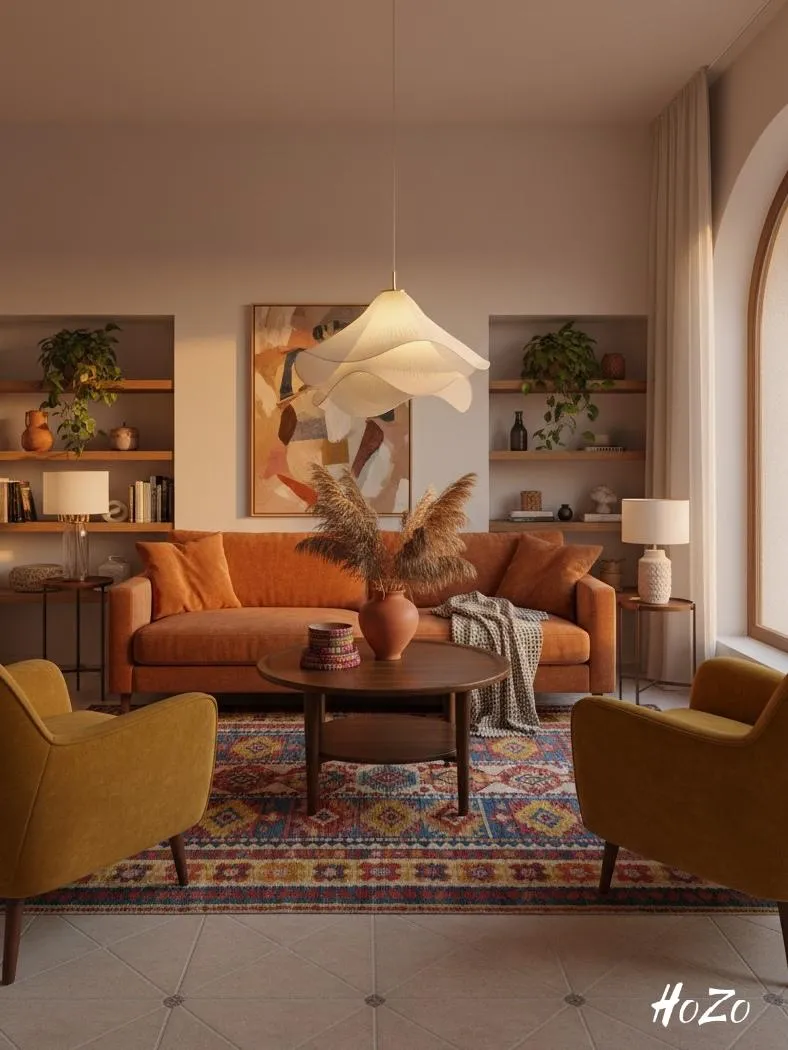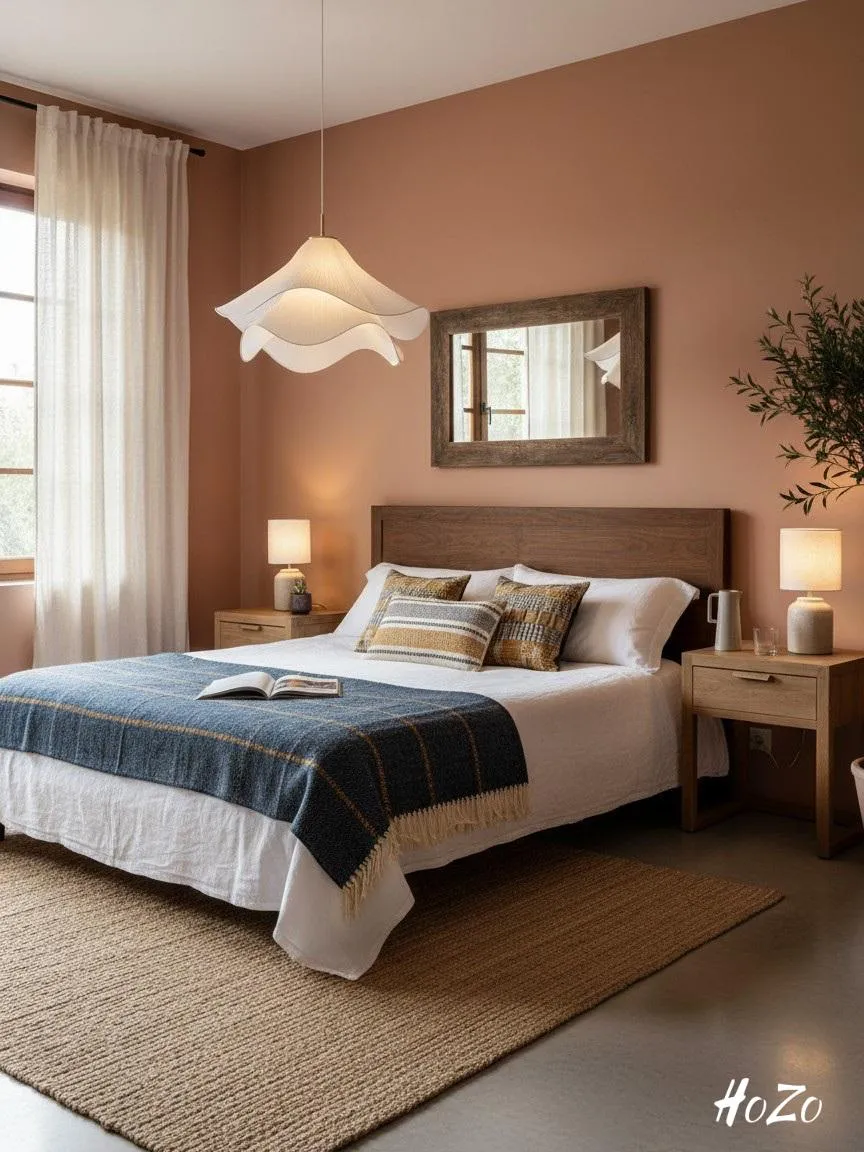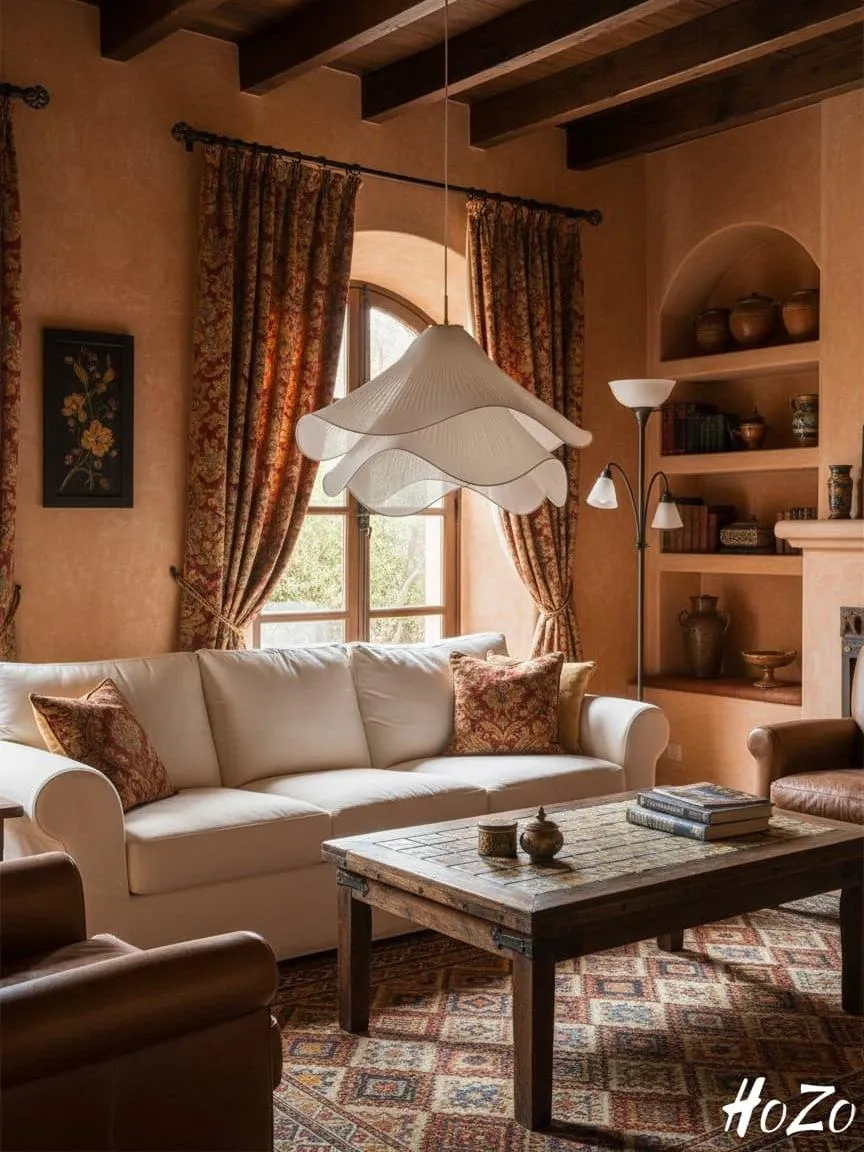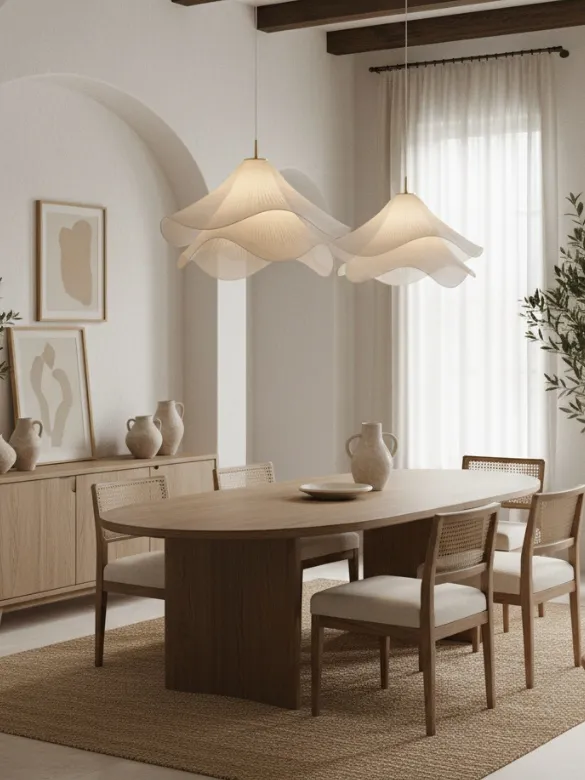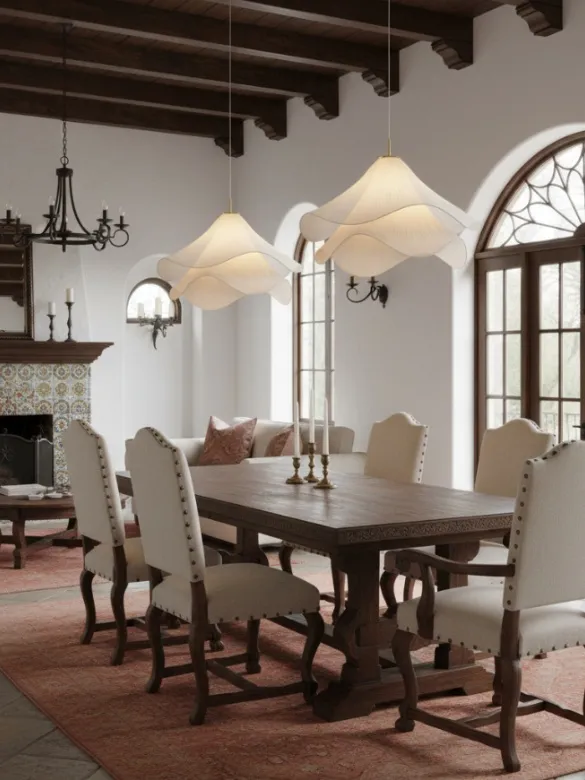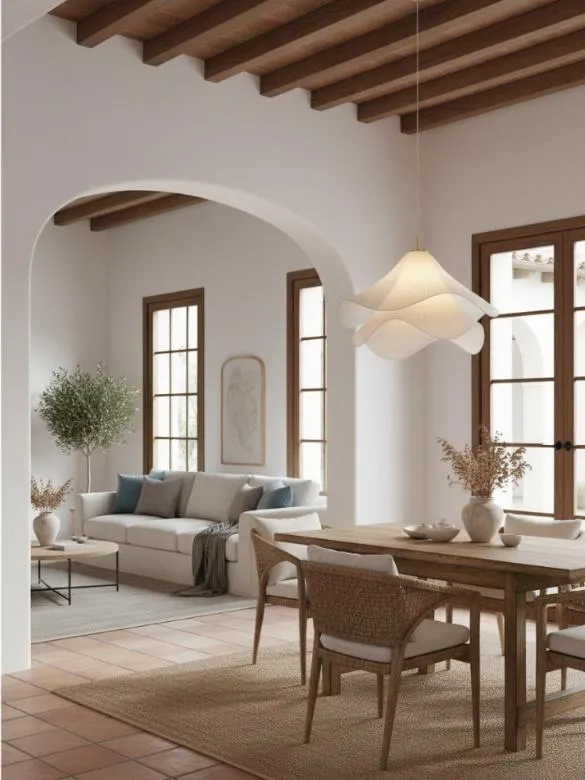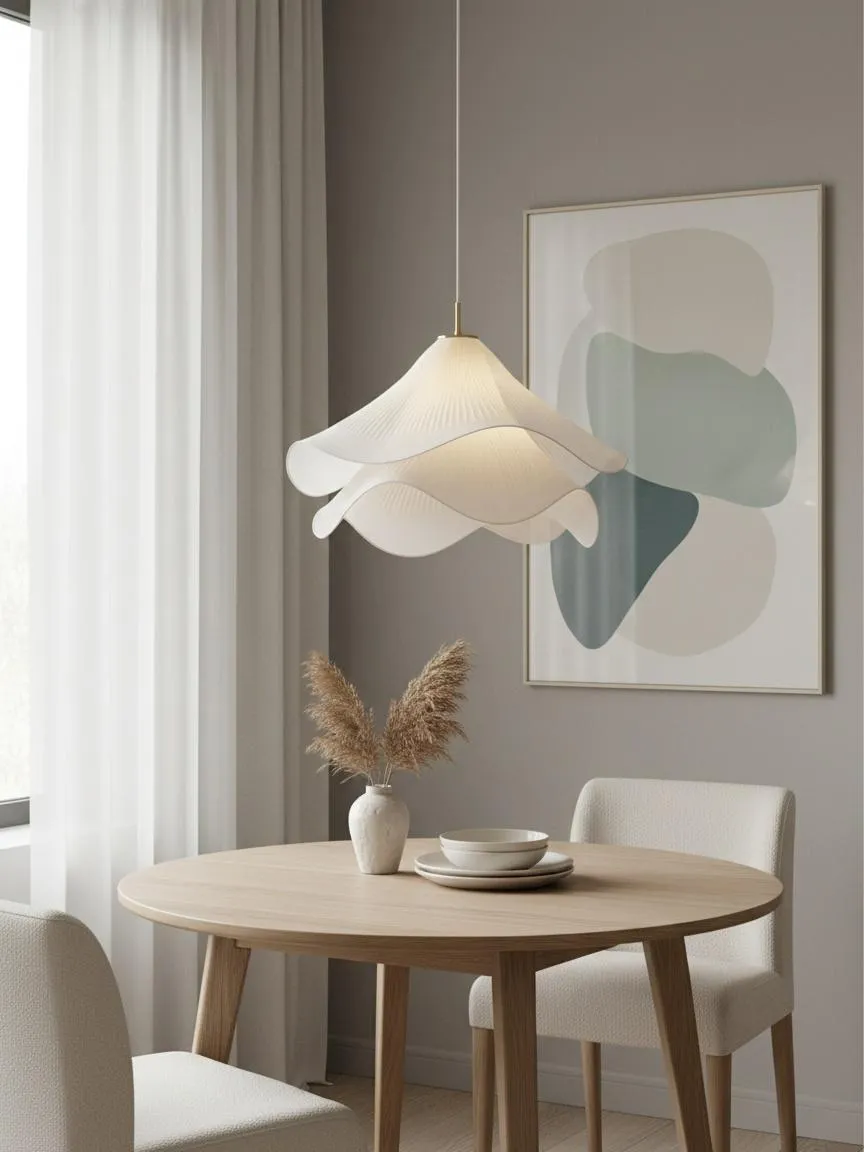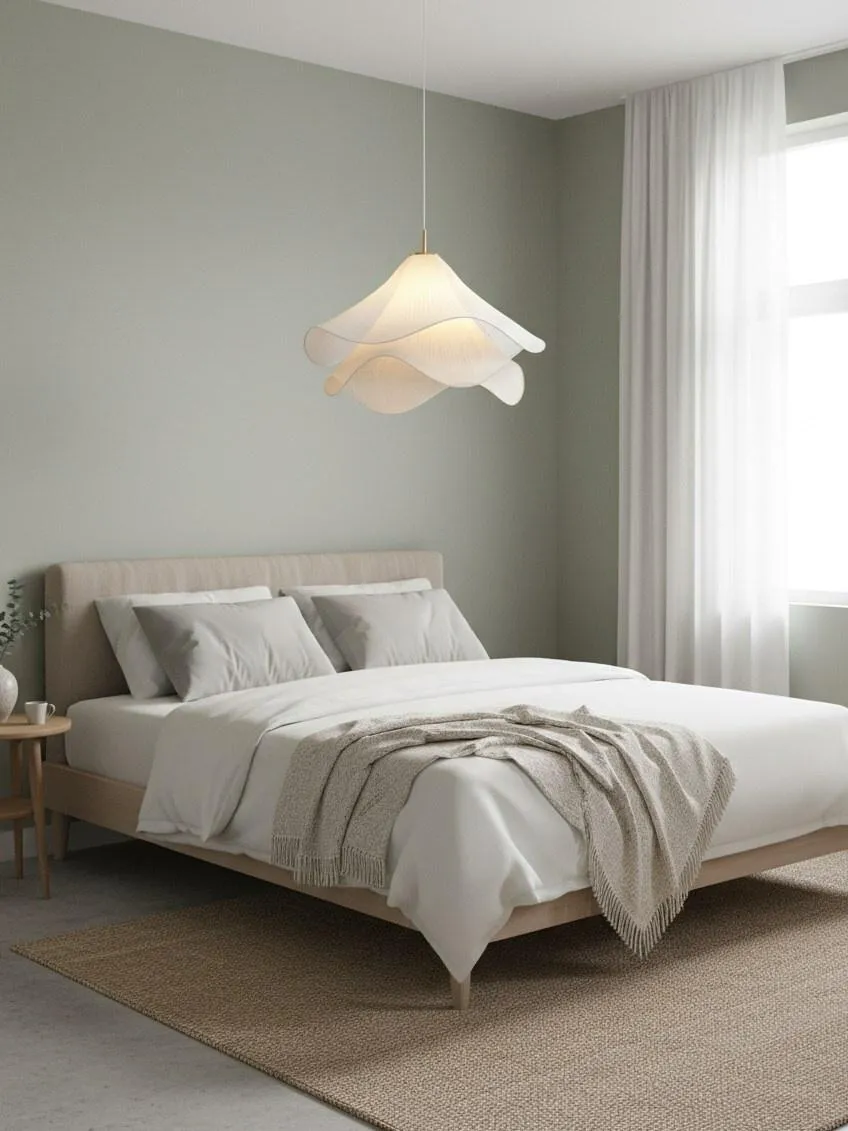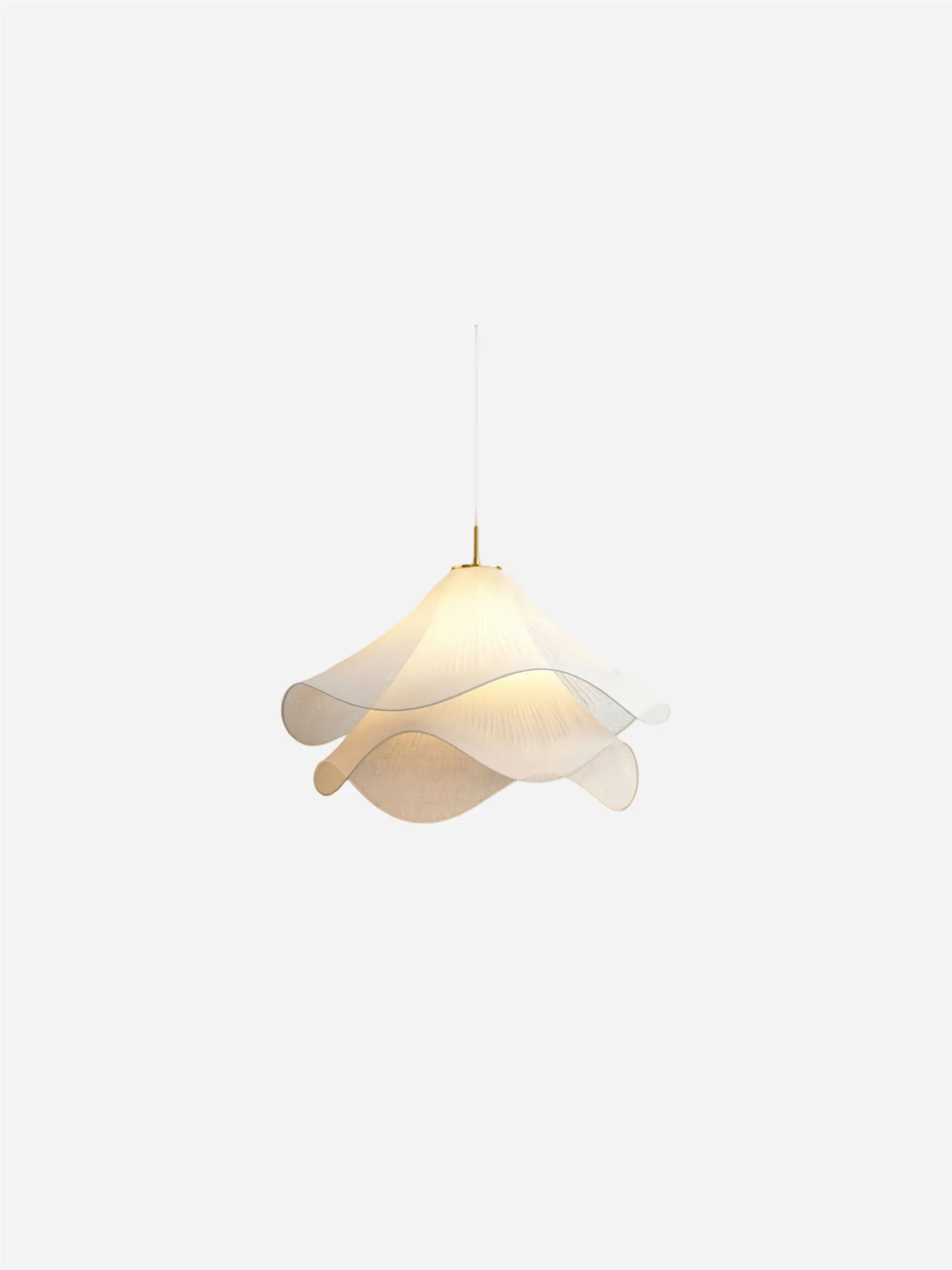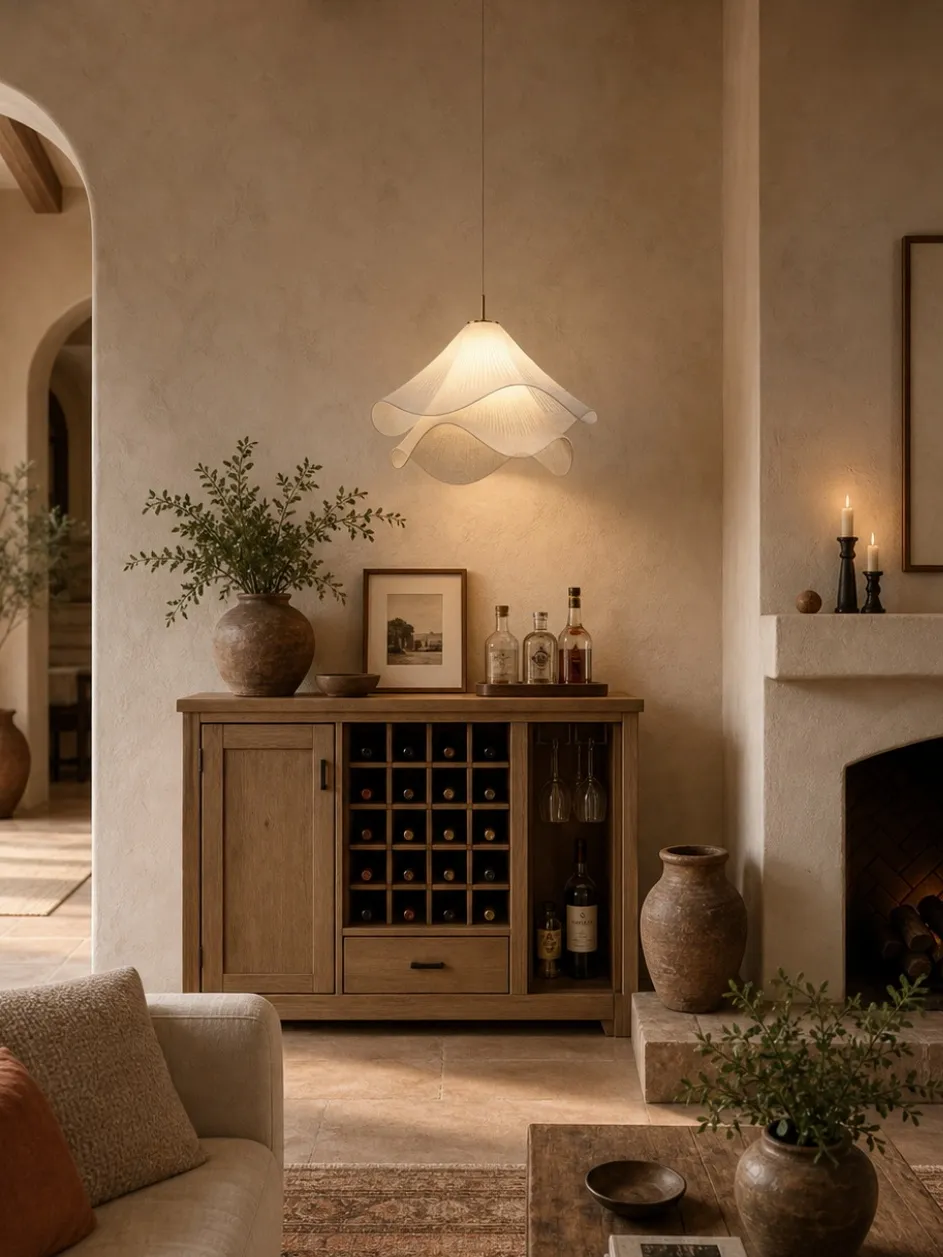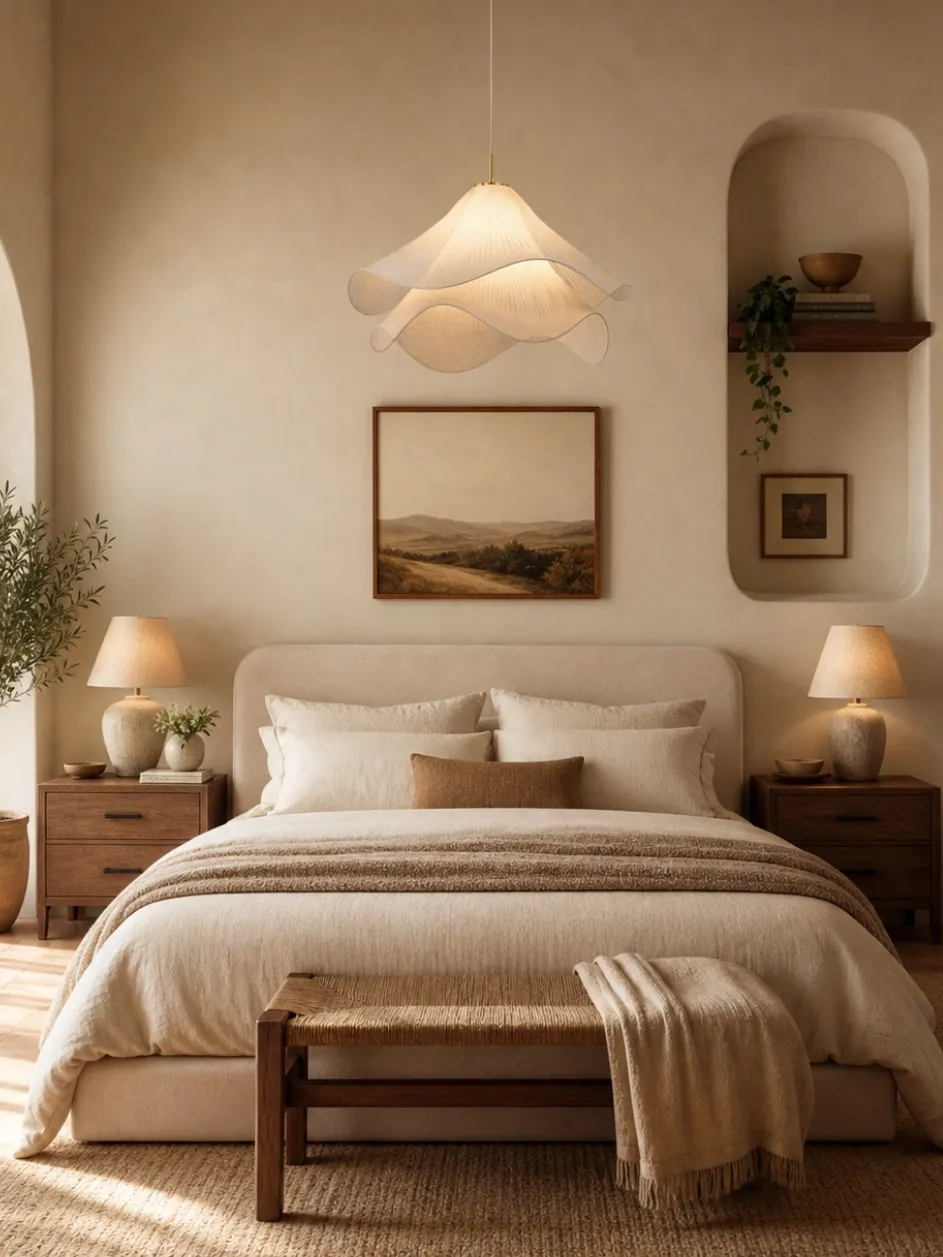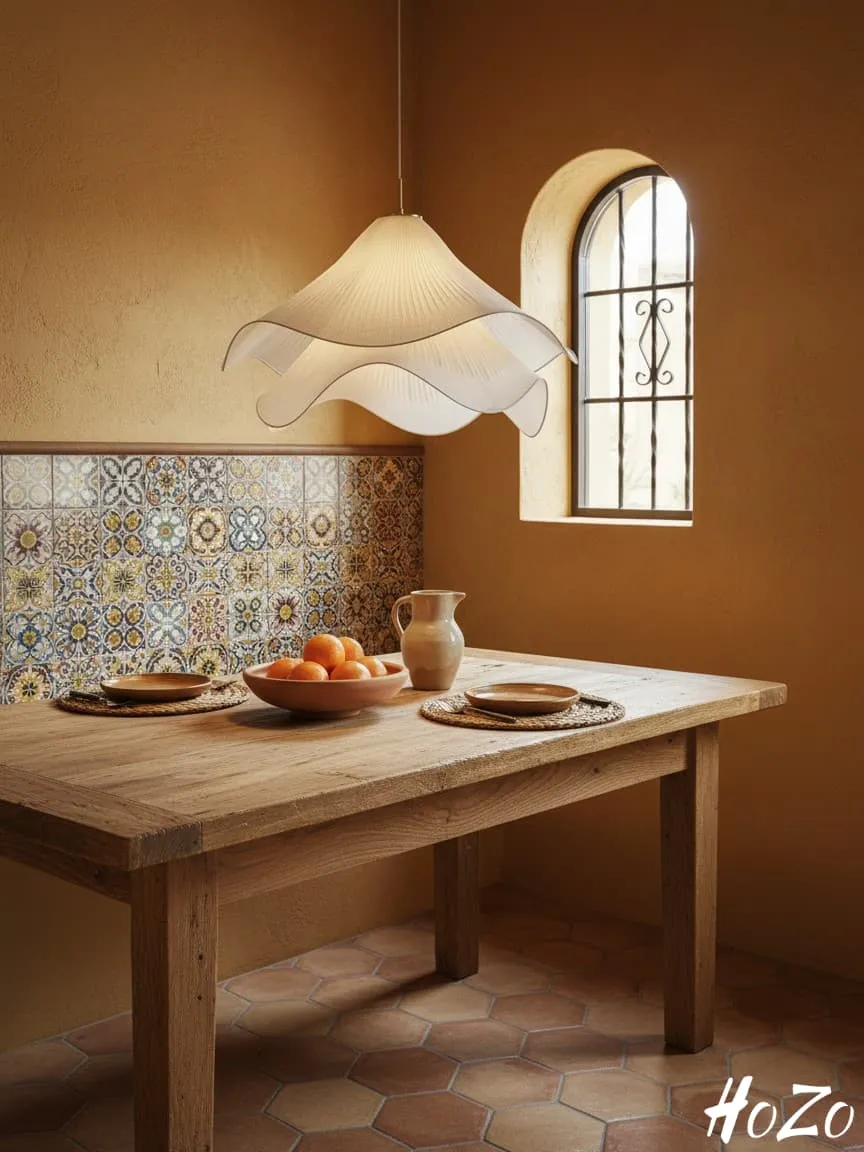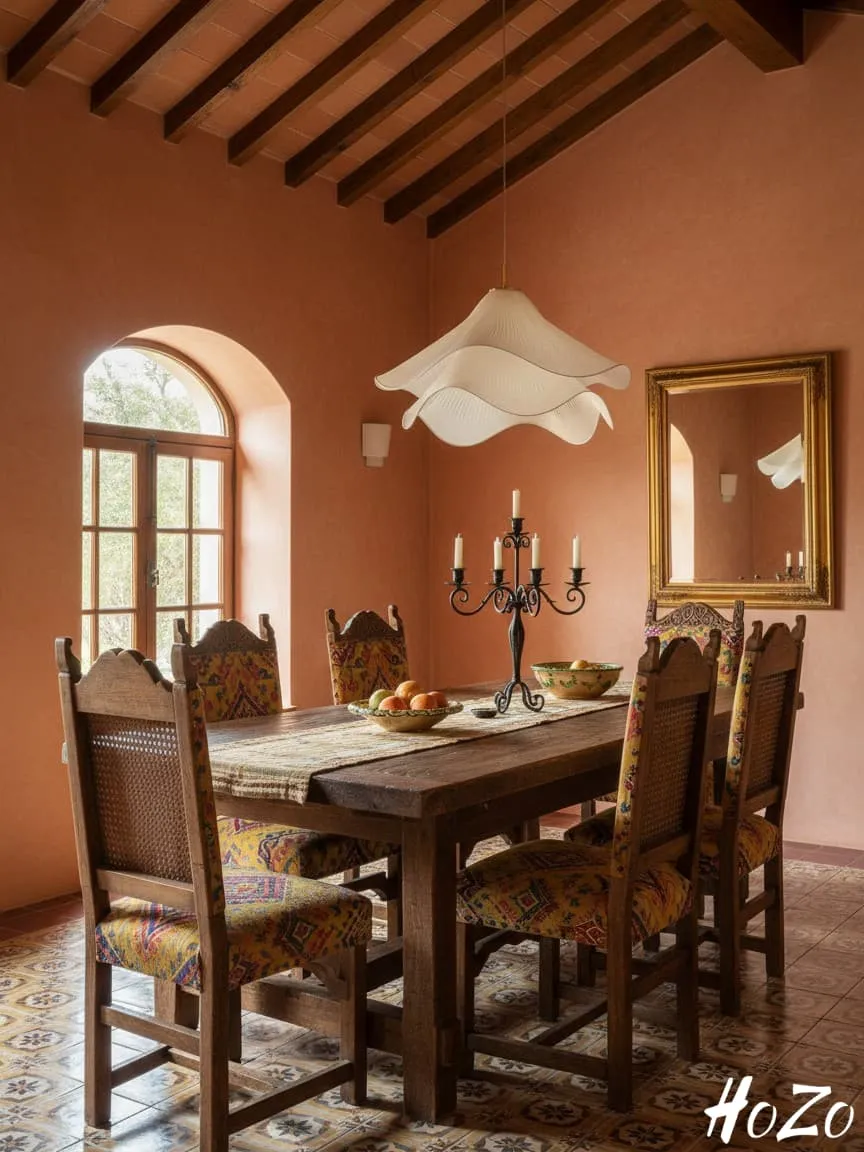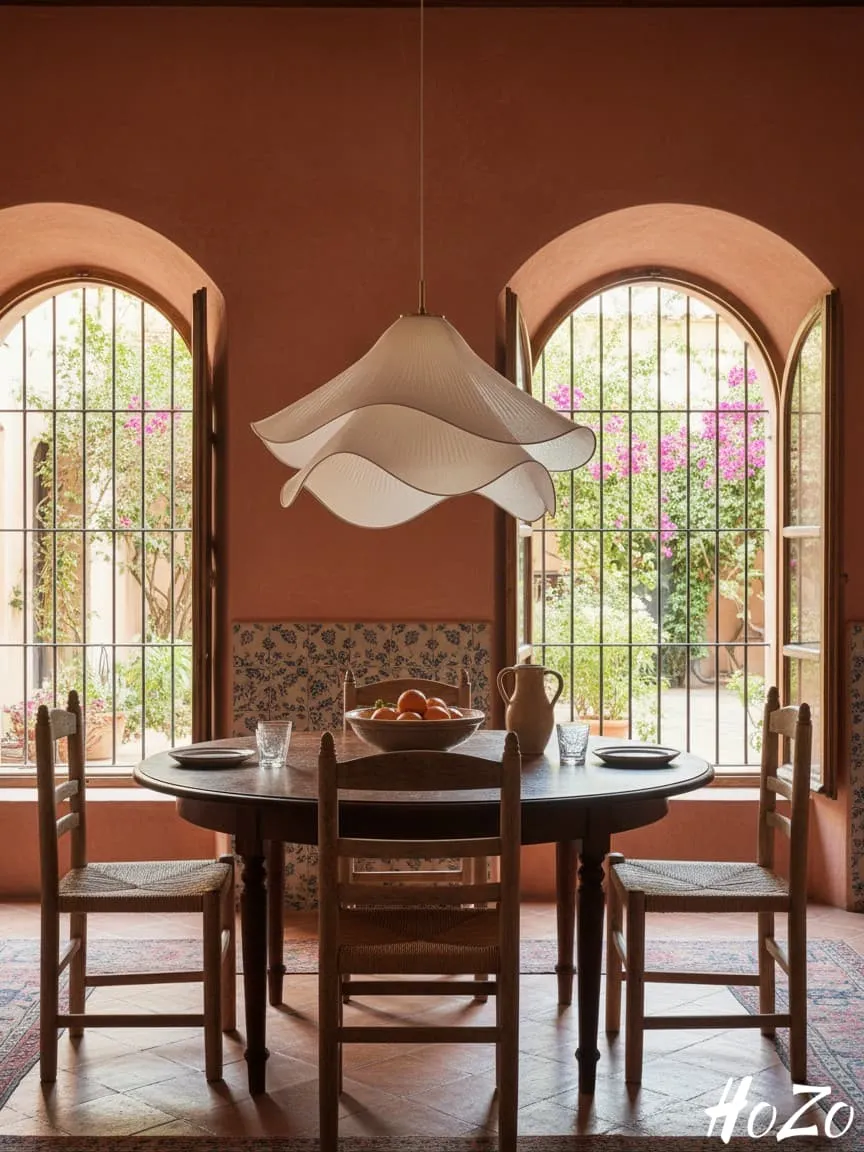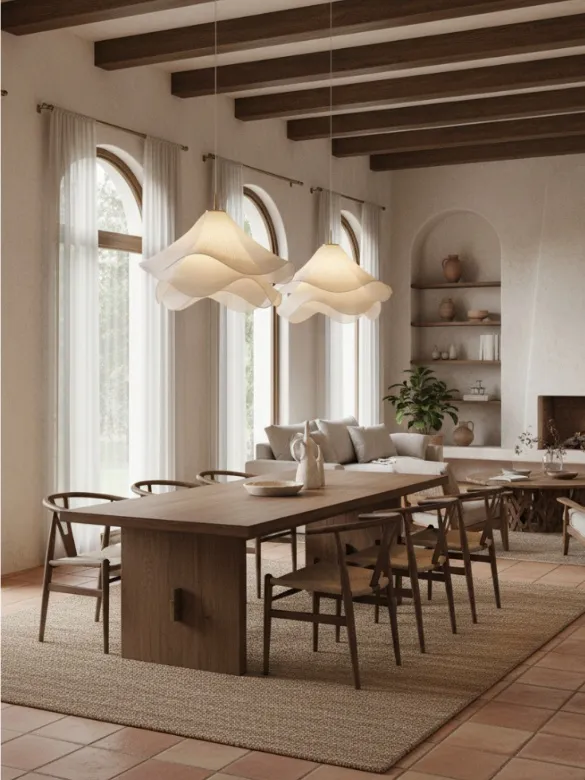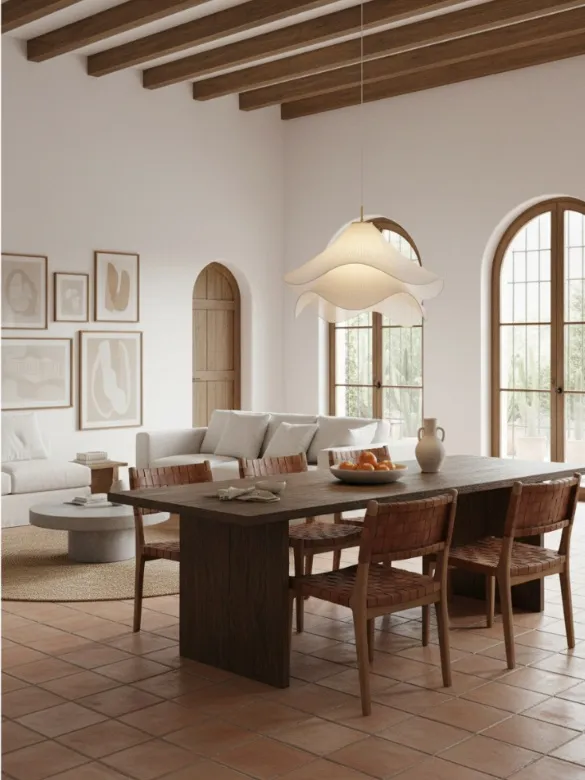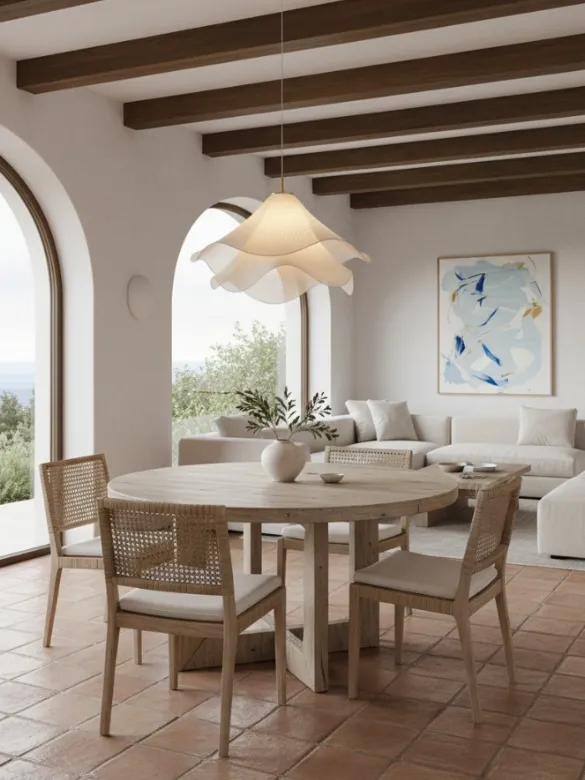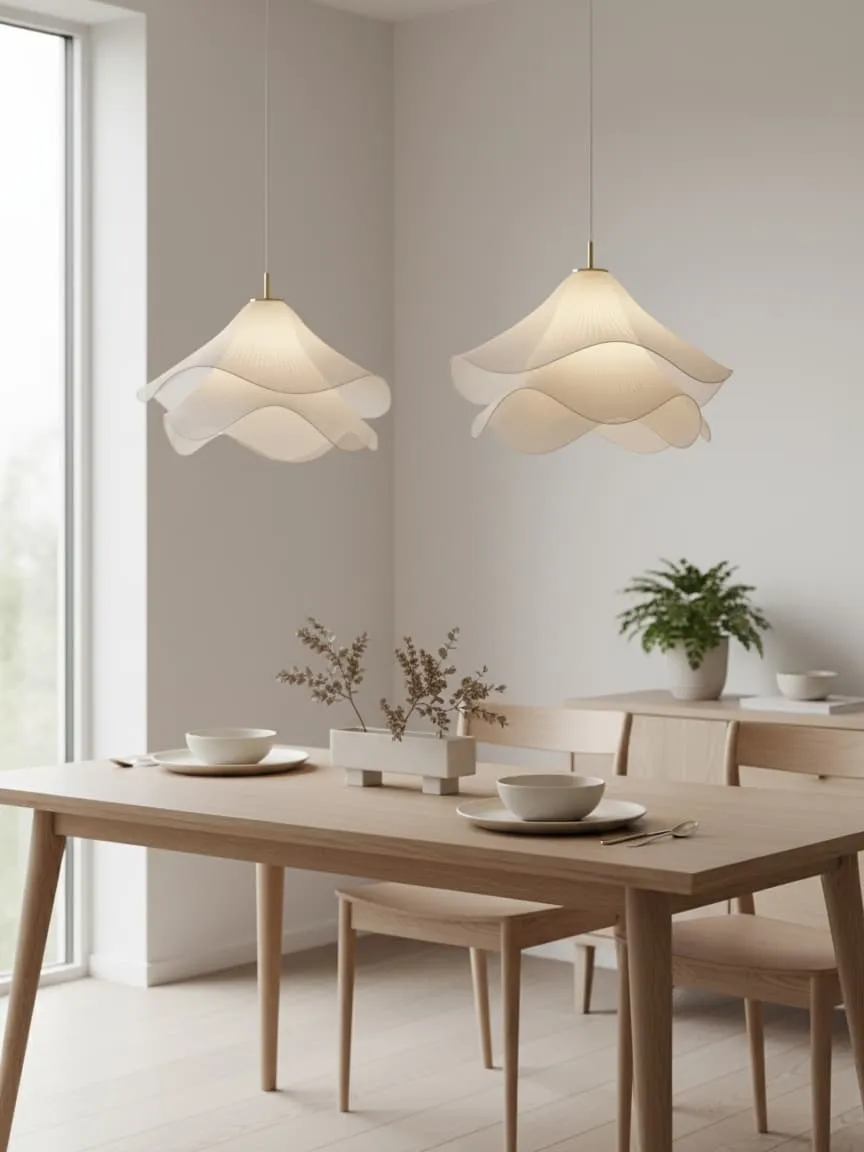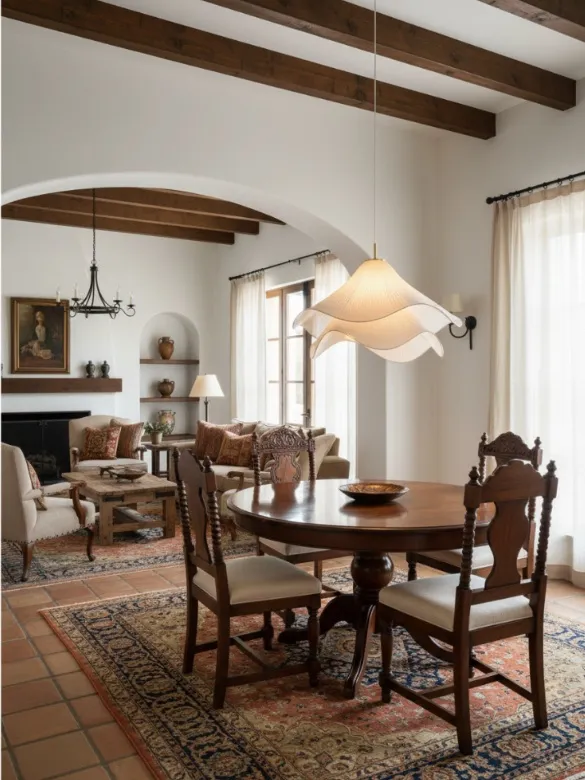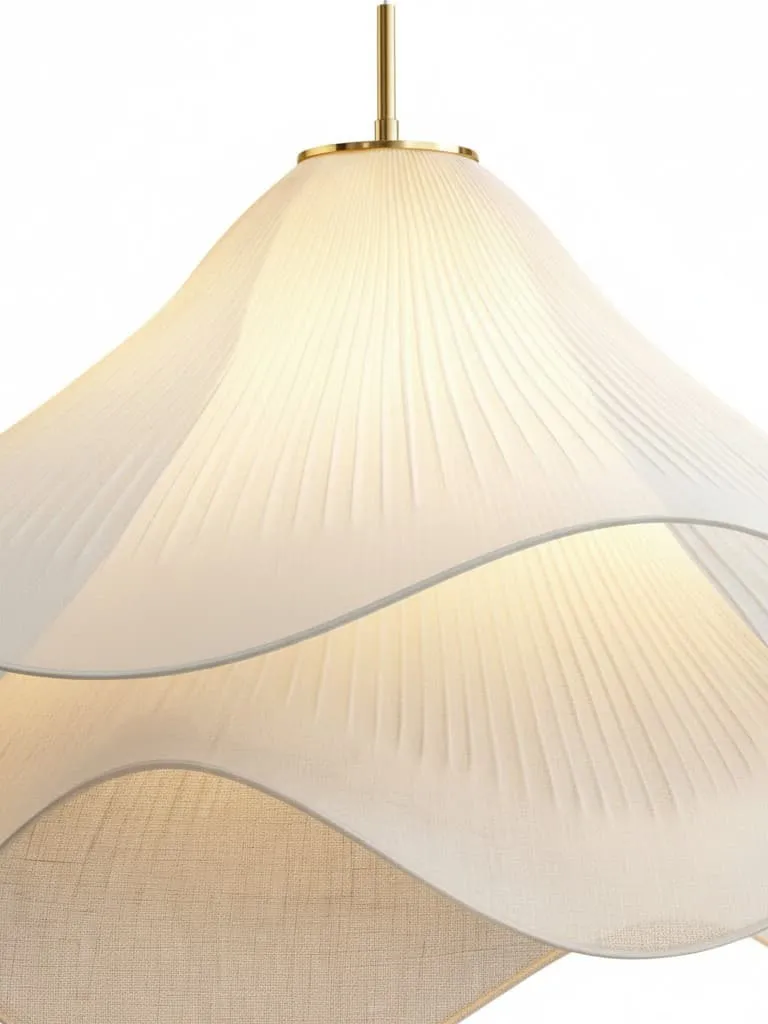
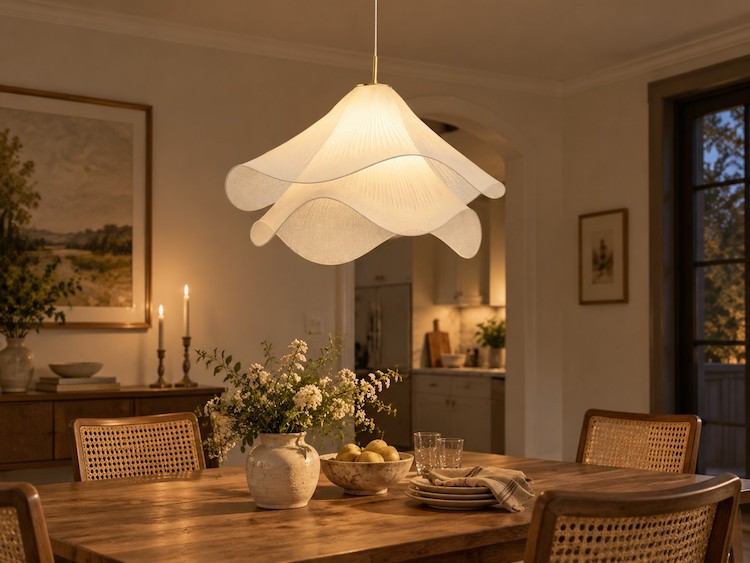
Do fabric pendant lamps reduce glare better than glass or metal shades?
A fabric pendant light can reduce glare compared to an exposed bulb, but there's no hard and fast rule that fabric is always better than any glass or metal shade. Visual comfort depends on the opacity of the fabric, the light source's position, the opening at the bottom, the hanging height, the bulb's wattage, and the viewing angle. The best approach isn't to choose a material based on reputation, but rather to see how it performs in your room.
What does “less glare” really mean?
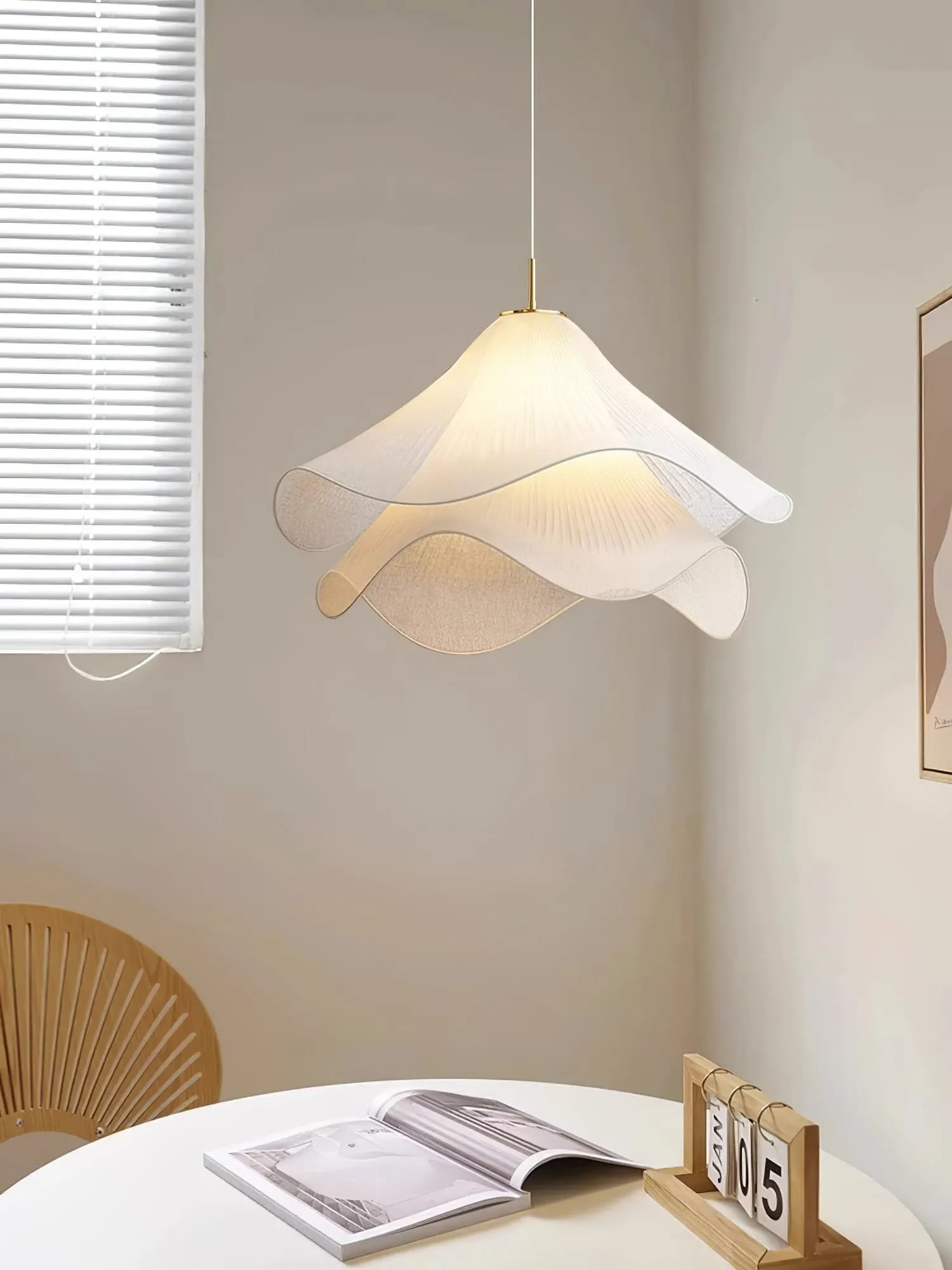
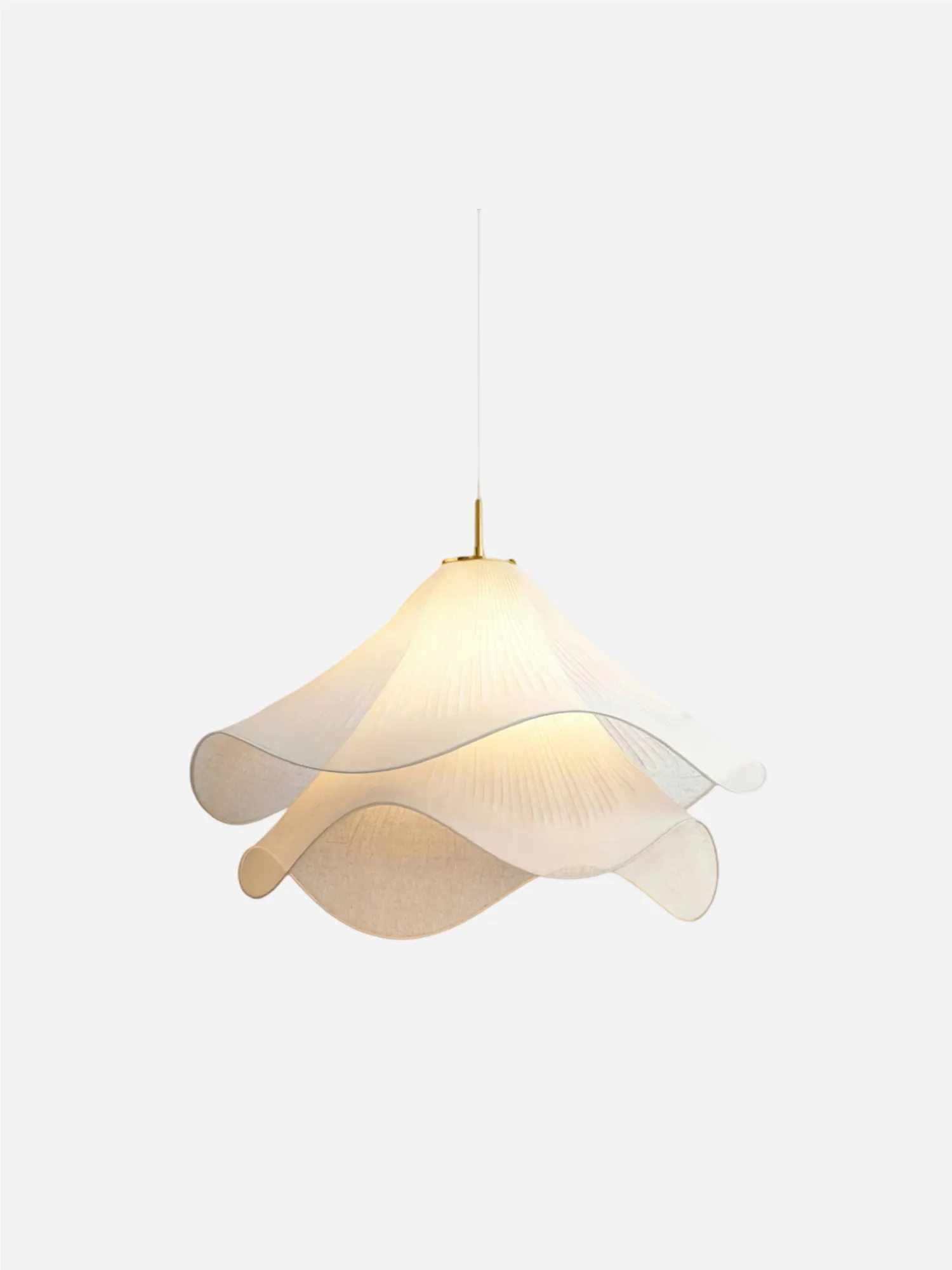
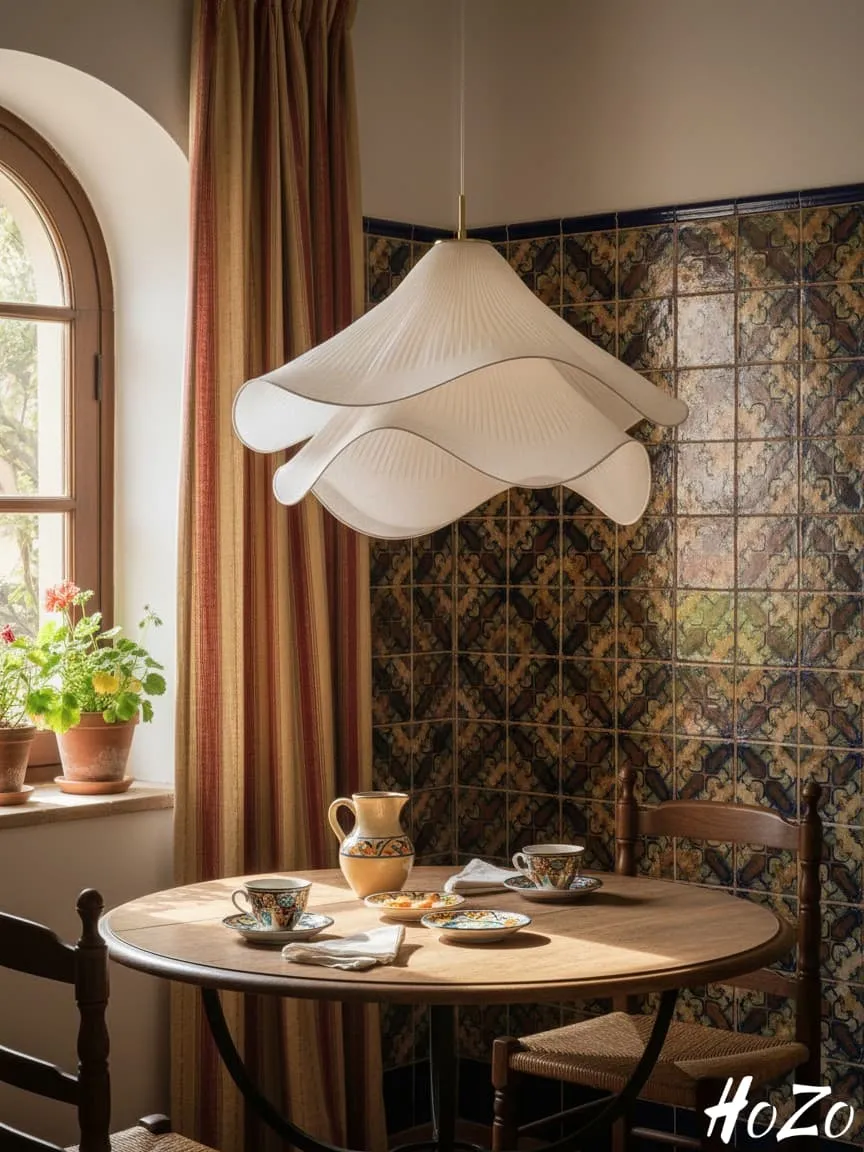
Glare occurs when a light source is much brighter than the rest of the field of vision or when it enters directly into the line of sight. A pleated shade can break up that bright surface into many small areas and make the light feel less harsh. However, if the bulb protrudes from underneath, the edge of the fabric can still create an uncomfortable spot.
The surface in front of the lamp also matters. A very shiny table, a white wall, or a computer screen can reflect the light and increase discomfort, even if the lamp has a fabric cover. Therefore, the test should include the entire setup: lamp, bulb, table, walls, and eye position.
Practical comparison between fabric, glass and metal
| Material | Usual advantage | Risk of glare | When to choose it |
|---|---|---|---|
| Pleated fabric | Filter the source and add texture | You can let the shine through the bottom opening. | Dining rooms and bedrooms seeking warmth |
| Opal glass | Homogeneous distribution and easy-to-clean surface | It can reflect intense spots if the bulb is close. | Spaces that need a cleaner reading |
| Metal | It directs the light and defines a precise shape. | The edges and contrasts can appear harsh. | Work tables or graphic environments |
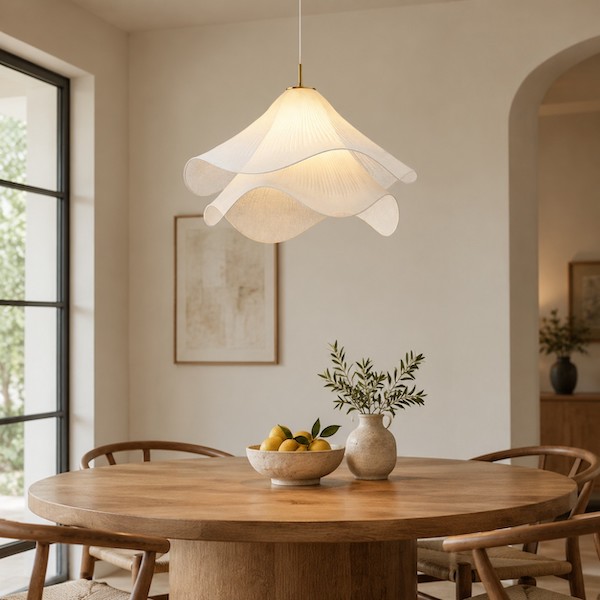
The table summarizes behavioral trends, not a guarantee. Two screens made of the same material can offer different experiences due to their shape, color, and light source.
The light bulb matters as much as the lampshade.
If the lamp accepts E26 or E27 bases, compare bulbs with an opal diffuser and avoid exposed filaments when the problem is a bright spot. Choose the lumens according to the task and the color temperature according to the environment. The guide of ENERGY STAR on LED lighting It helps to distinguish efficiency, brightness, and features of LED bulbs.
In a fabric lamp, a high-wattage bulb doesn't always improve the result. It can make the pleats appear flatter due to excessive light and create a harsh halo effect on the ceiling. A slightly more moderate light source, supplemented by separate ambient lighting, is usually more comfortable in a relaxation room.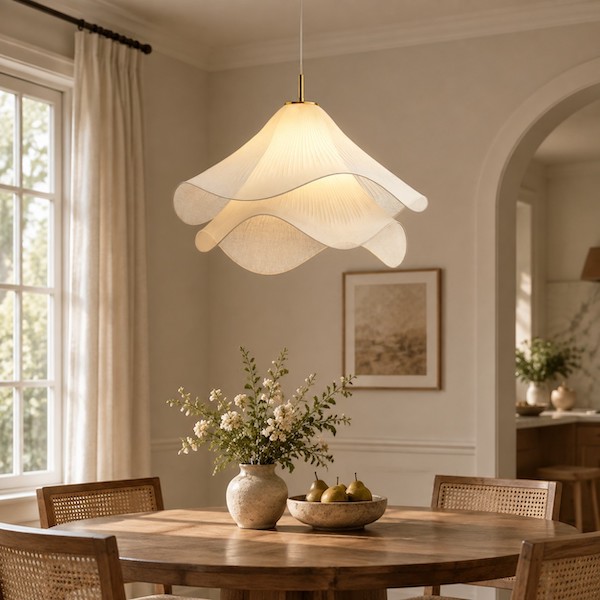
The four-angle test
- Sit in the main position and look towards the lamp for a few seconds.
- Move to the opposite seat and check if the light bulb is exposed.
- Walk from the door to the table or bed; the lower edge should not become a flash.
- Turn off the main light and turn on only the lamp, then reverse the order. This way you'll know if it works for ambient lighting and for task lighting.
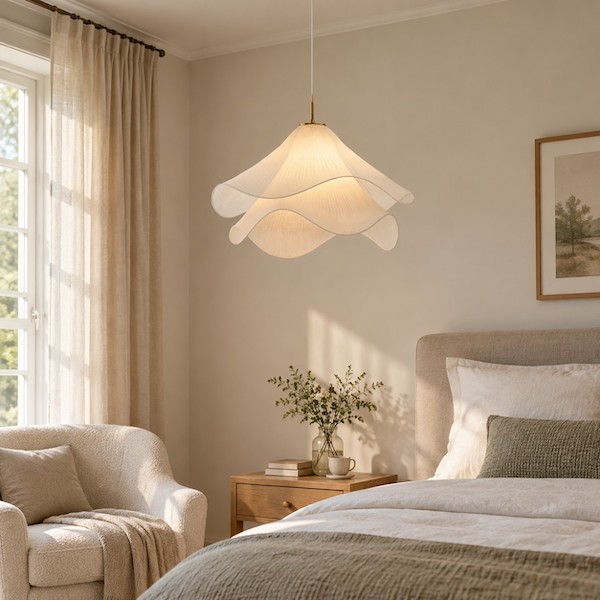
If the glare is only bothersome from one angle, simply raising the lamp a few centimeters, changing the direction of the beam, or using a bulb with a diffuser might suffice. If it's bothersome from all angles, replace the entire system instead of increasing the wattage.
When does the fabric win, and when does it not?
Choose fabric when...
- You want a cozy light on a table or in a bedroom.
- The room has matte surfaces and needs a textured coating.
- You prefer that the lamp looks like a soft object even during the day.
Consider glass or metal when...
- You need to clean frequently due to dust, cooking, or heavy use.
- The direction of the light is more important than the texture of the ceiling.
- The lamp should withstand a more graphic and less textile visual environment.
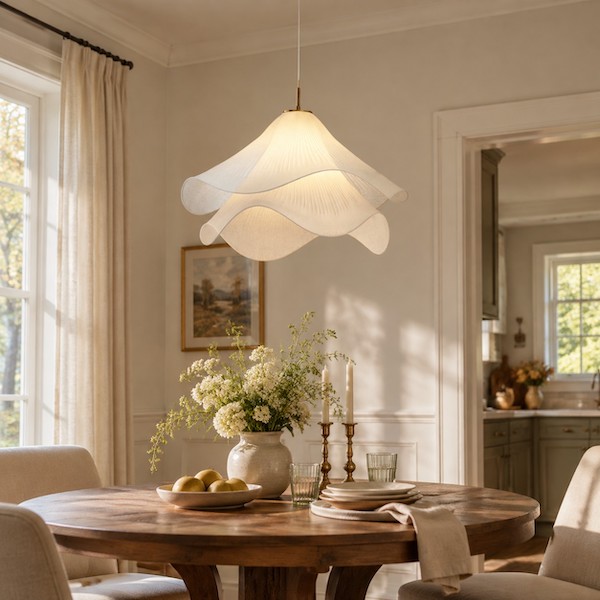
In the article Pleated fabric pendant lamps: why soft, sculptural shades will define lighting in 2026 You'll find the context for trends and materials. To choose the diameter and height, consult How to choose a pleated fabric pendant lamp for a bedroom or dining roomCleanliness is also part of visual performance: How to clean a pleated fabric screen without flattening the pleats It explains how to prevent dust from changing the way light appears.
A recommendation for Ethereal Bloom
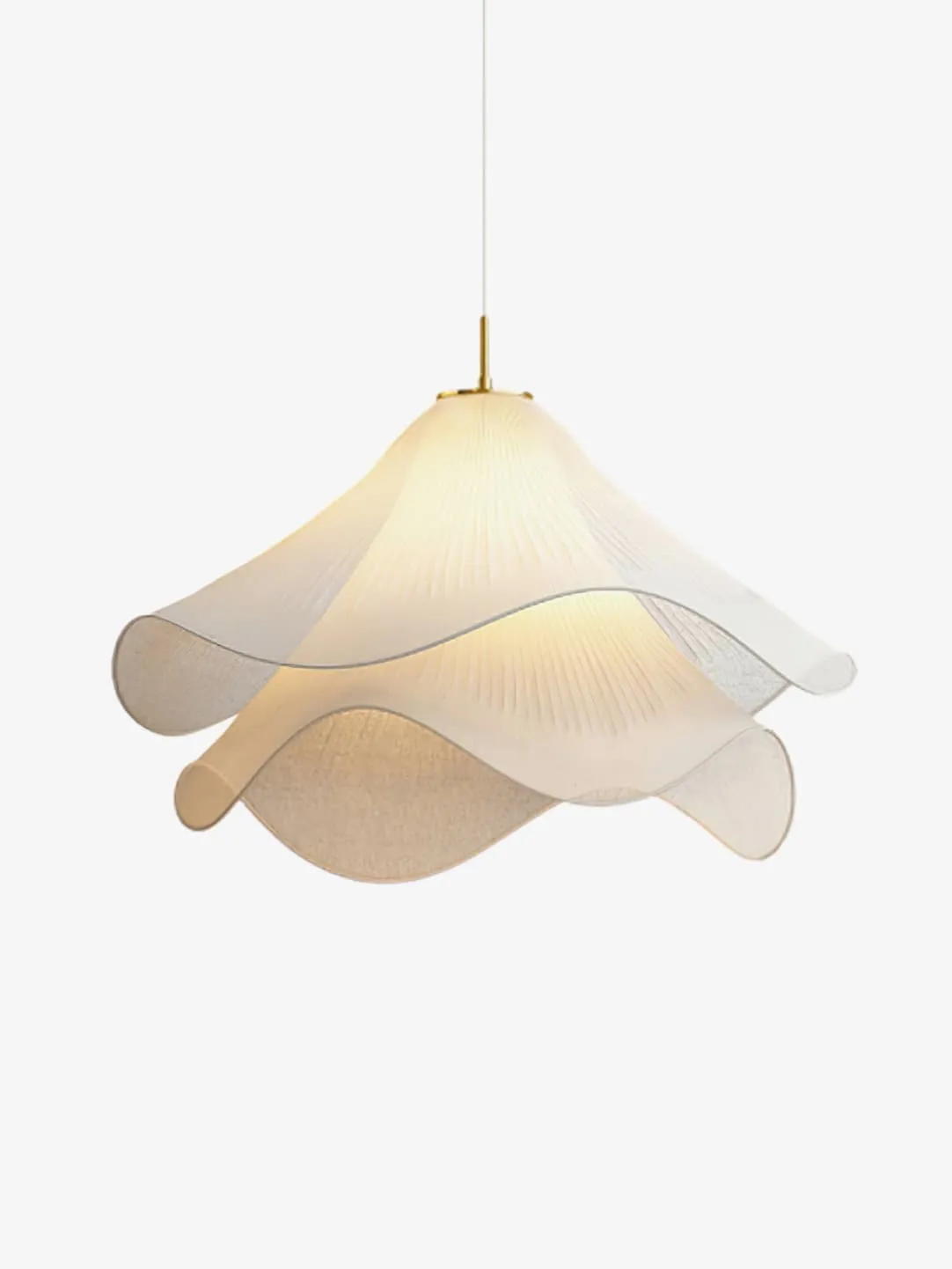
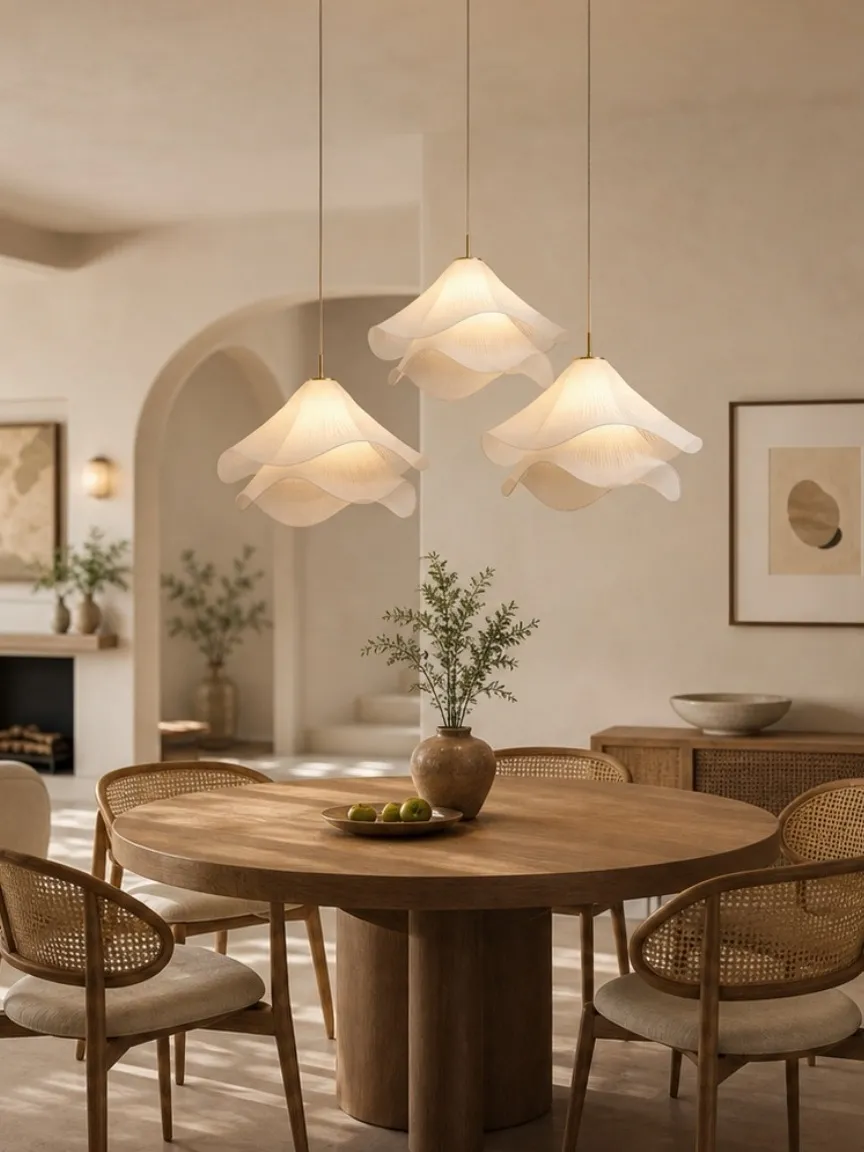
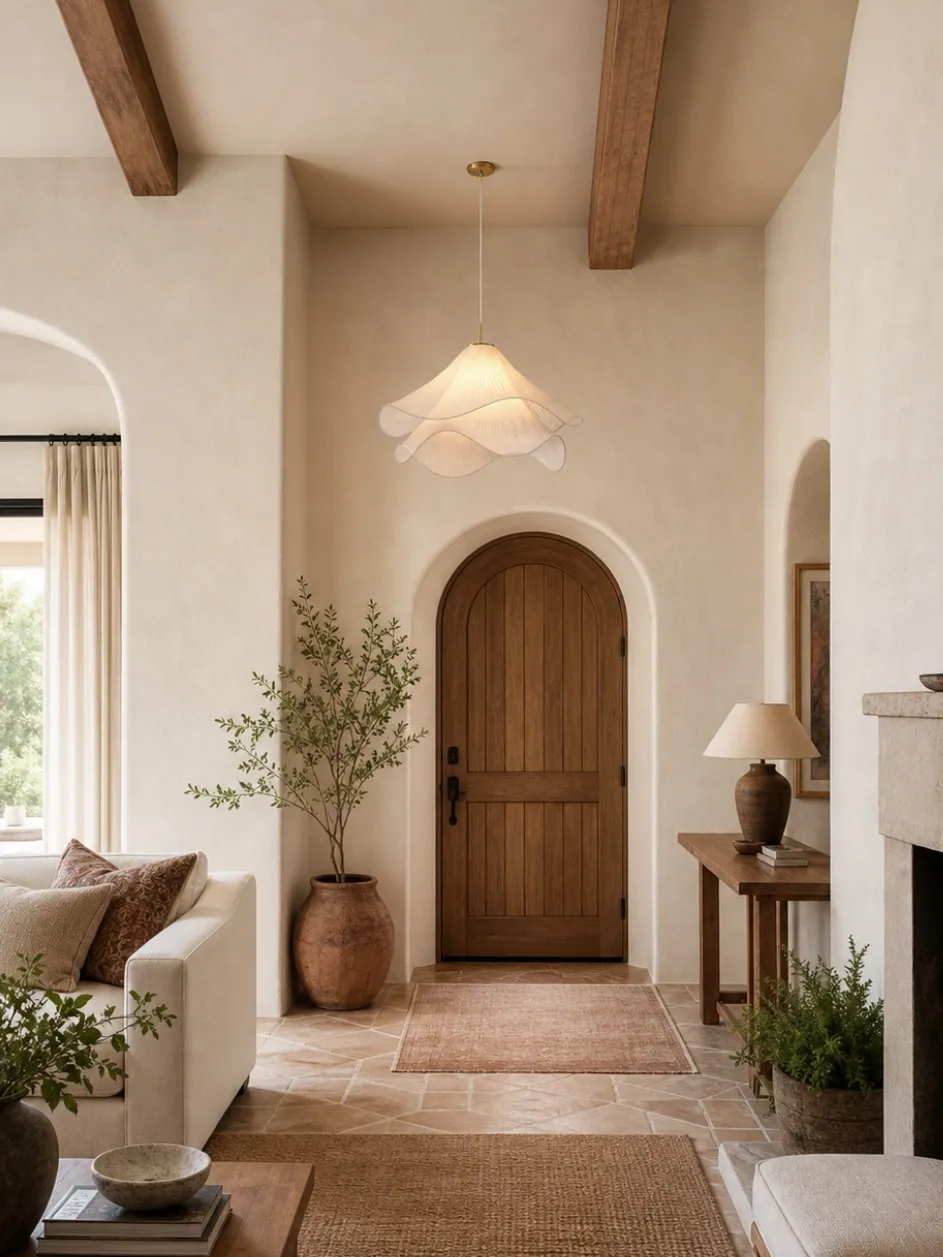
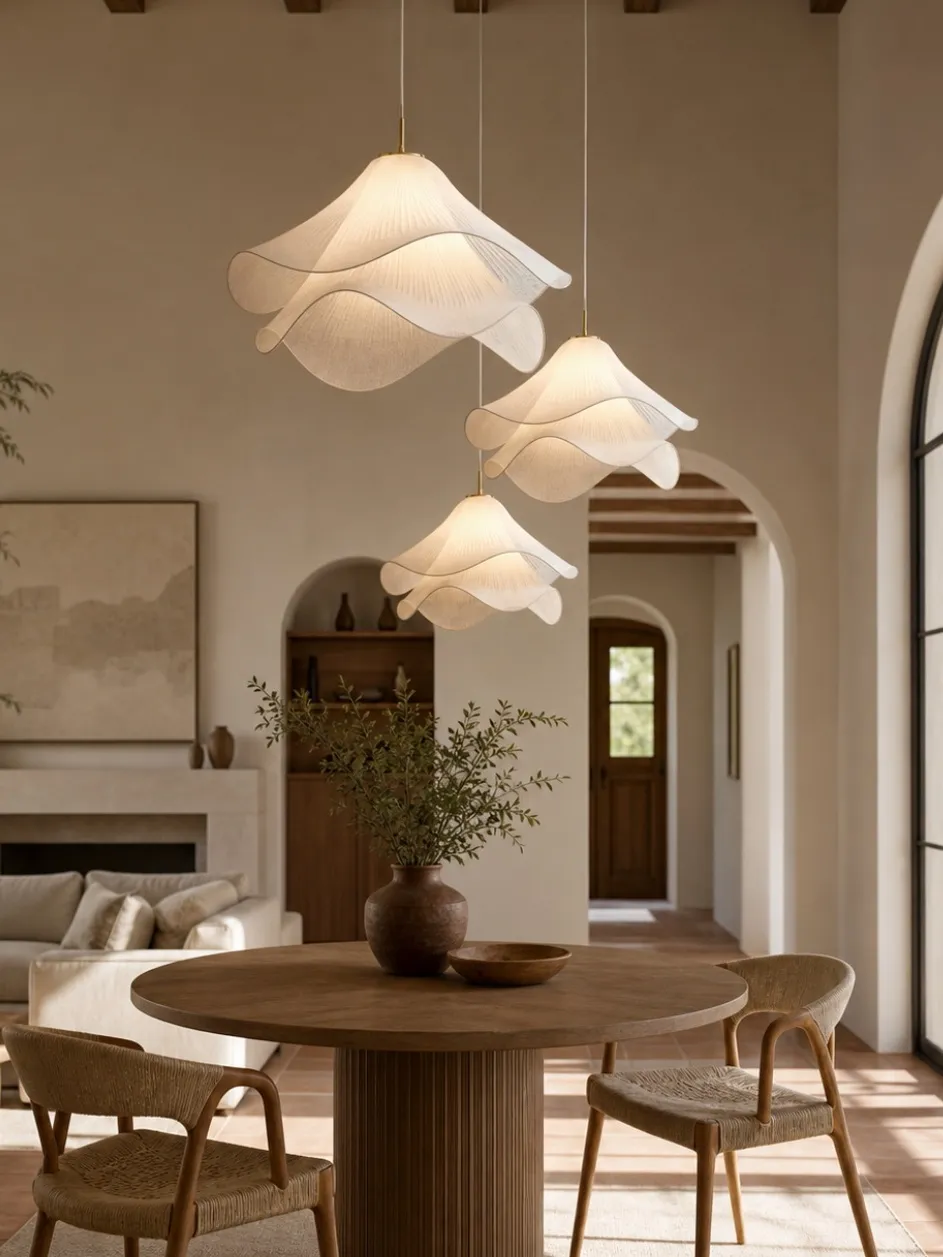
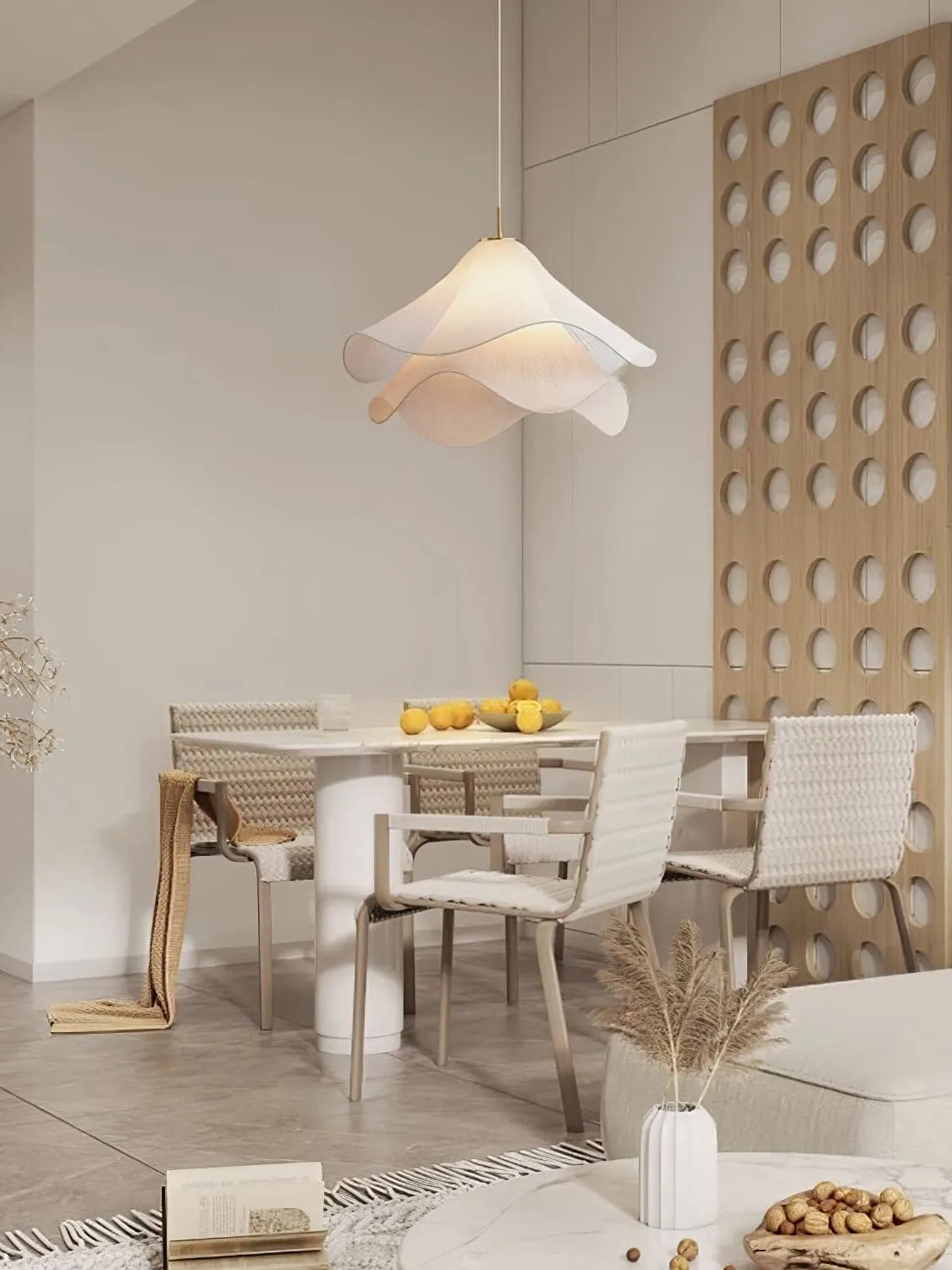
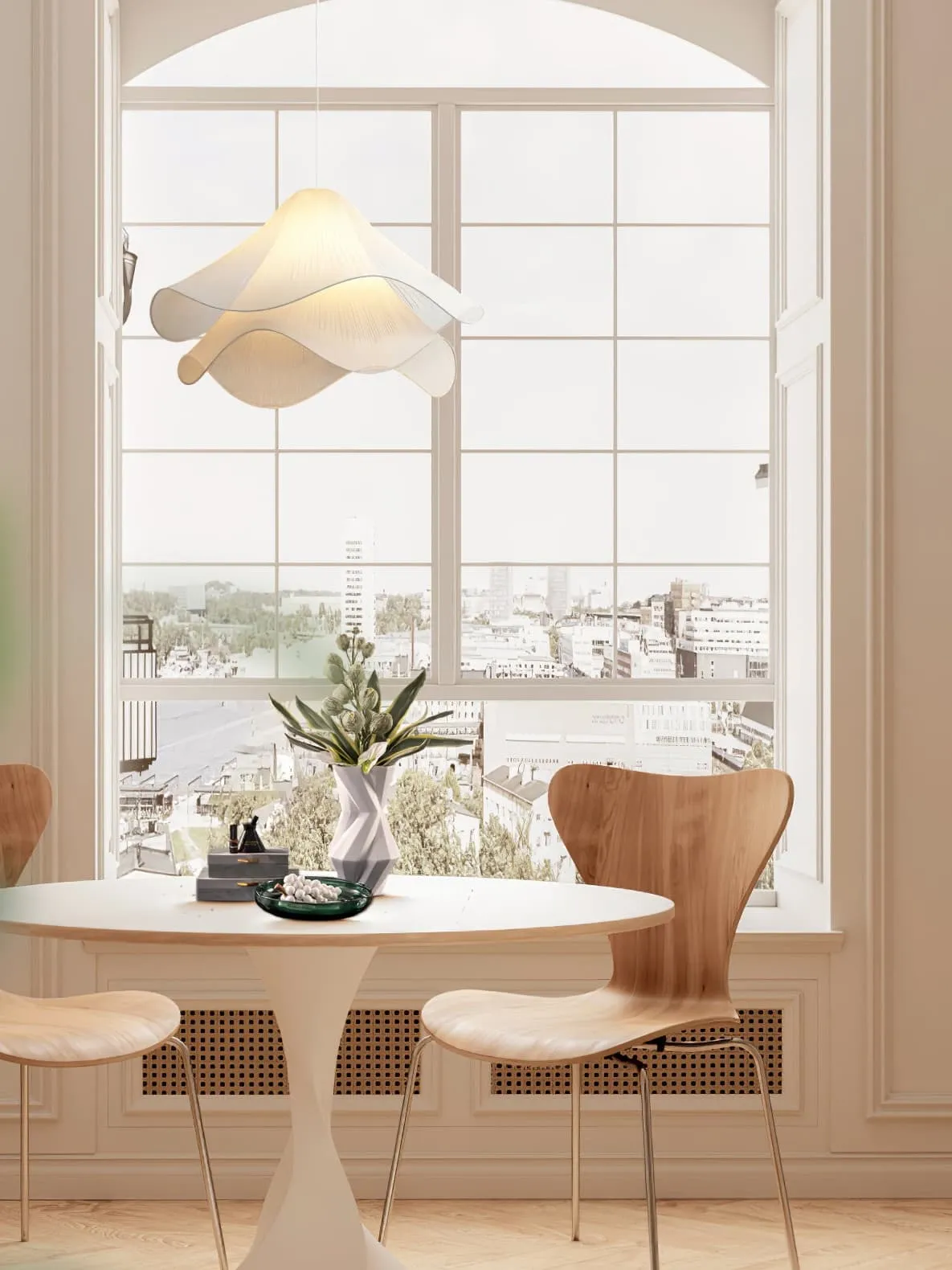
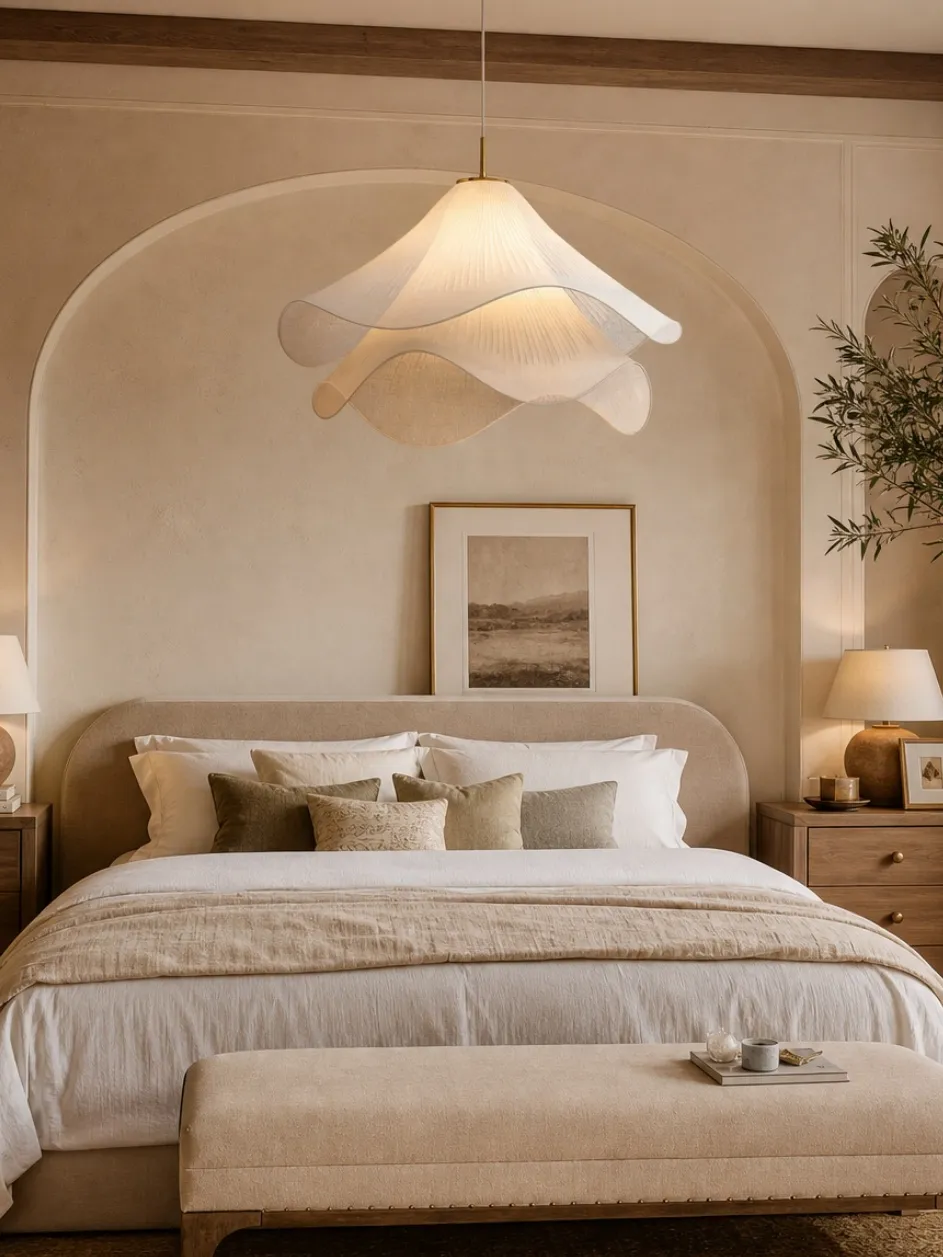
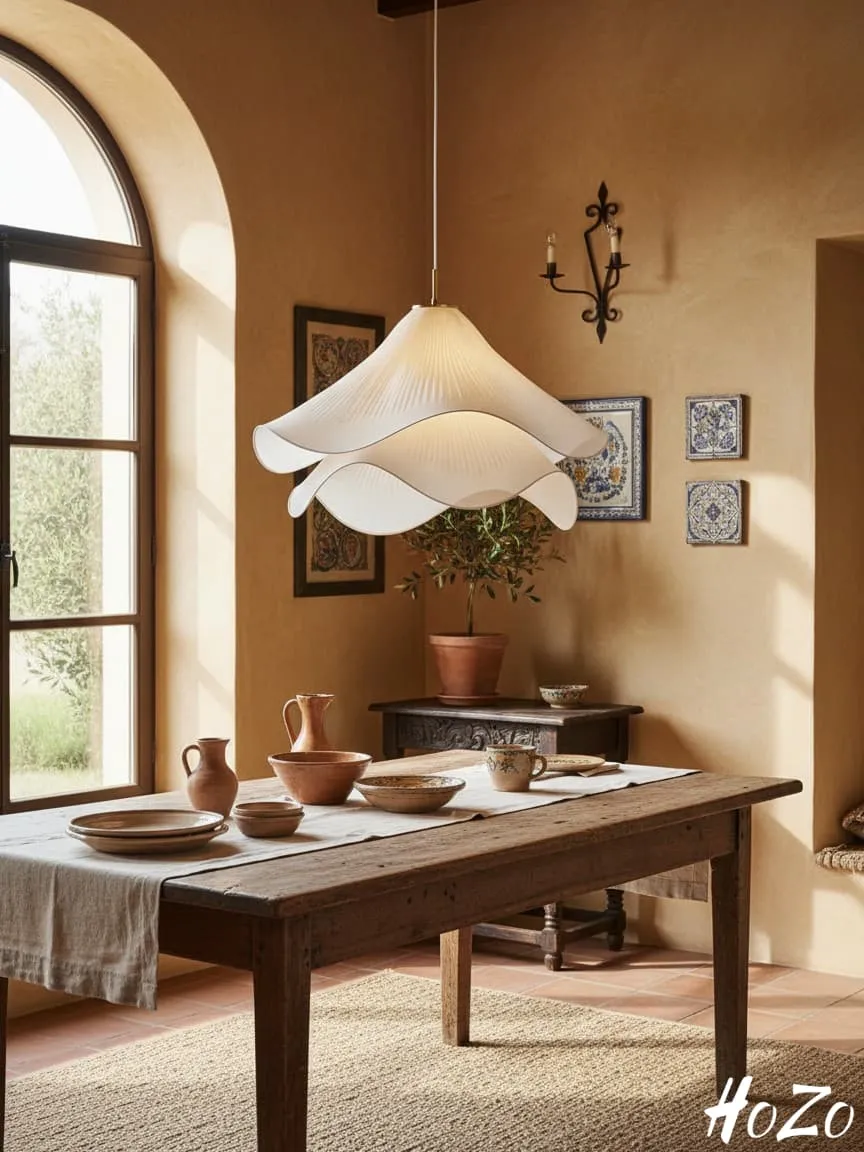
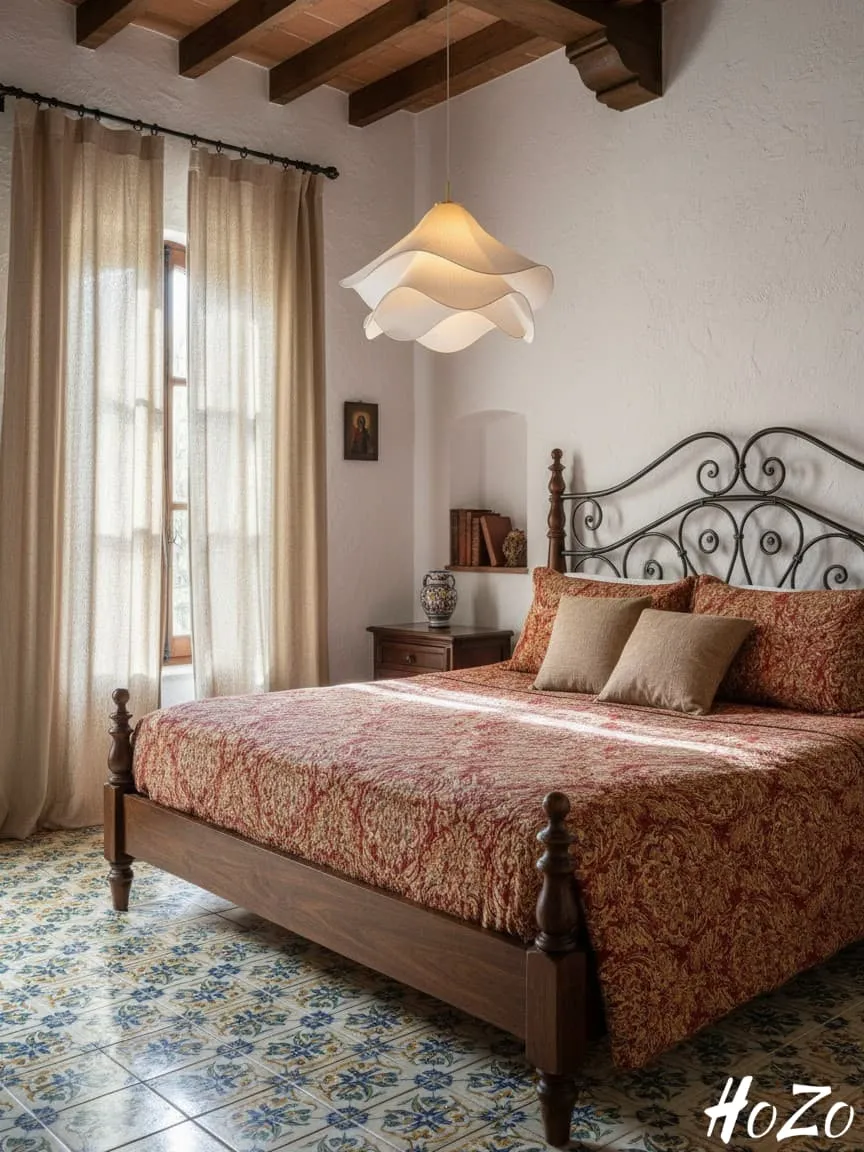
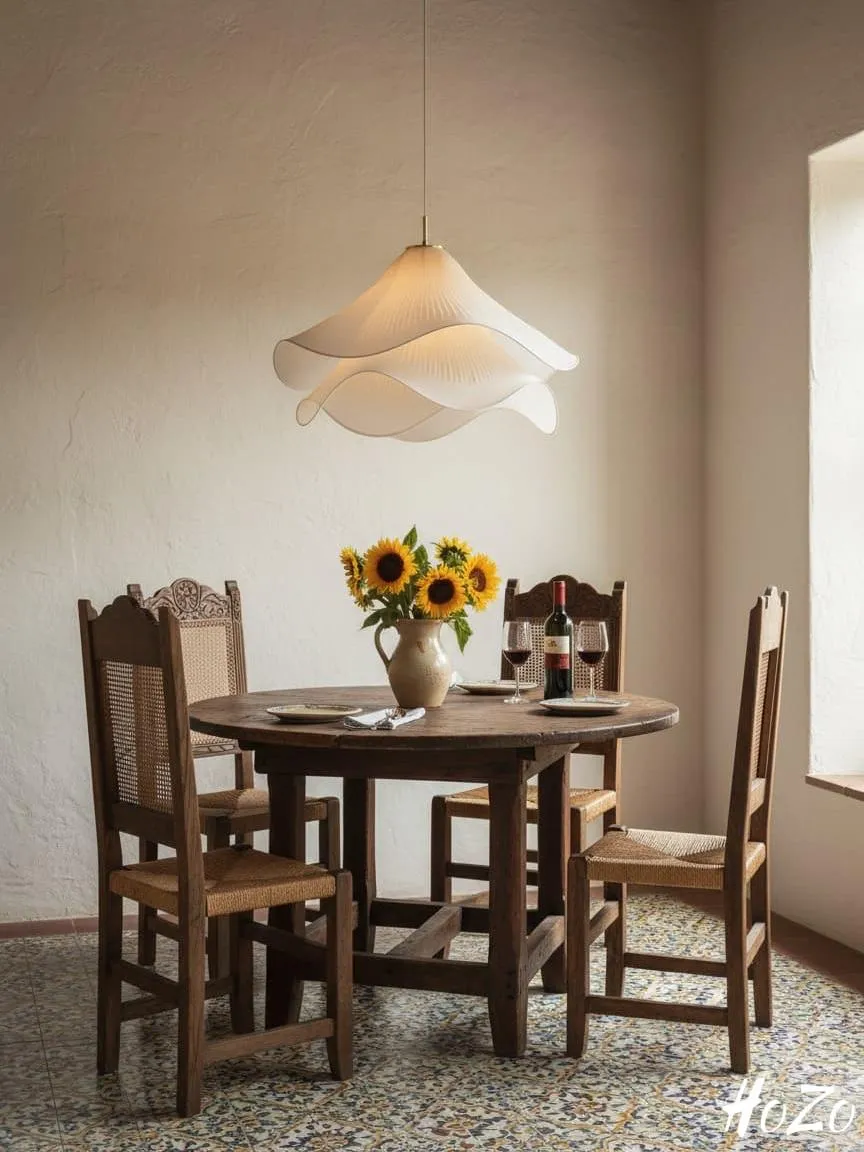
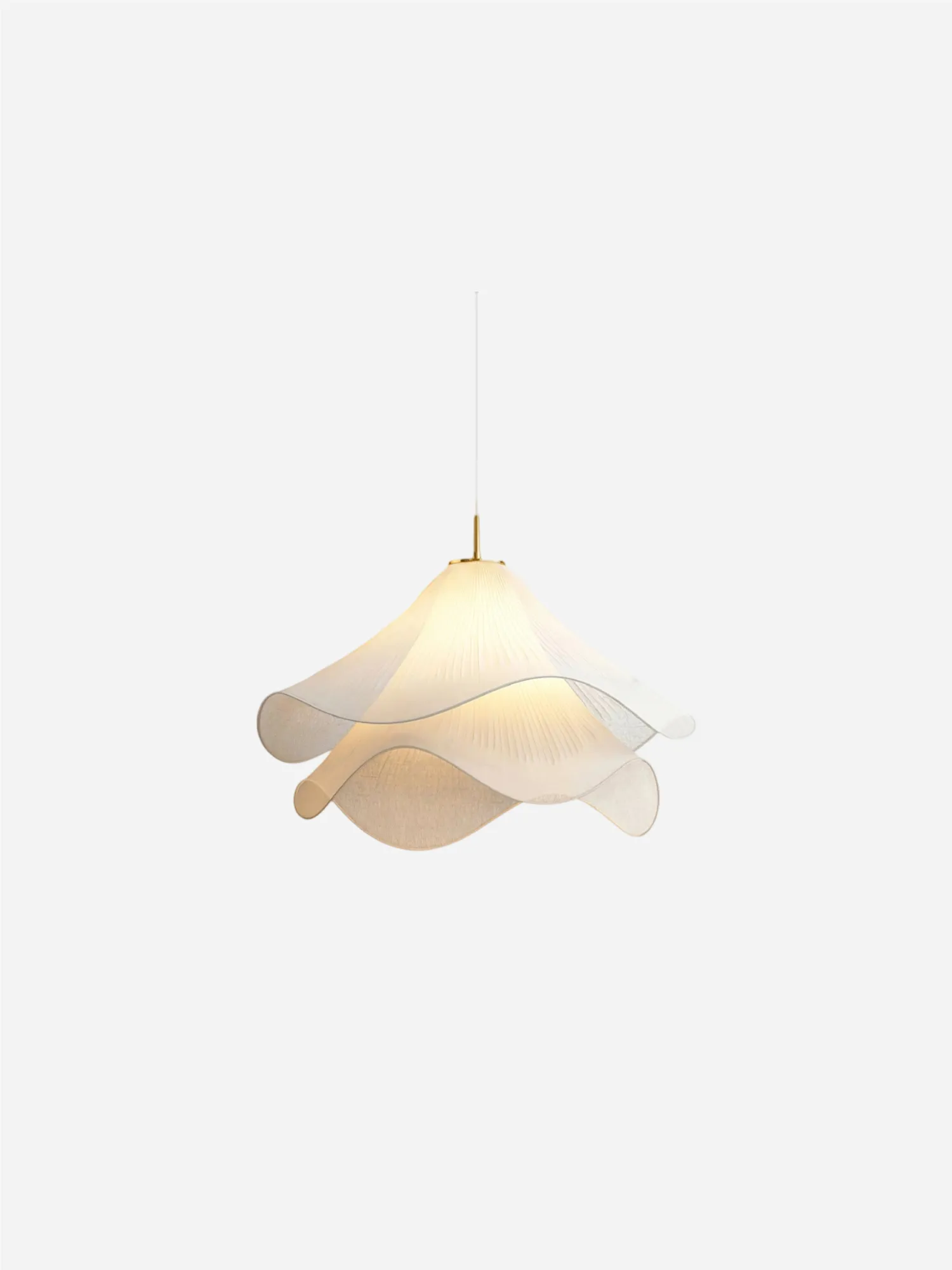
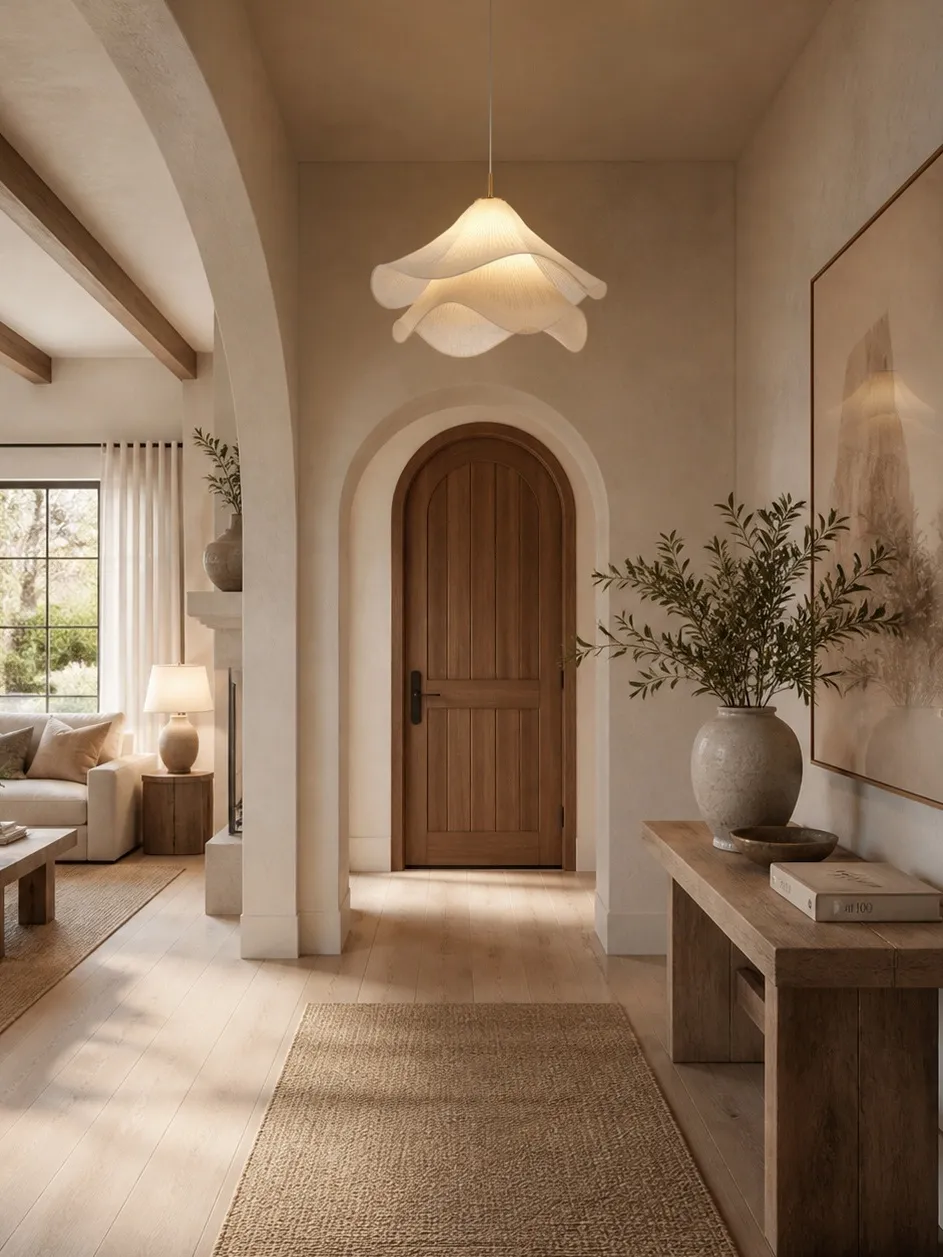
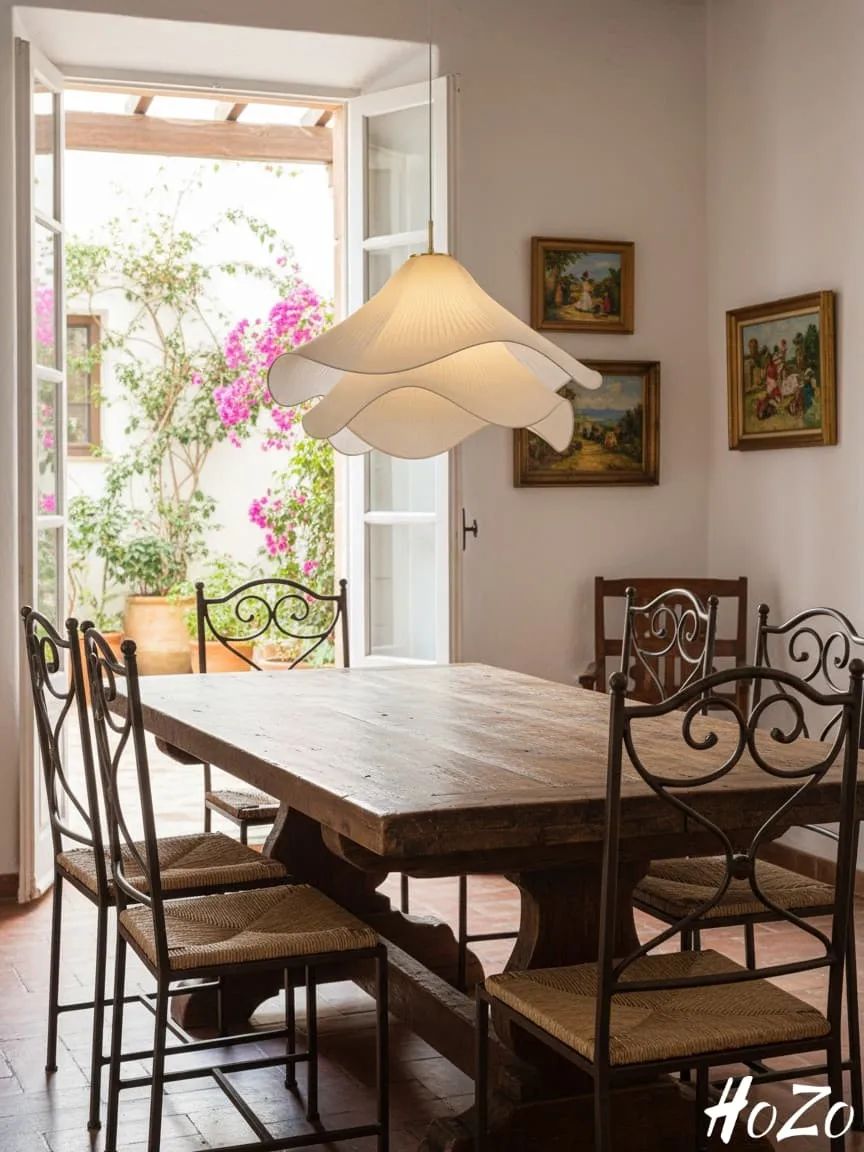
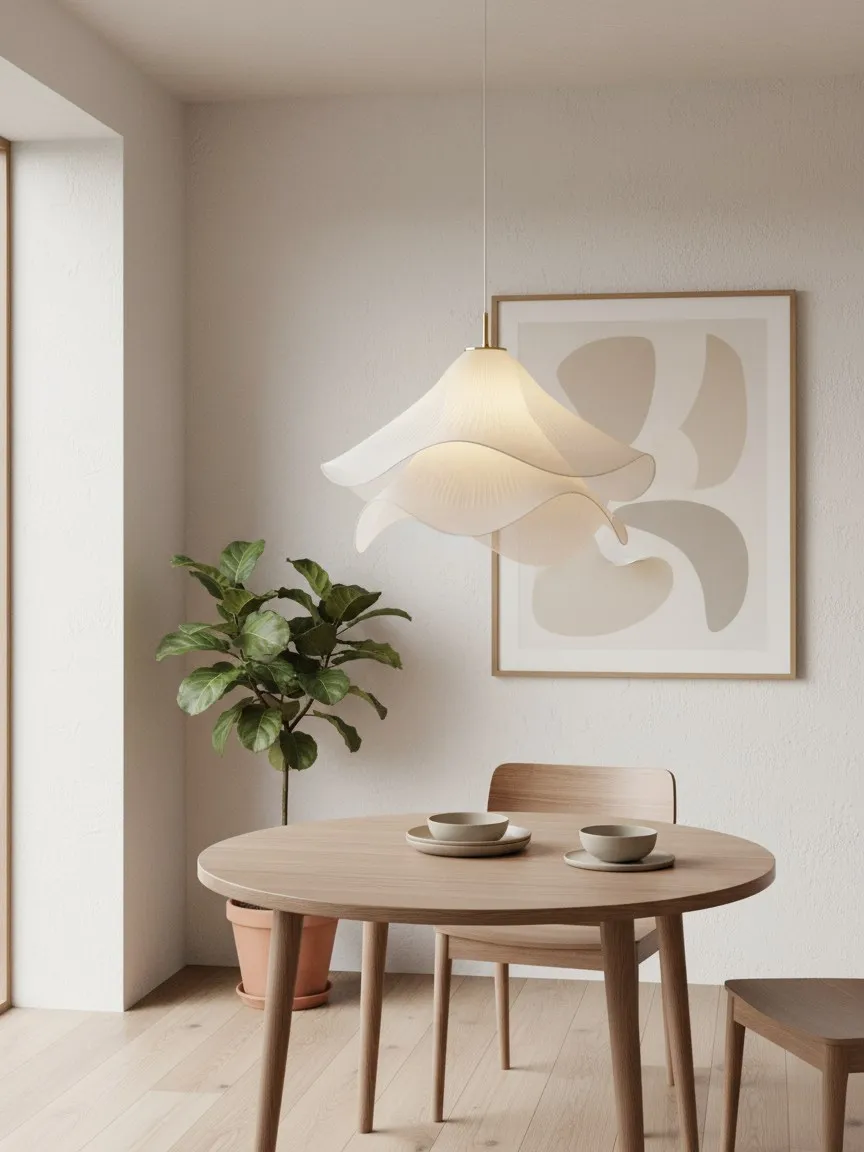
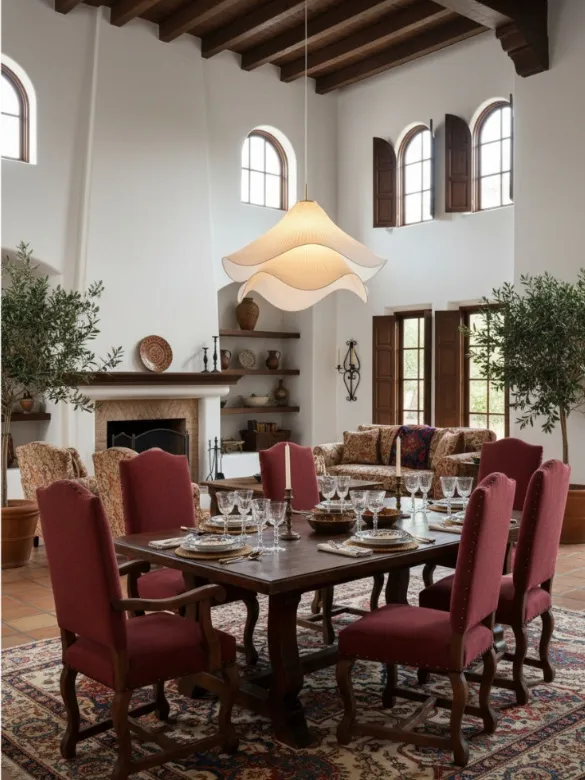
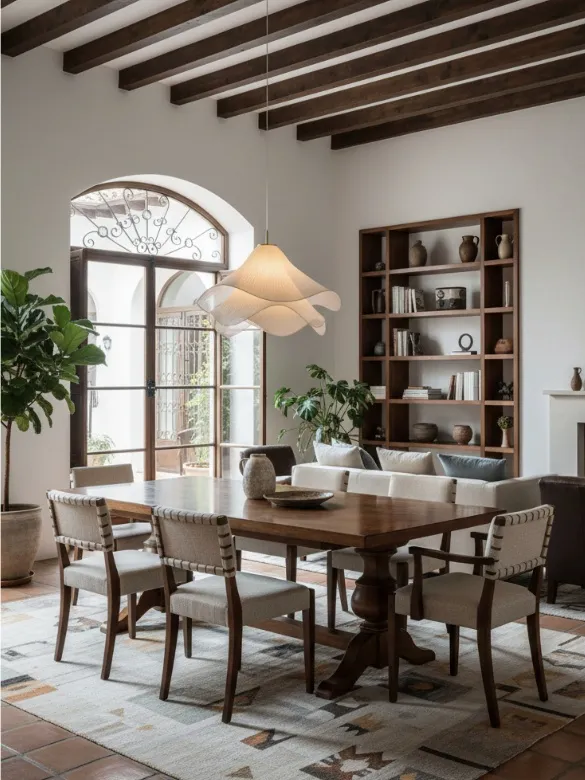
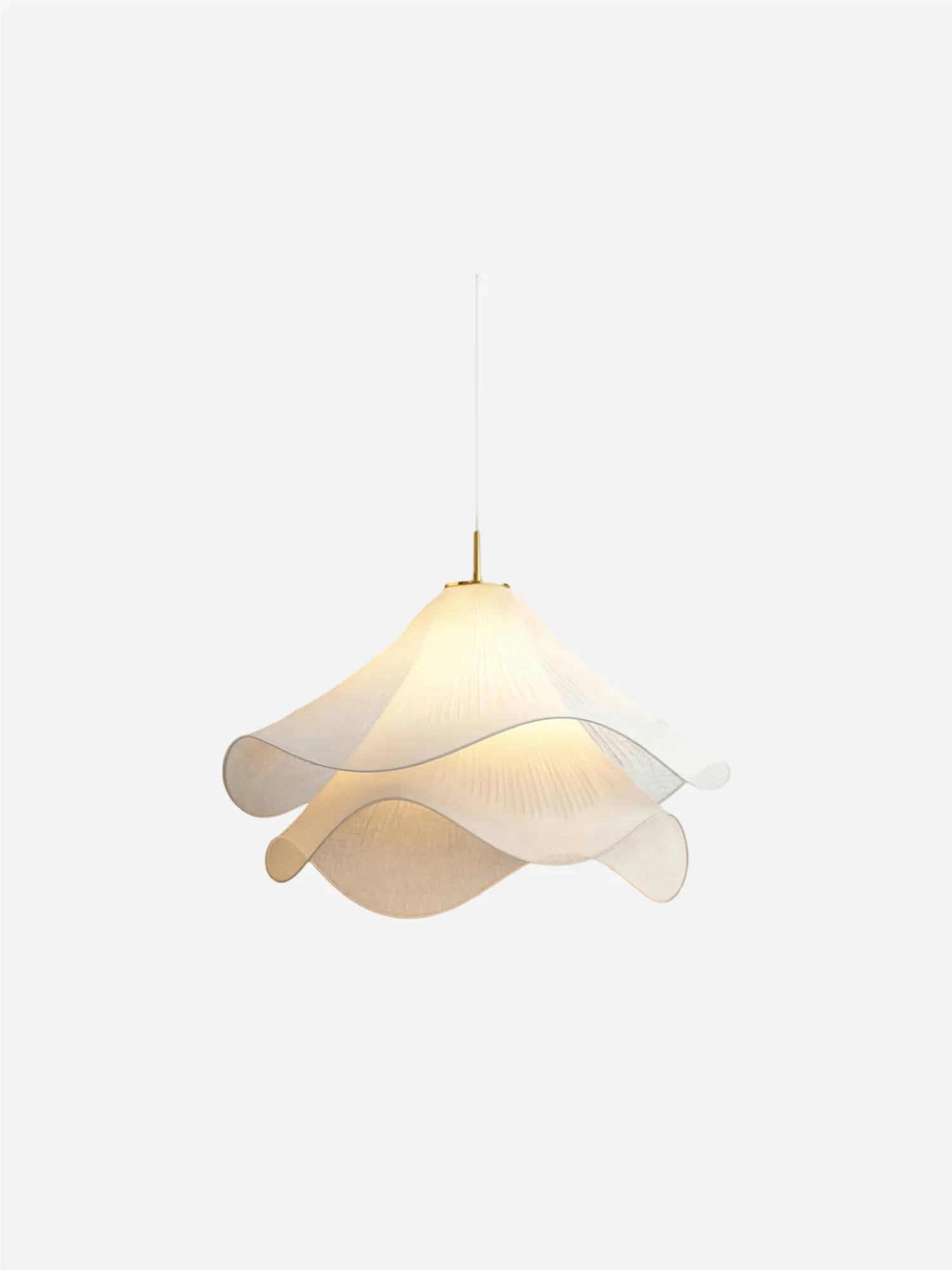
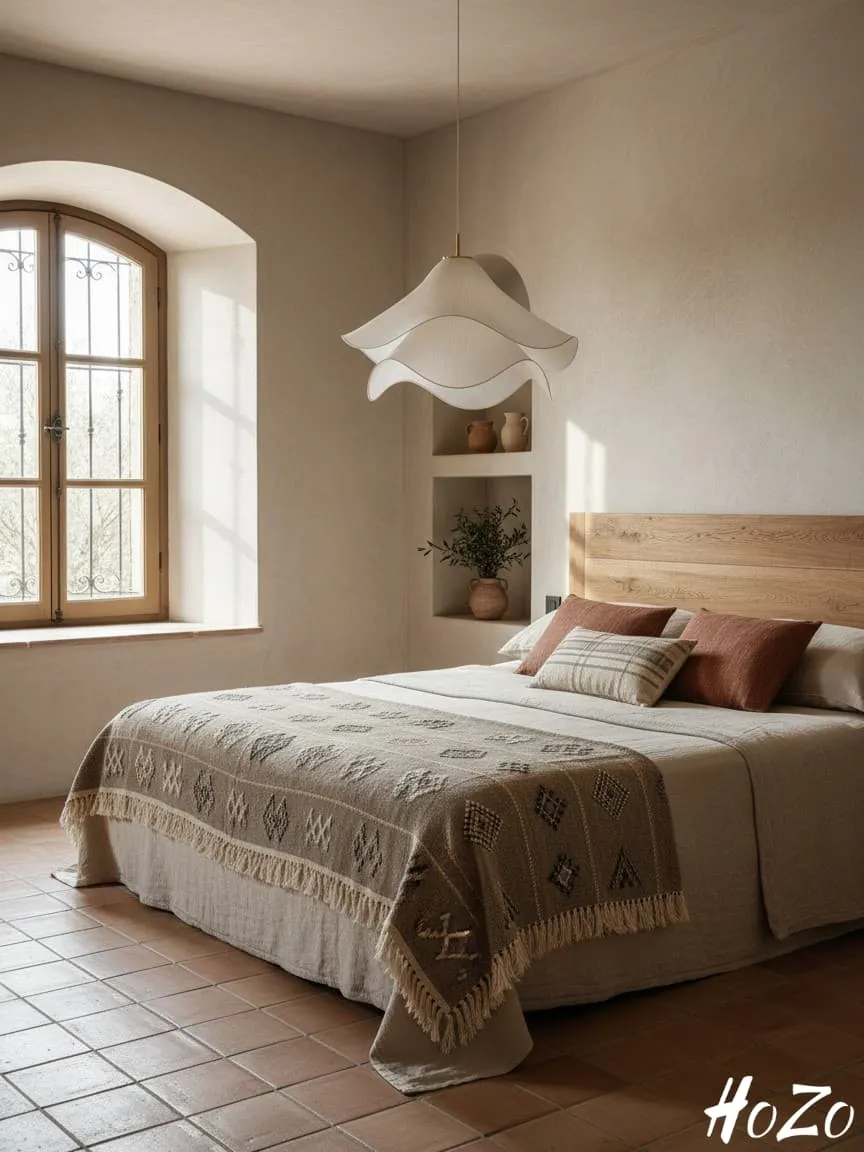
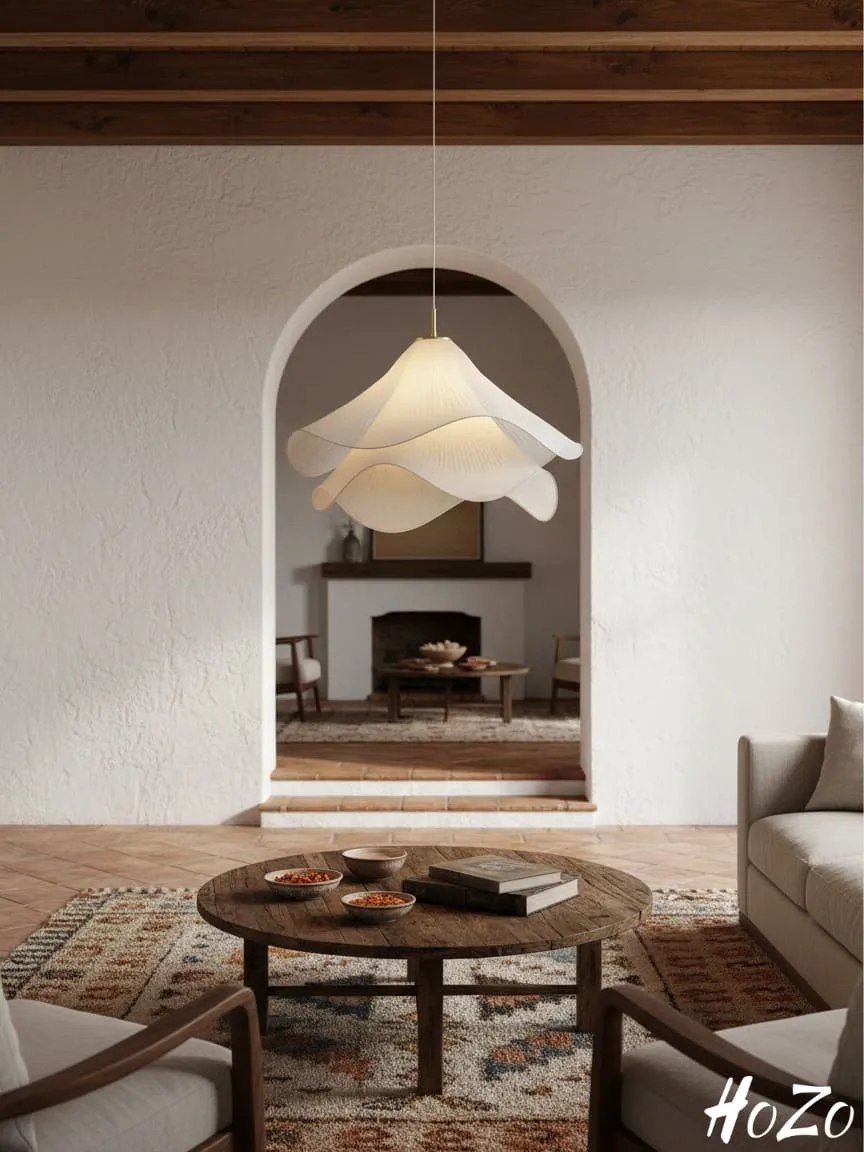
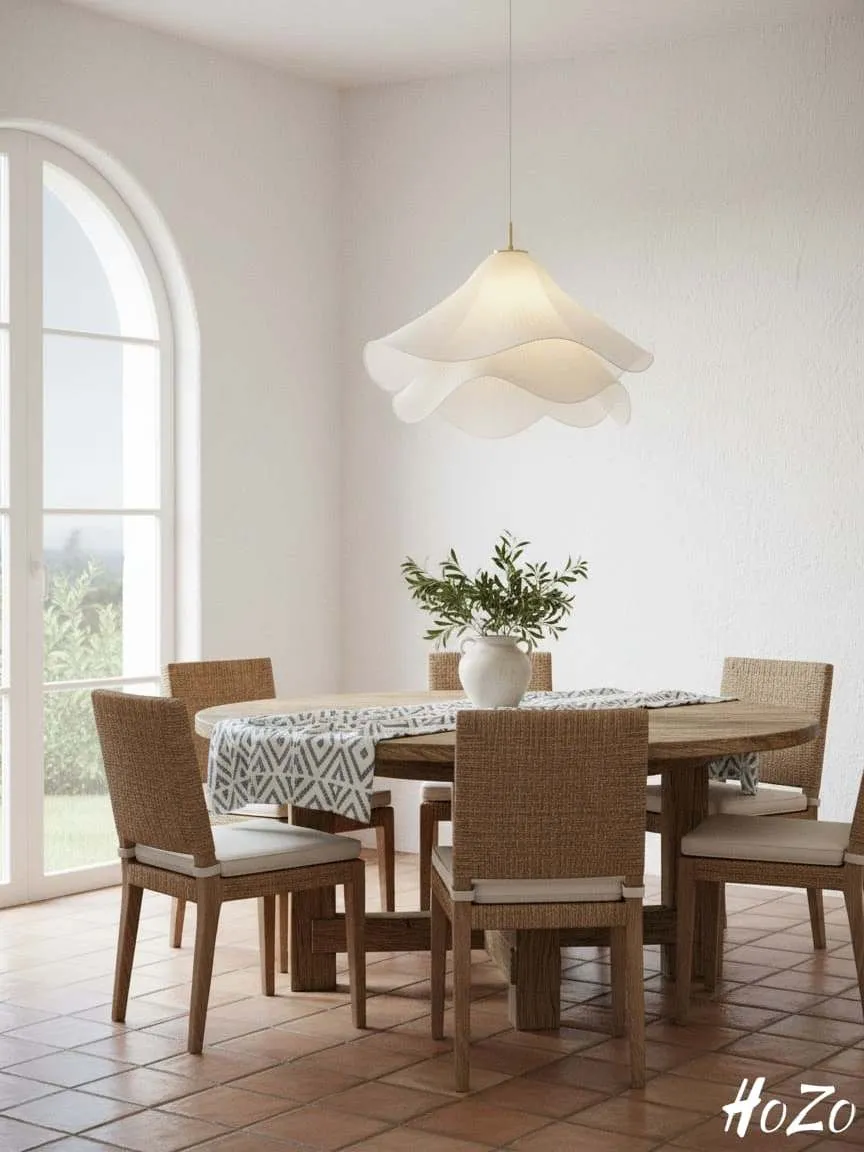
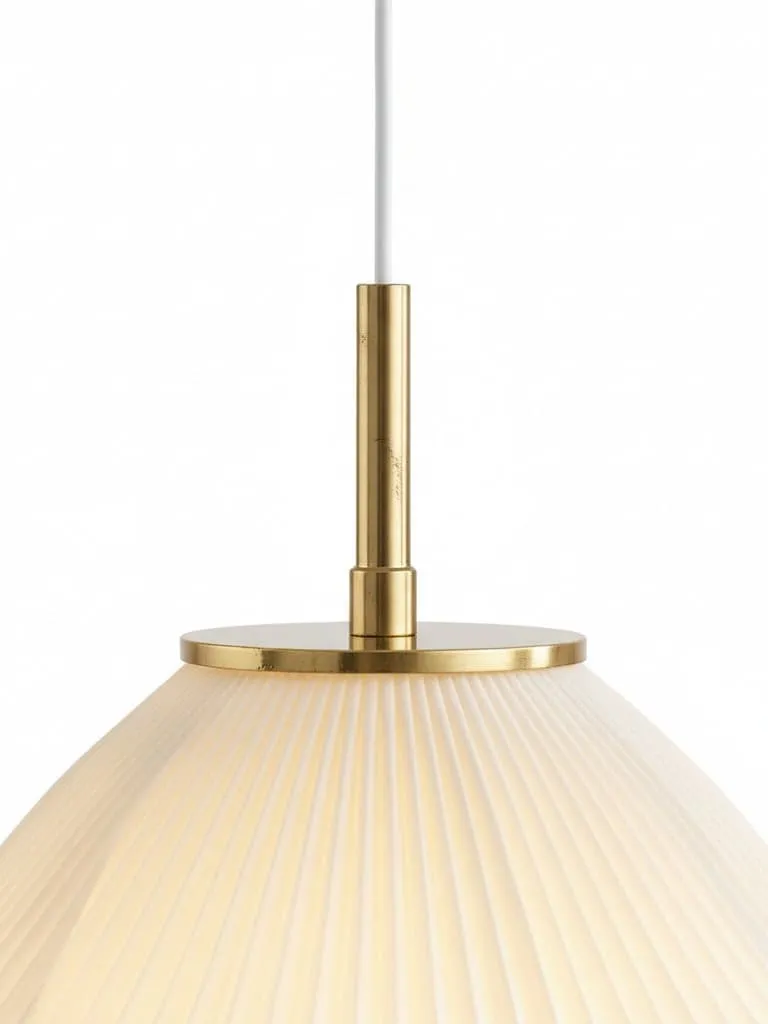
Ethereal Bloom combines pleated white fabric, gold accents, and a ceiling mount. The specifications indicate an IP20 rating for indoor use, fixed wiring, and compatibility with sloped ceilings. This information helps in deciding where to install it, but it doesn't guarantee complete glare elimination. The final experience will depend on the bulb, the height, the table, and the viewing angle.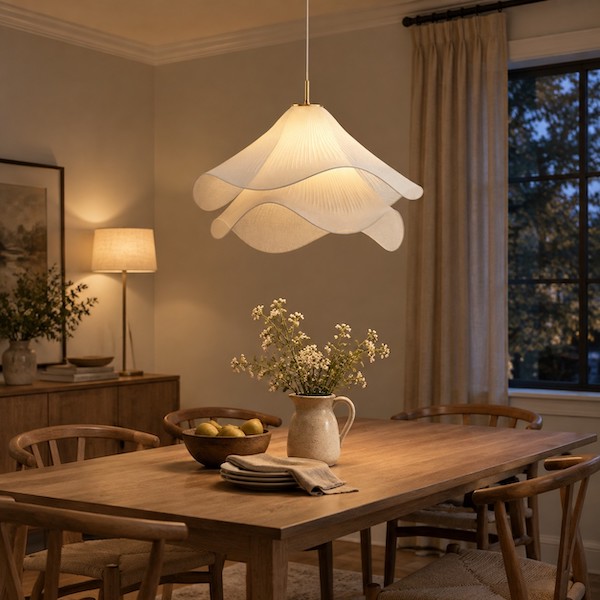
The final recommendation is to choose based on performance, not material. A well-placed pleated fabric can be more comfortable than clear glass or shiny metal. But an incorrect height or an overly bright bulb can ruin even the softest lampshade.
Frequently asked questions about glare
Does the fabric eliminate glare?
No. It can reduce the direct view of the bulb, but the aperture, wattage, and angle are still crucial.
Is an opaque screen always better?
Not necessarily. You can soften the light source, but also reduce the useful light. Find a balance between comfort and light quantity.
Which light bulb is suitable for a pleated lampshade?
Choose an LED bulb that fits the socket, has a diffuser, and provides the appropriate lumens for the task. Avoid choosing based solely on wattage.
Should I lower the lamp to have more light?
Not as a first solution. Check eye level, line of sight, and the possibility of improving the light bulb or ambient light.