Dining Table Pendant Lighting: Get the Height, Scale and Light Right Together
Good dining table pendant lighting is not created by choosing one impressive shade and hoping it fits. Height controls faces and sightlines, width controls proportion, and bulb output controls whether the table feels comfortable after dark. Treat those three decisions as one system. Start with the table, test the lowest edge at seated eye level, and choose brightness by lumens rather than by an old watt habit.
Make One Measurement Sheet Before Shopping
Record six facts: tabletop length and width or diameter, ceiling height, tabletop height, the electrical point, the tallest regular user's seated eye line, and the distance from the table to nearby doors or circulation routes. Add the pendant's overall diameter, shade depth, canopy size, cord range, lamp holder and maximum wattage. This prevents a common buying mistake: checking the room dimensions while ignoring the fixture dimensions.
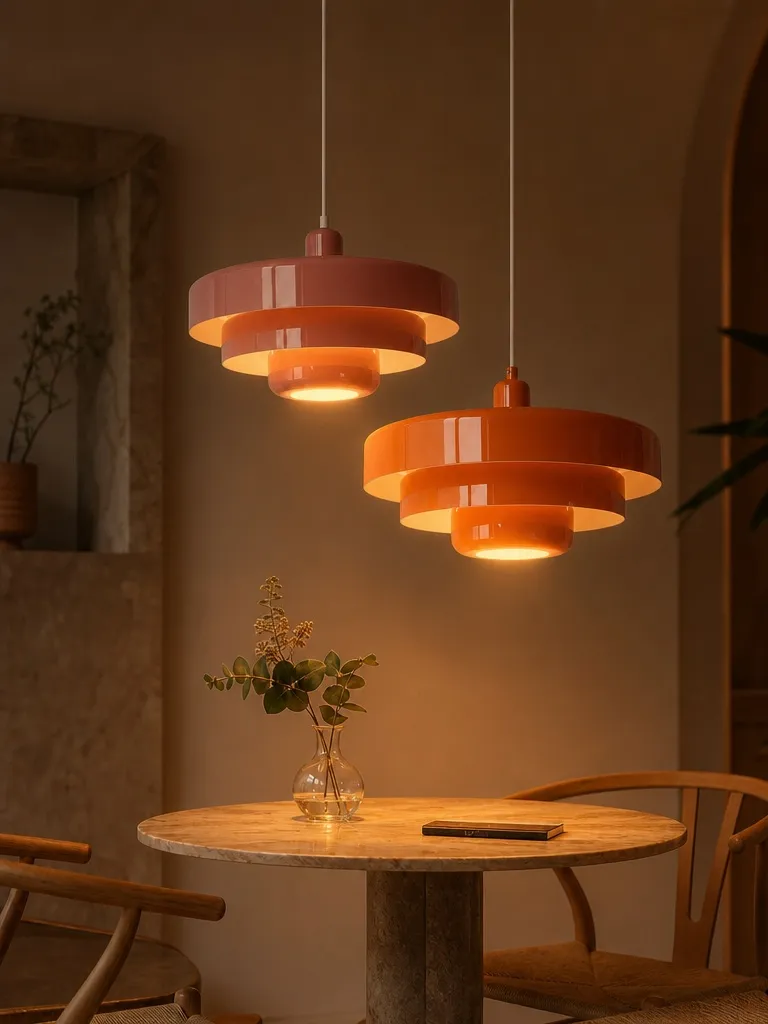
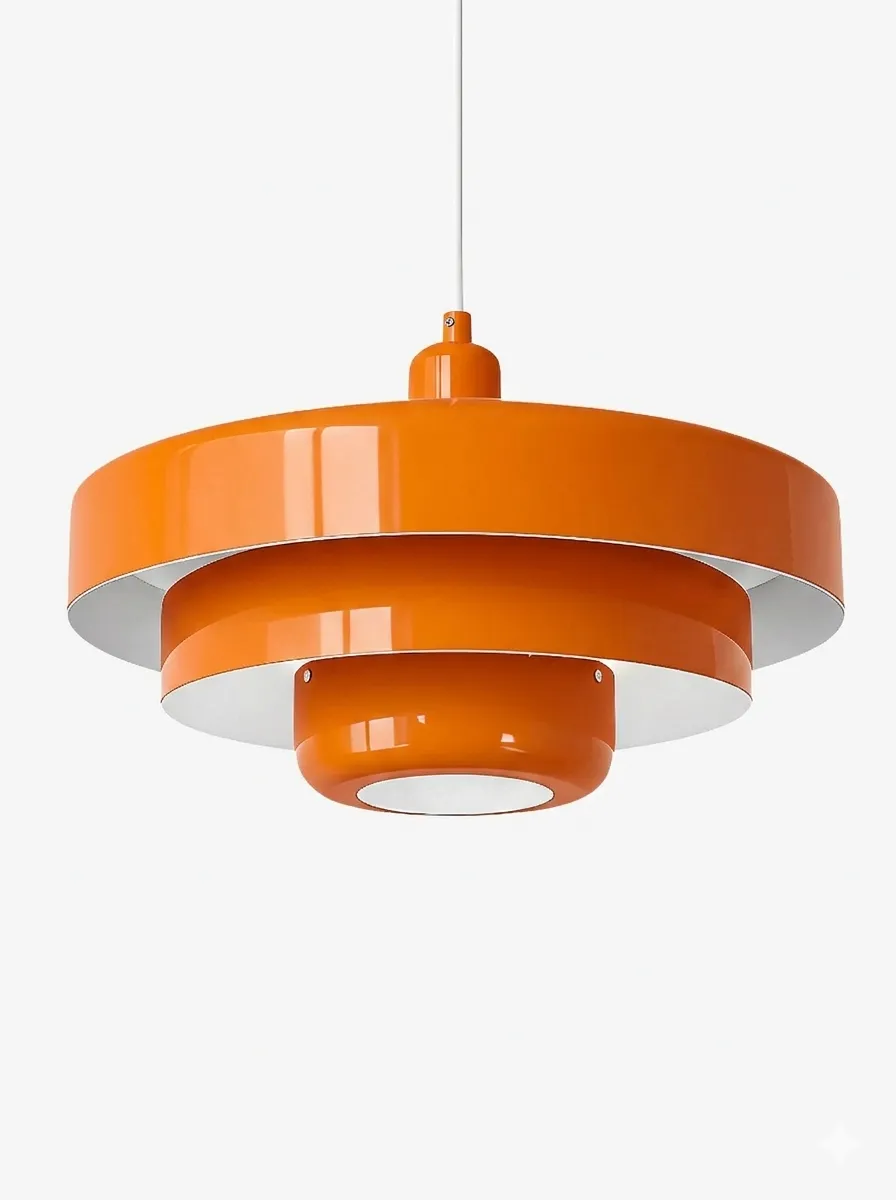
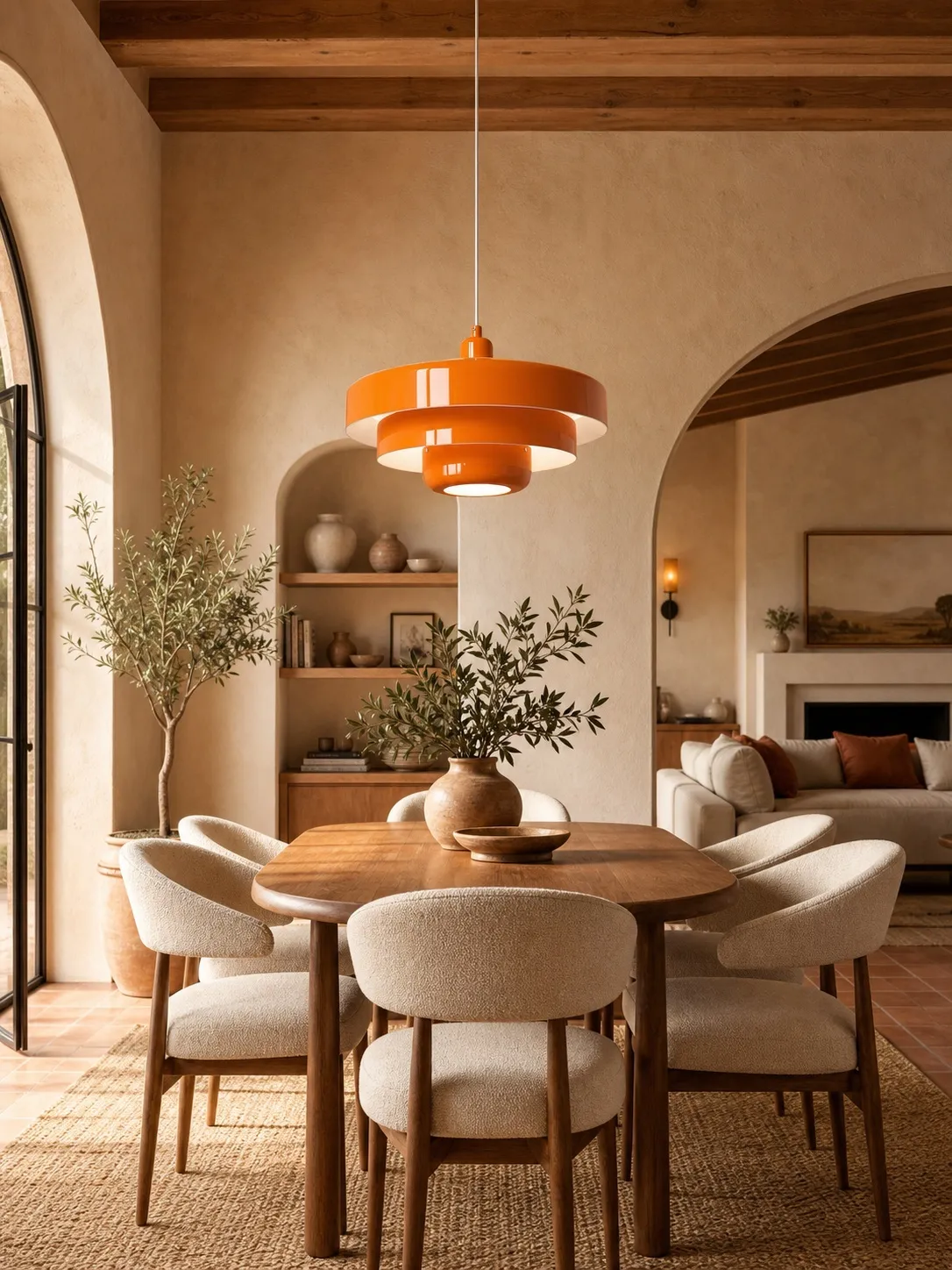
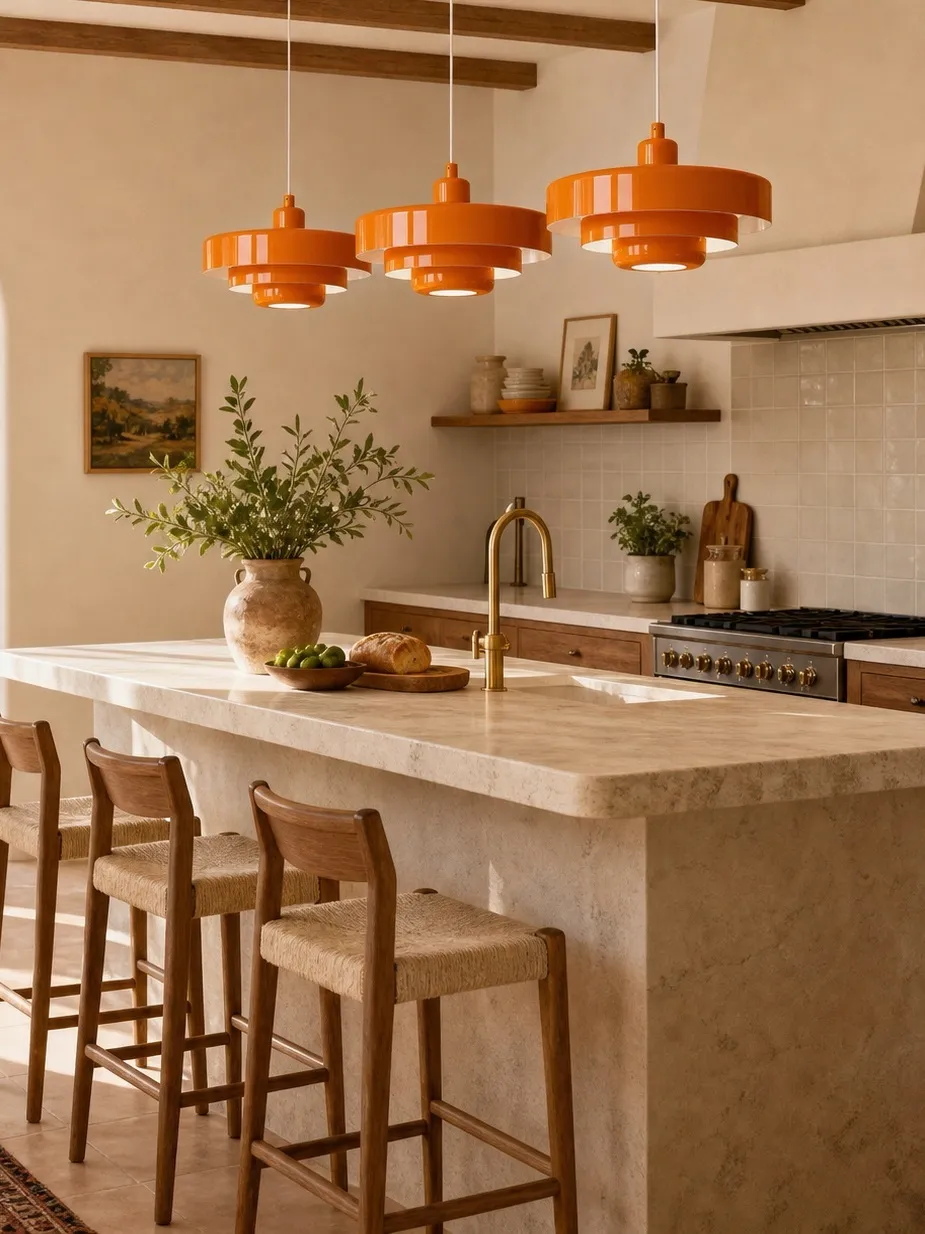
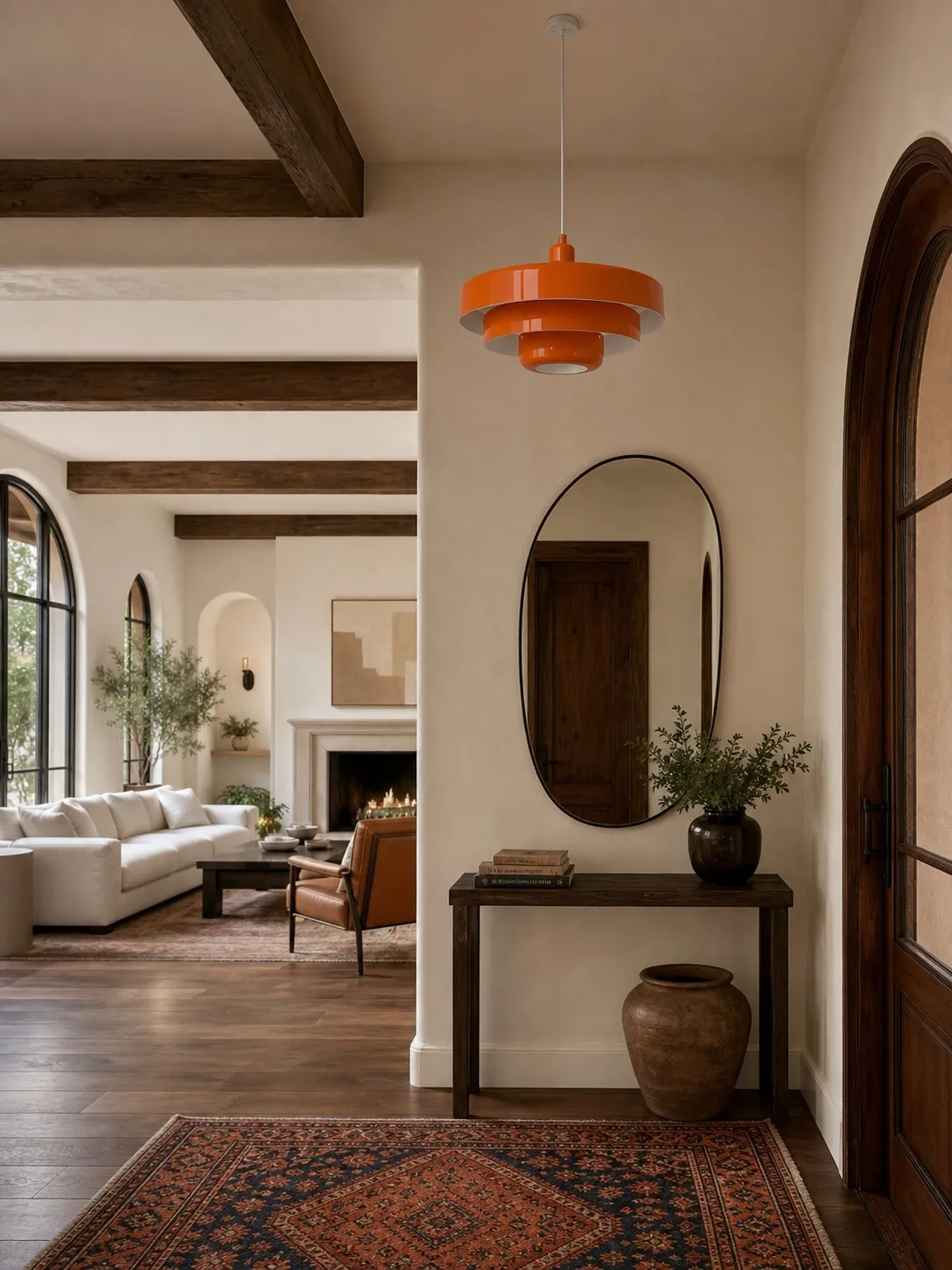
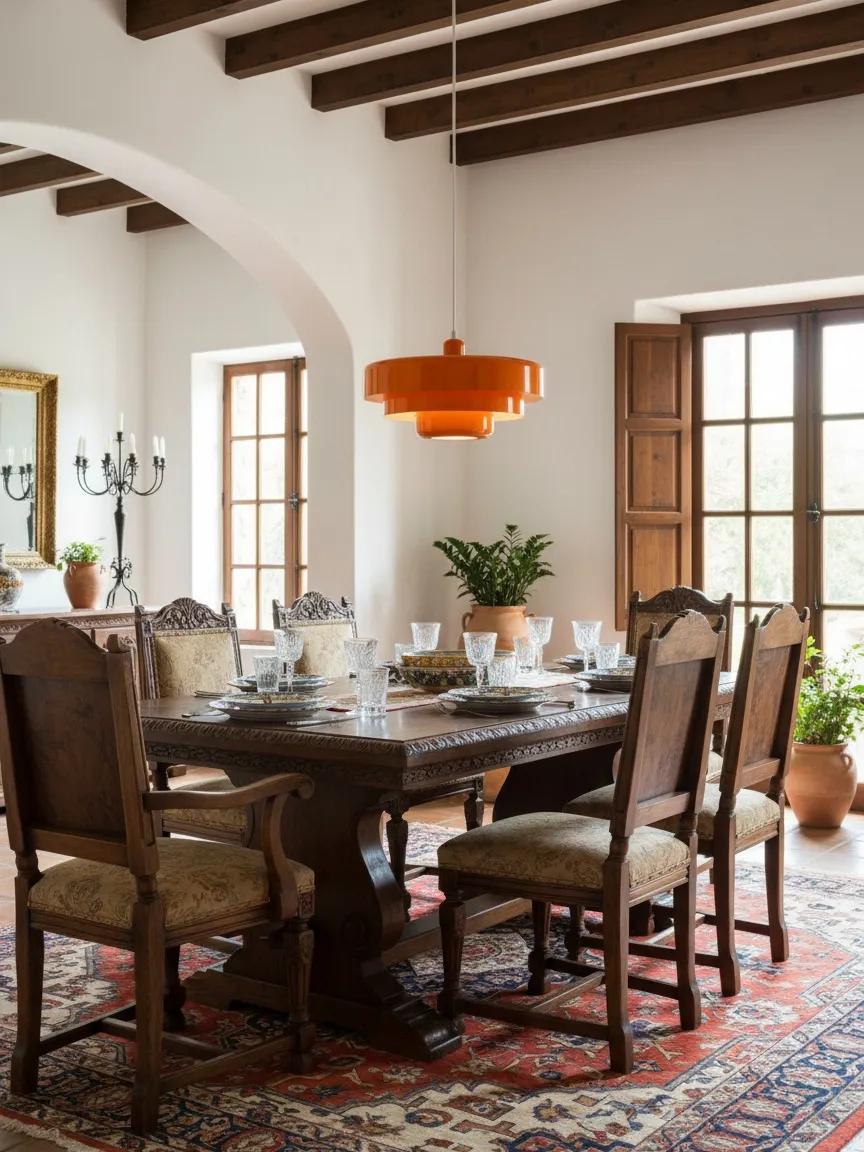
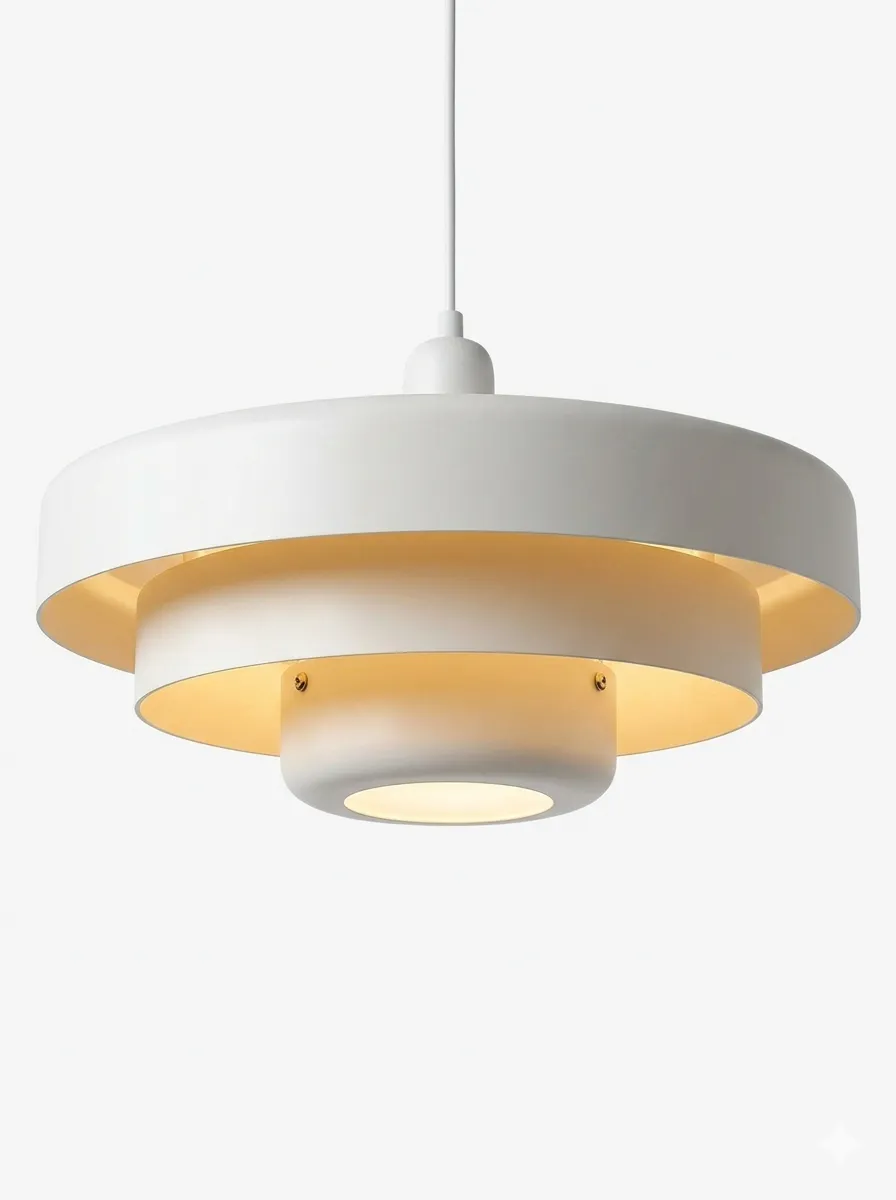
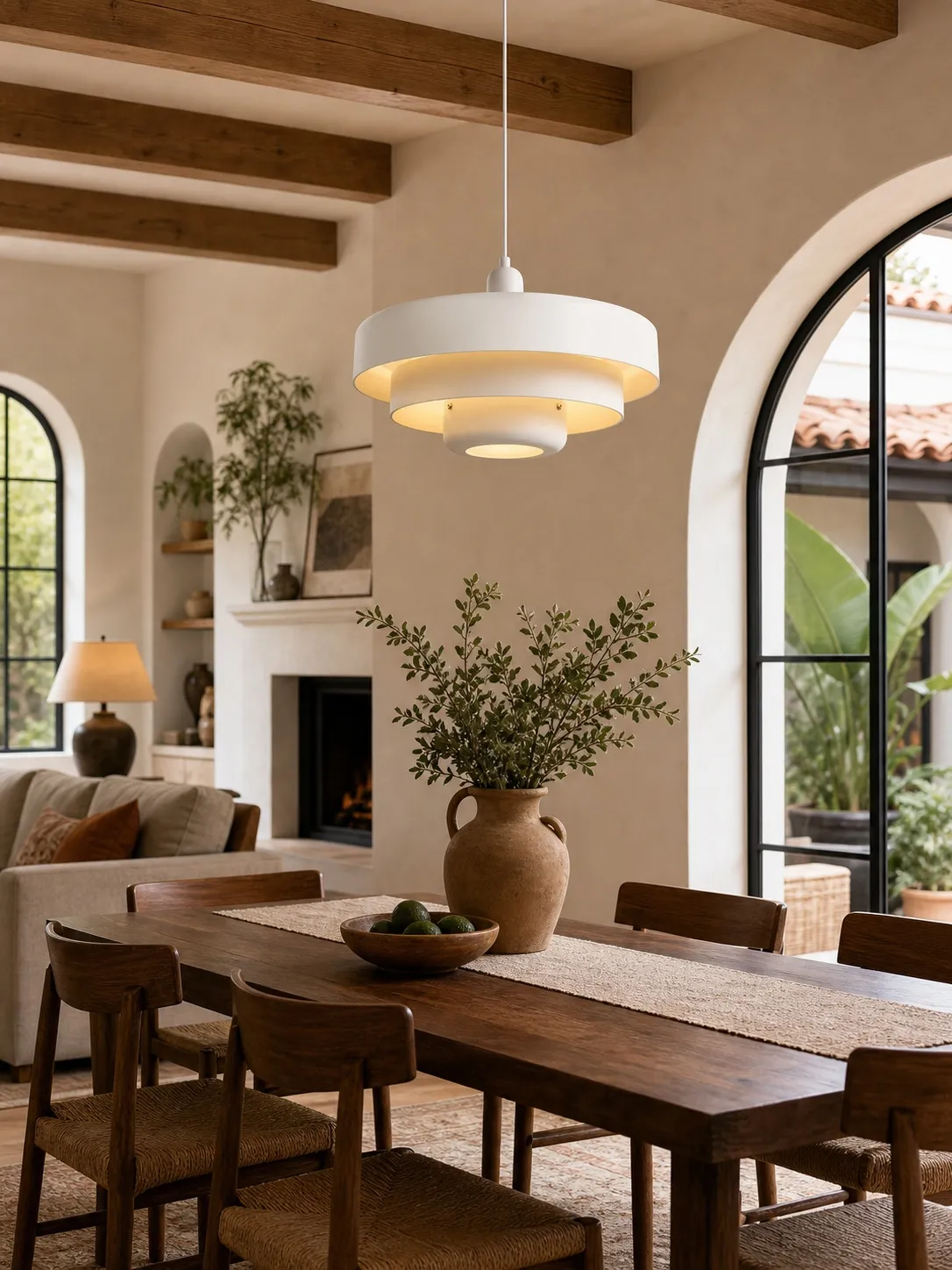
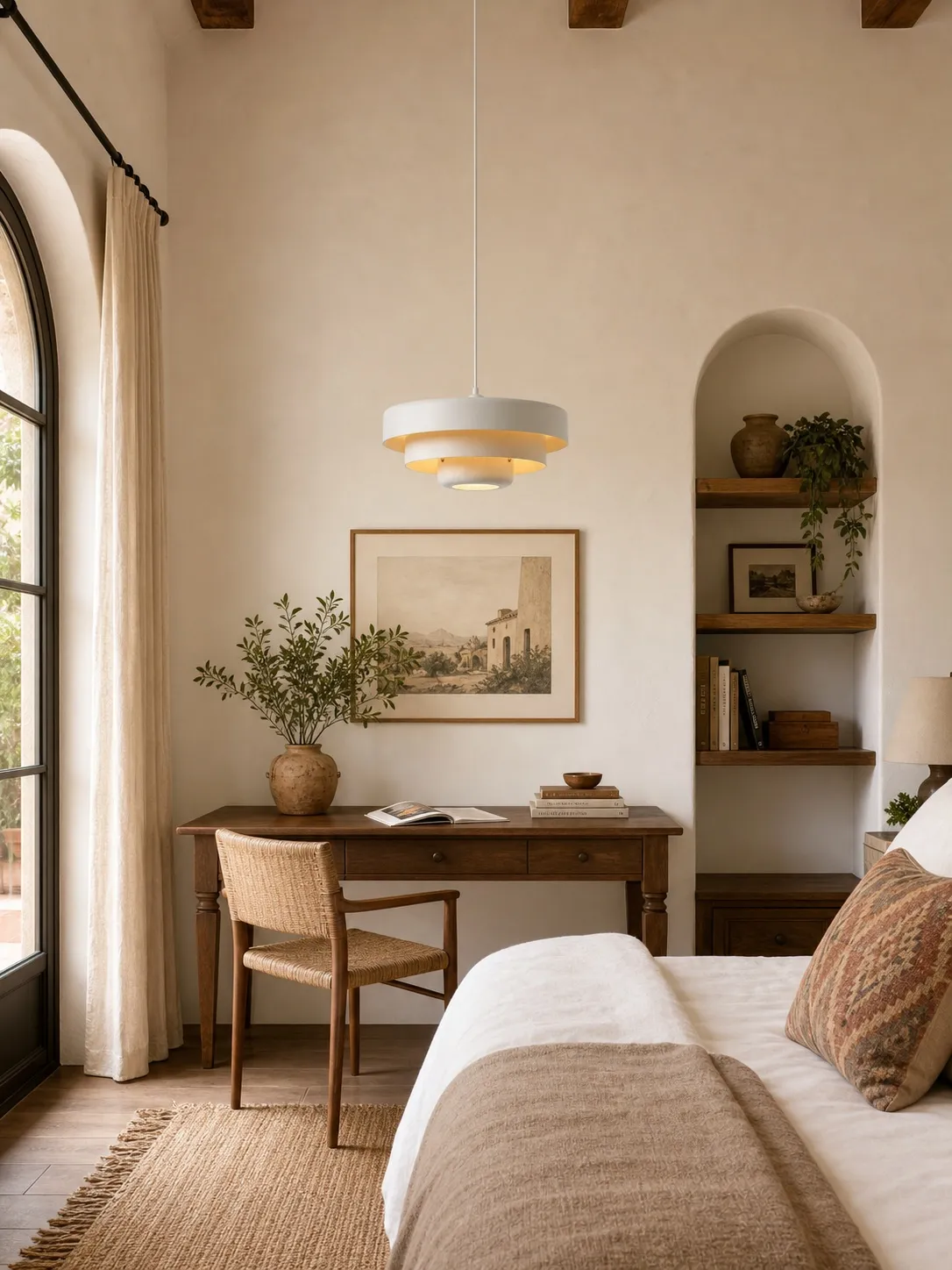
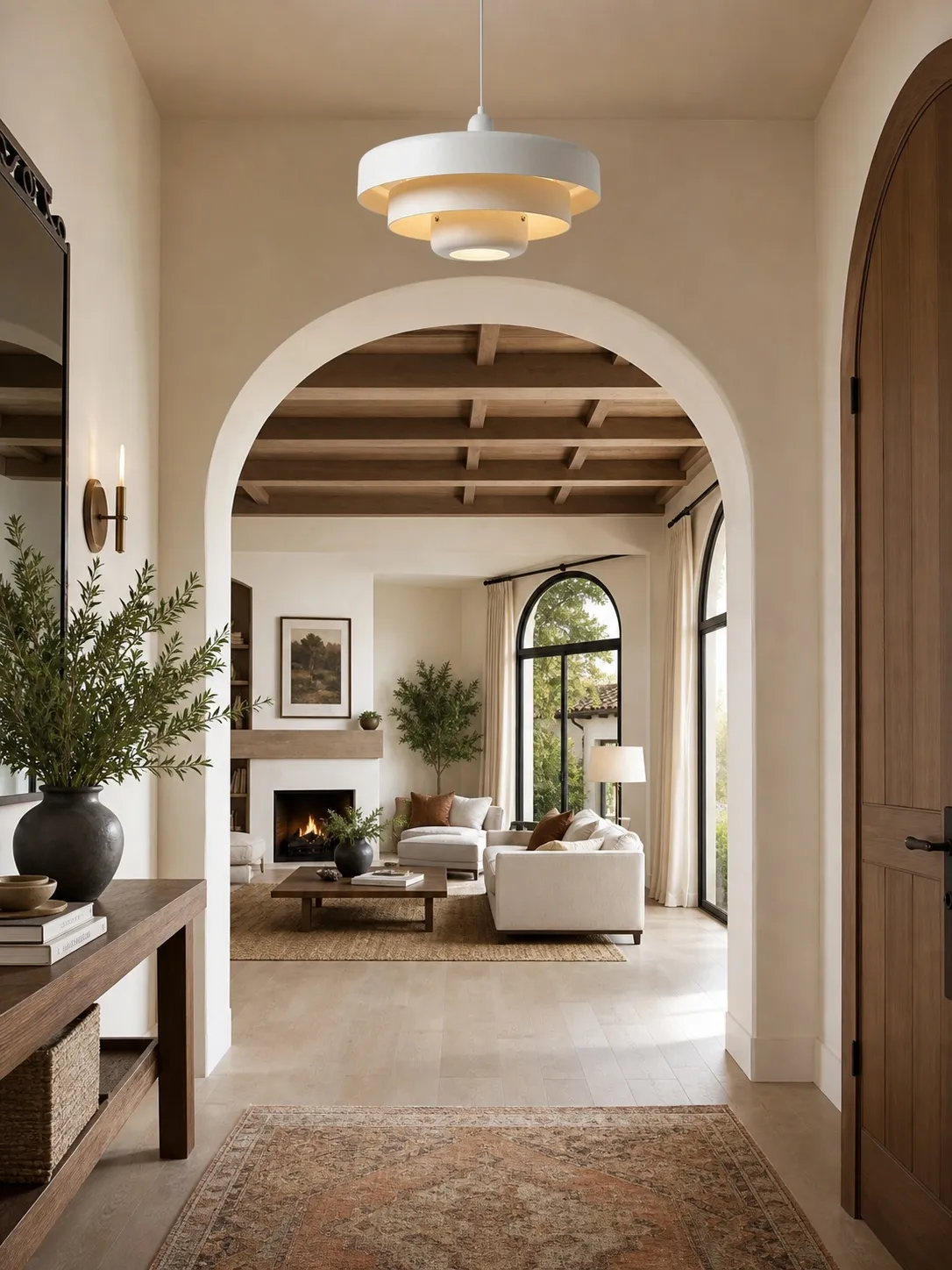
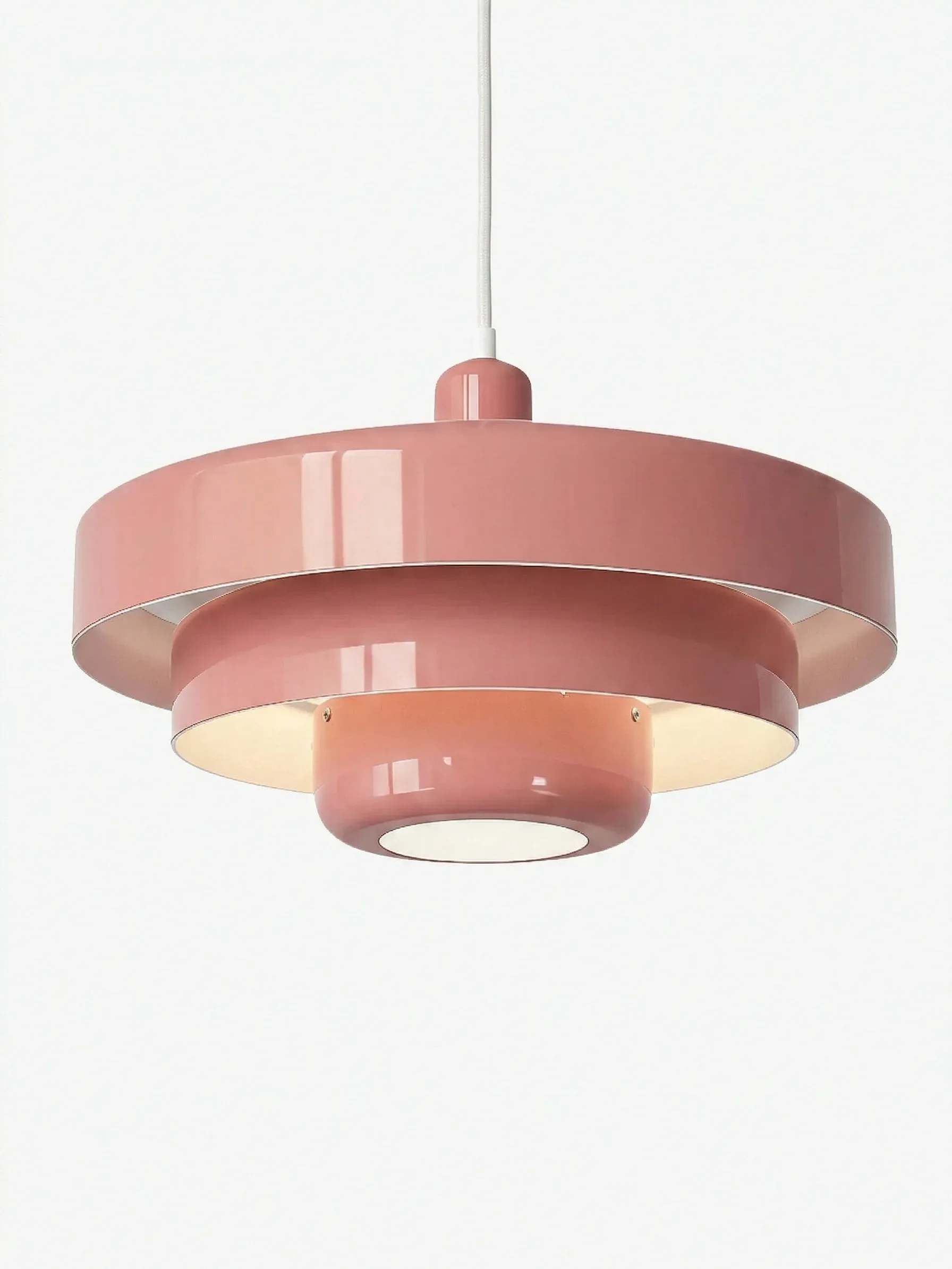
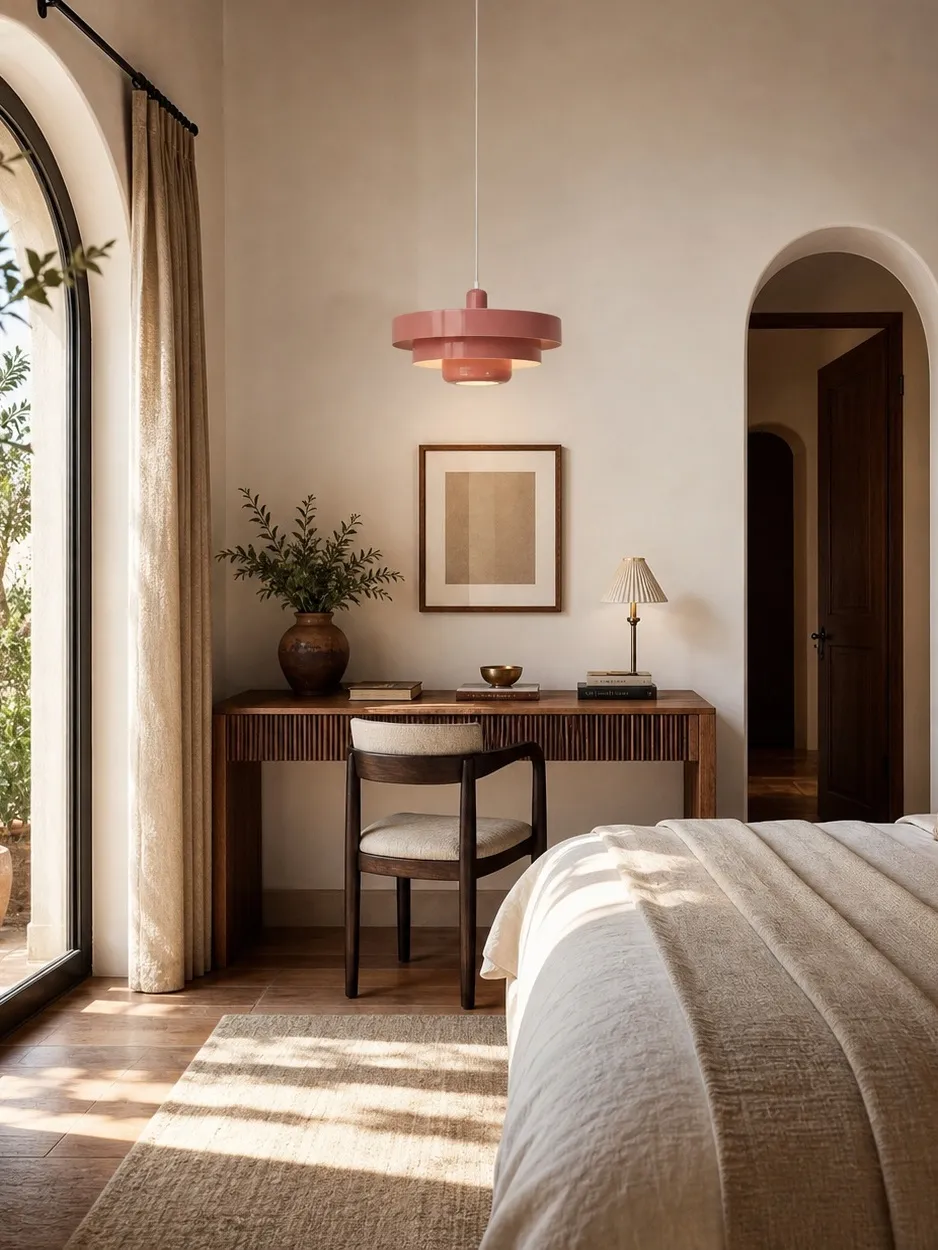
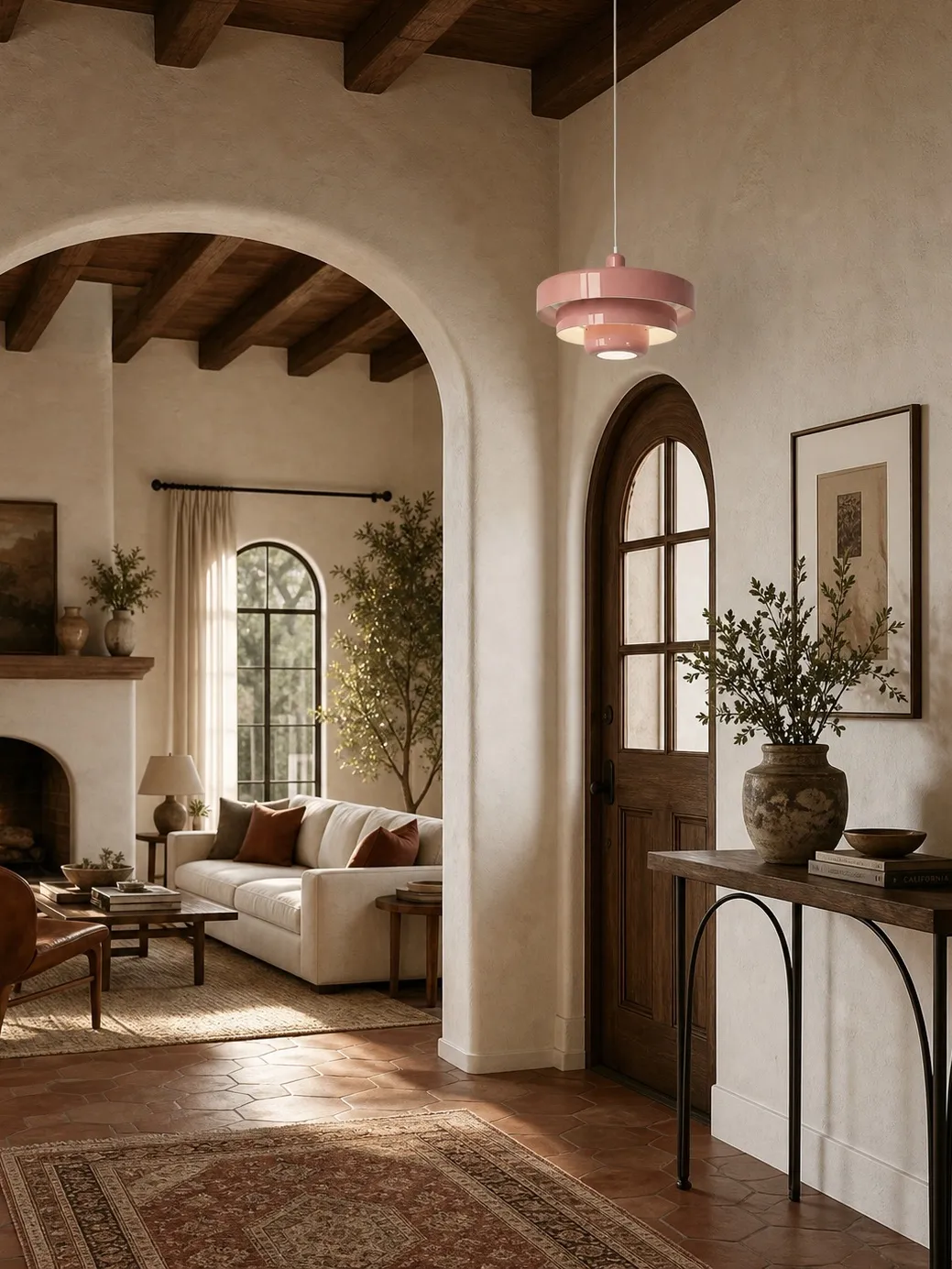
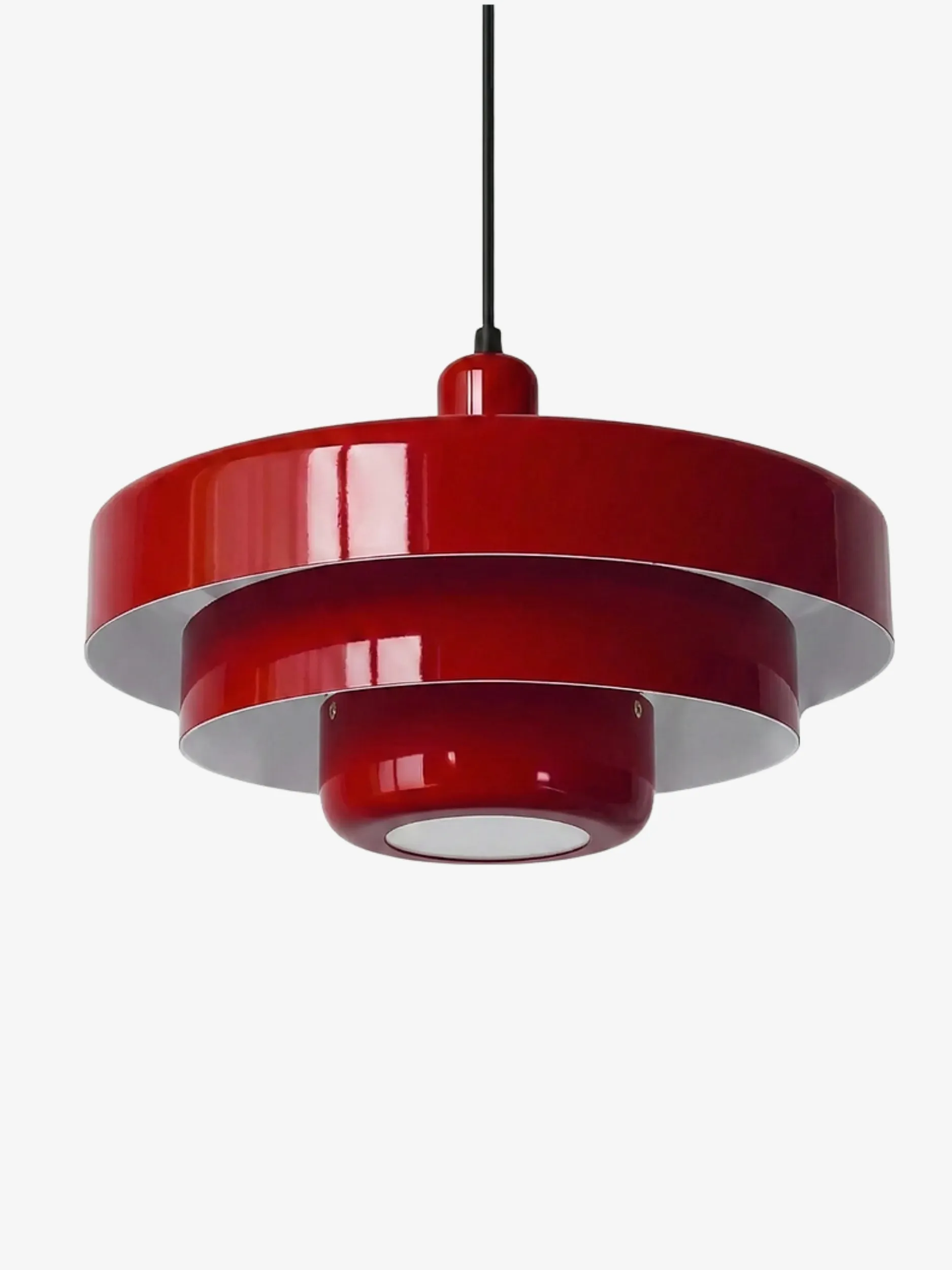
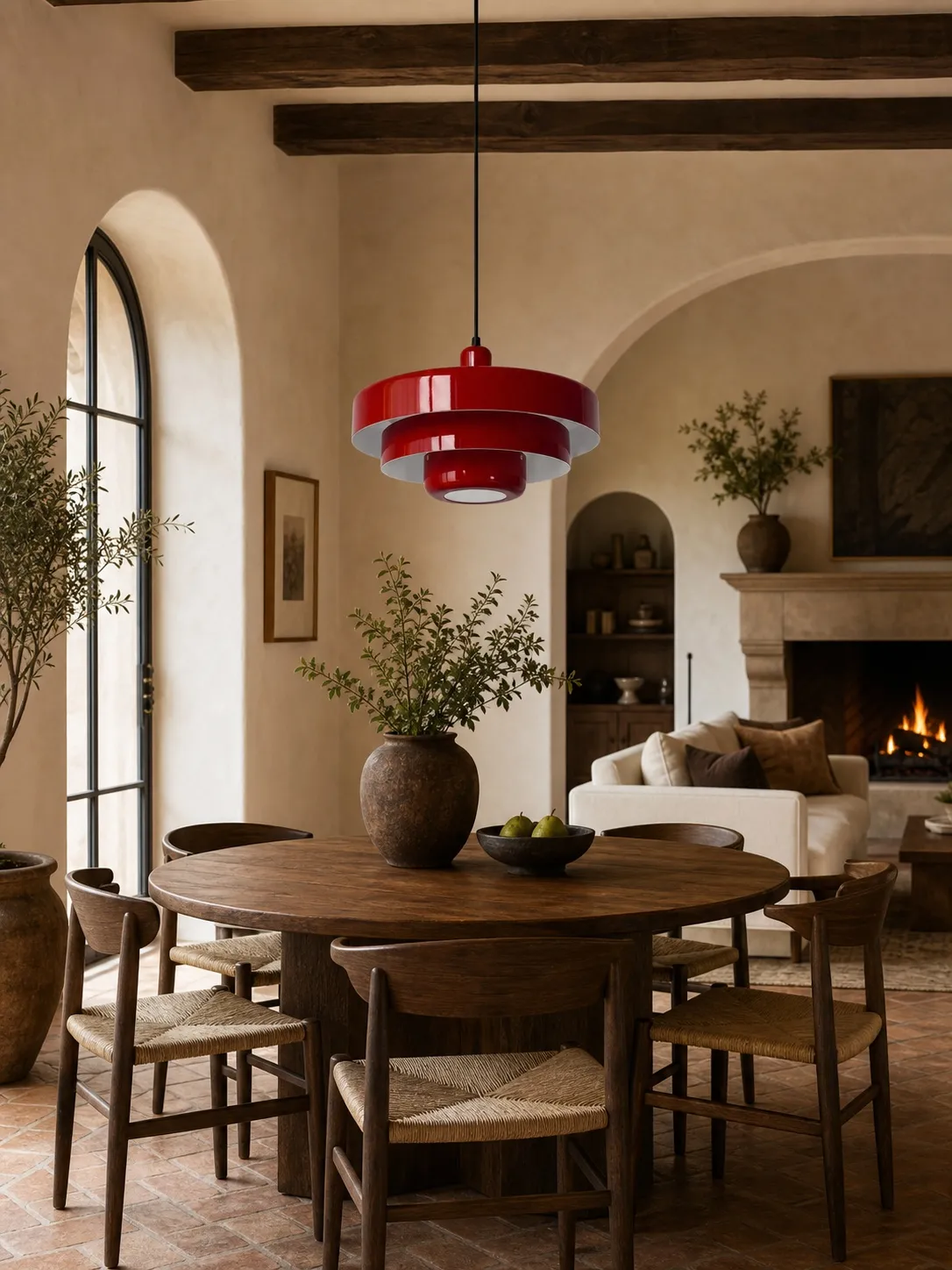
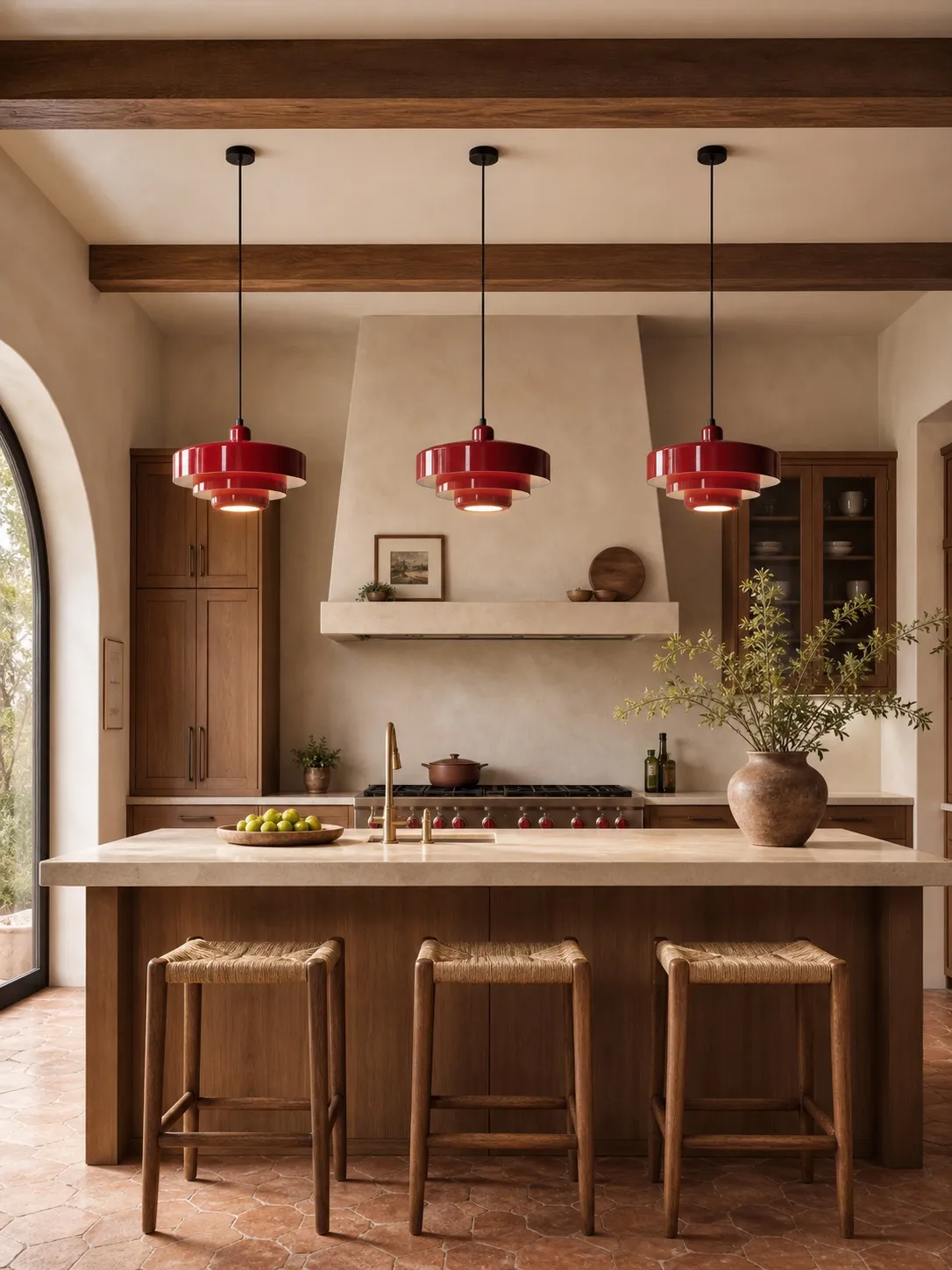
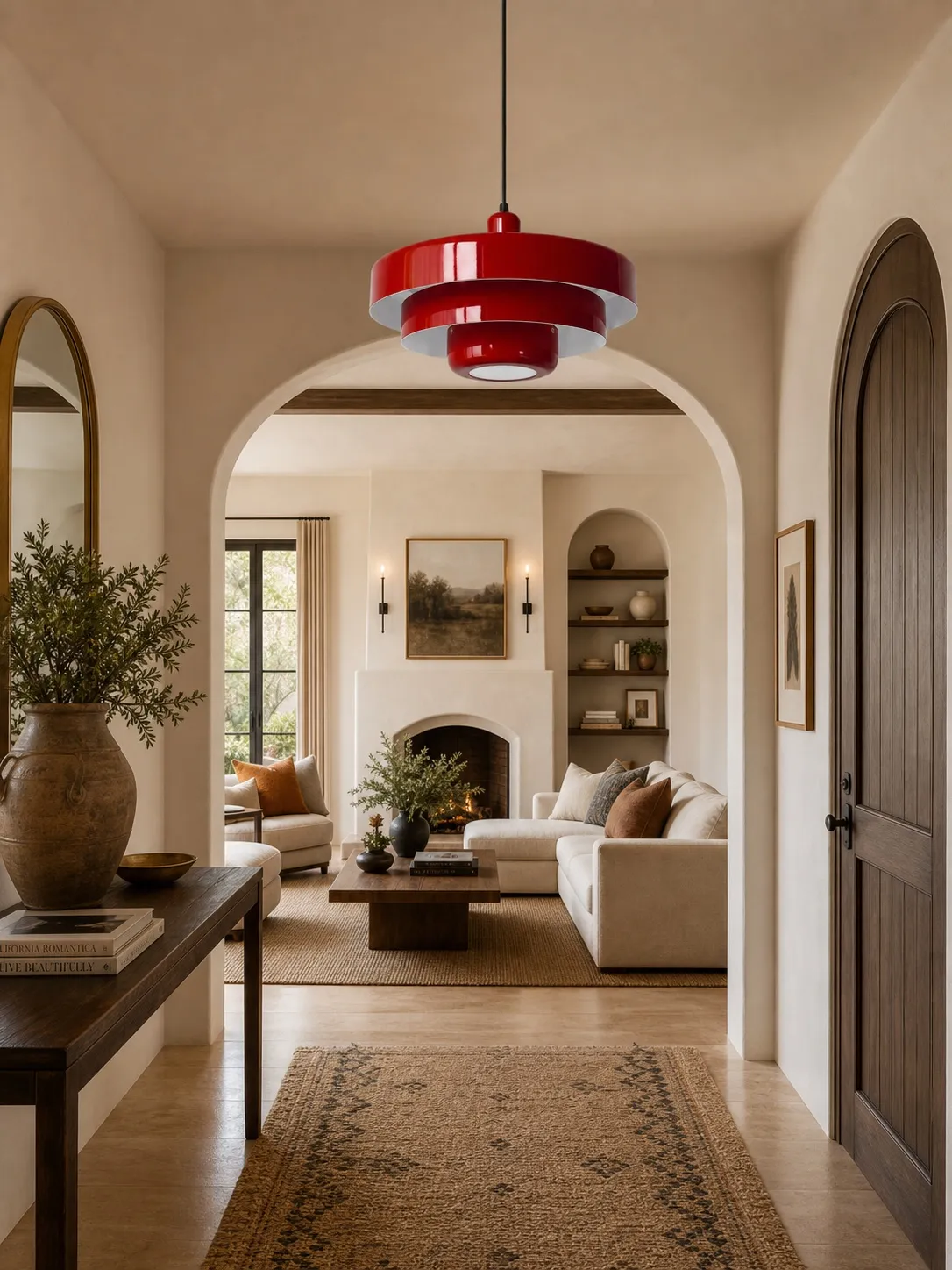
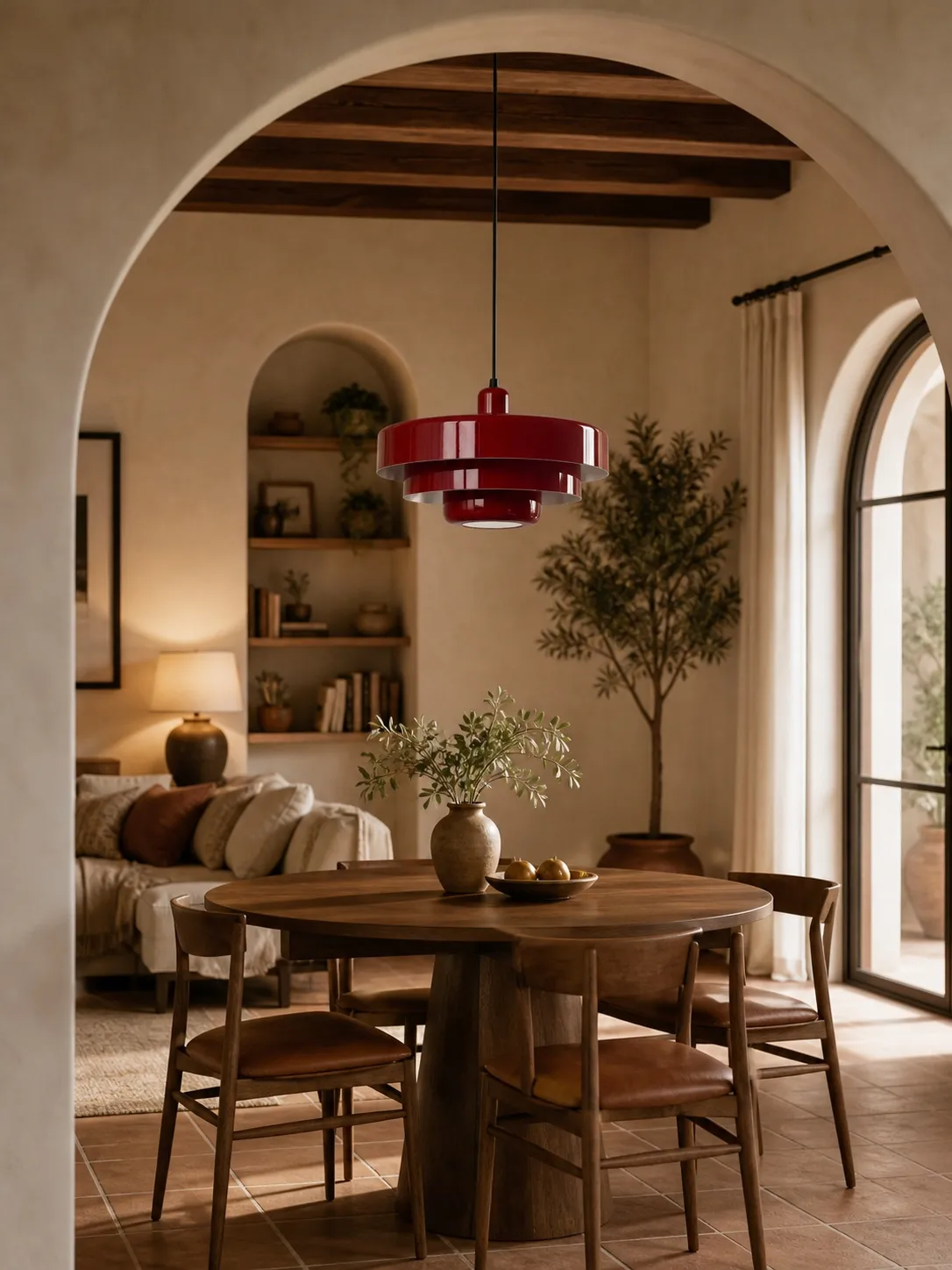
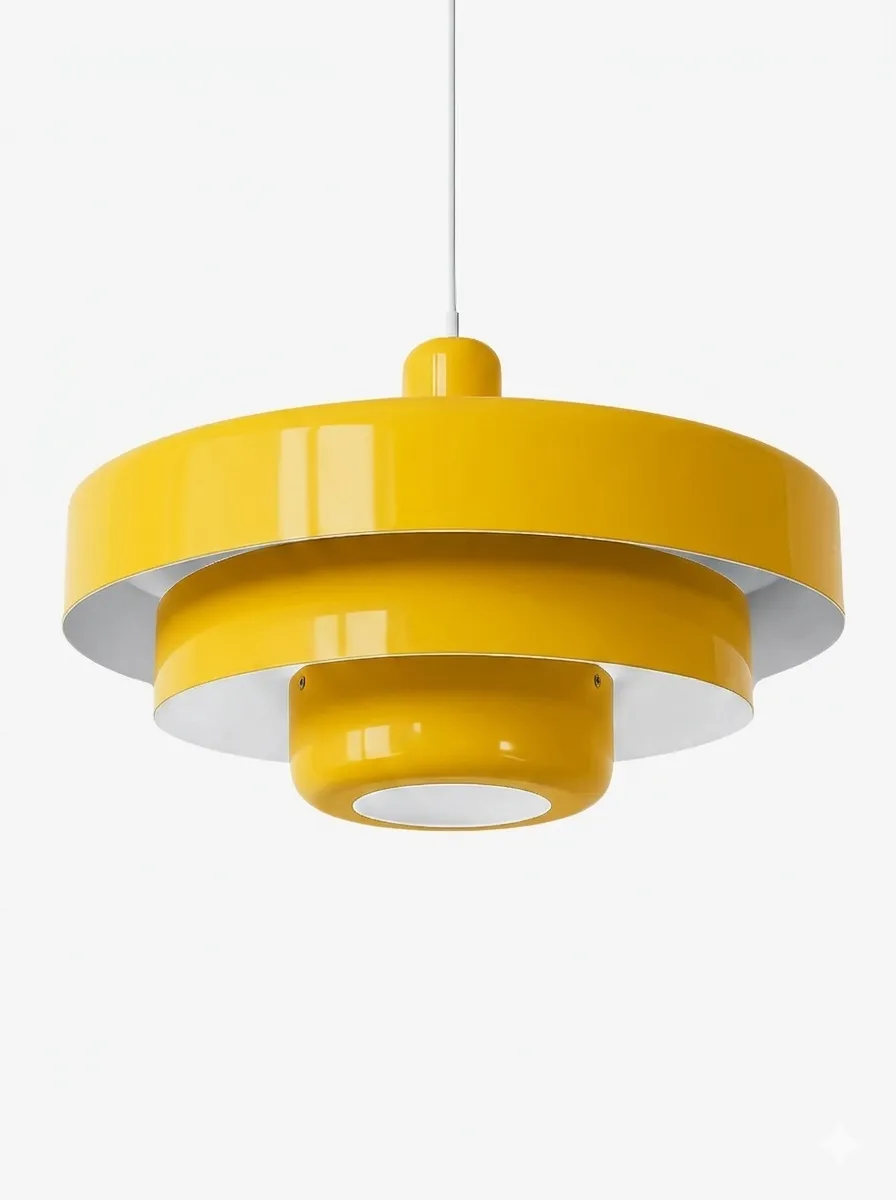
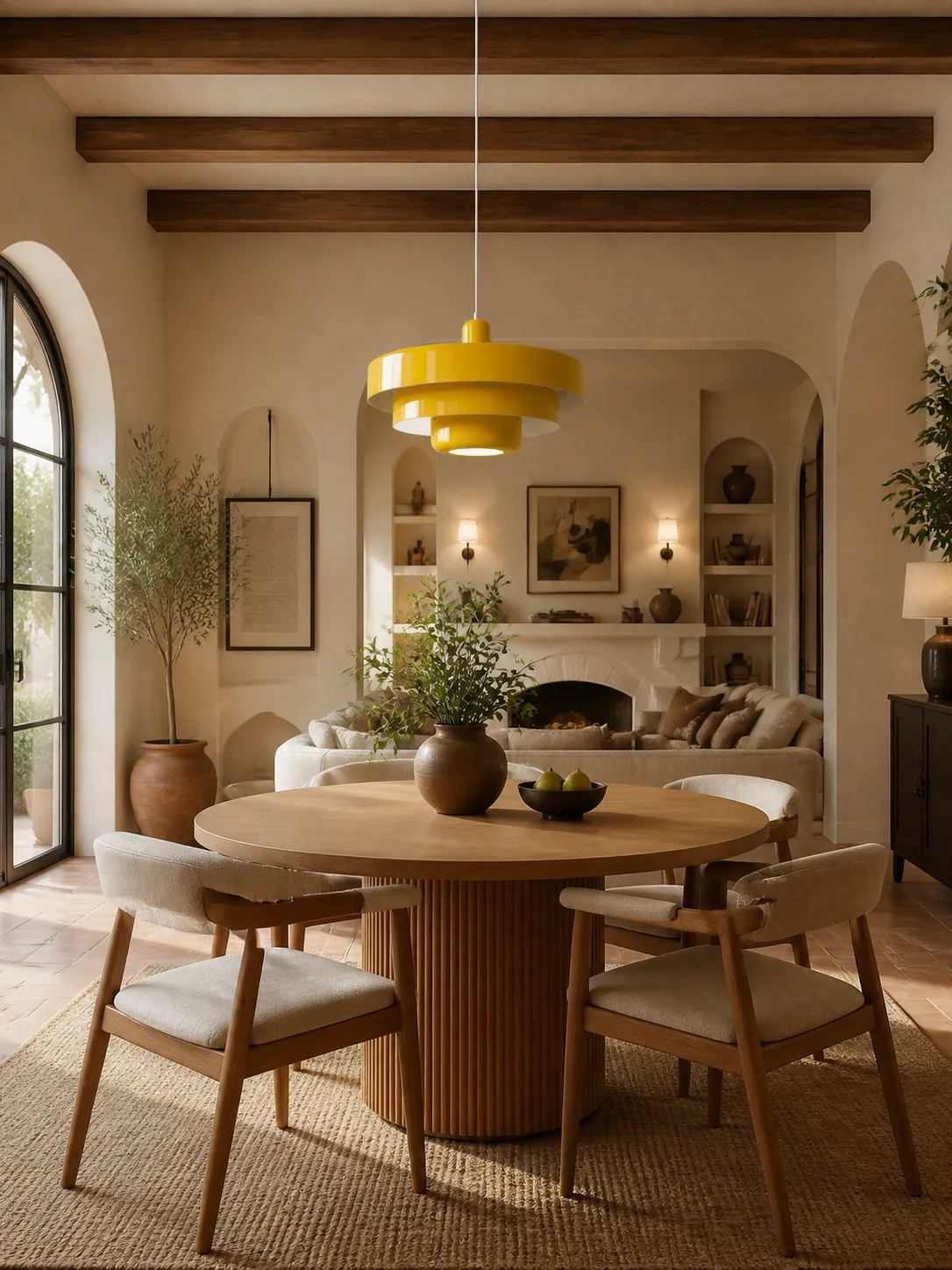
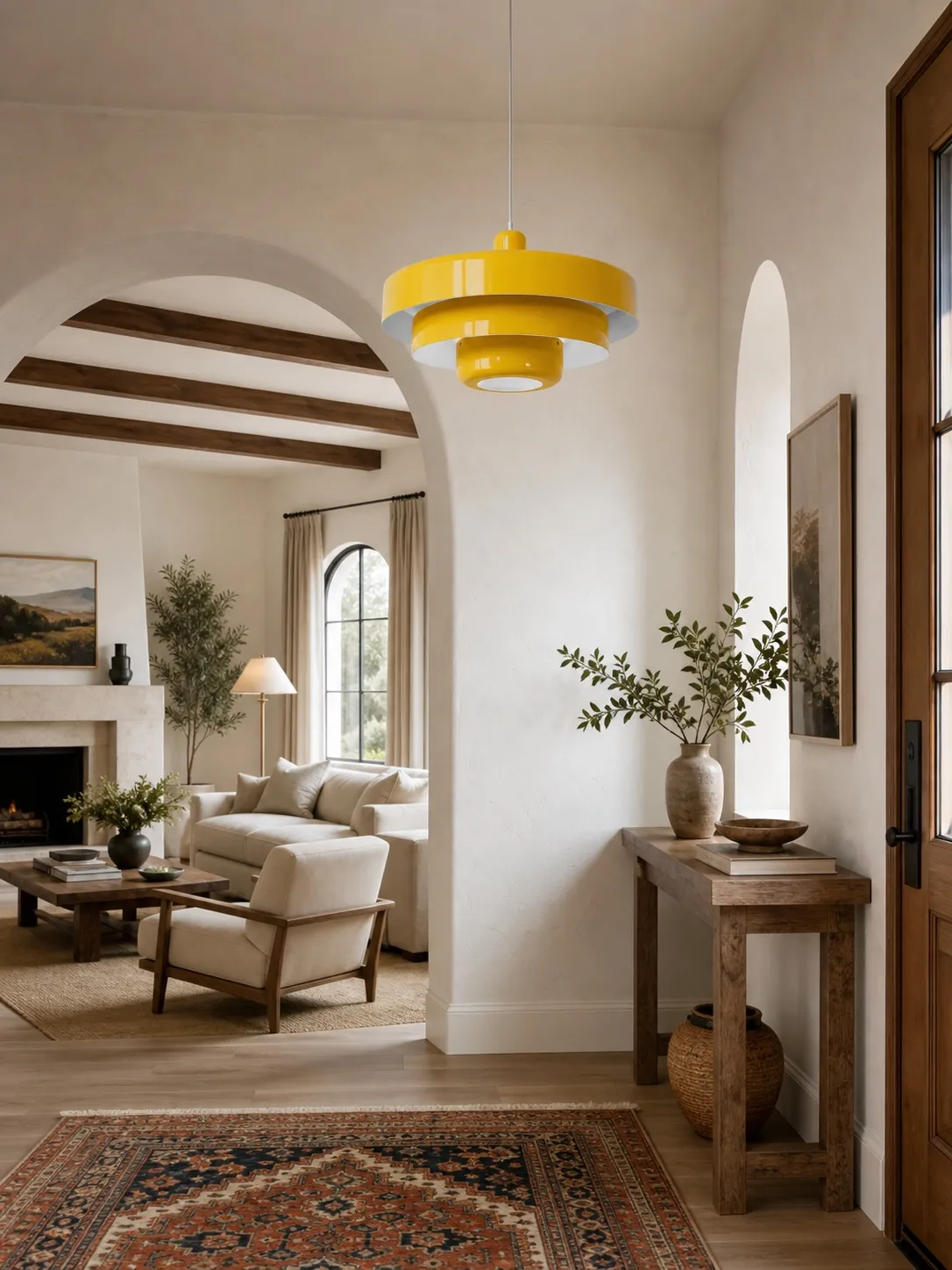
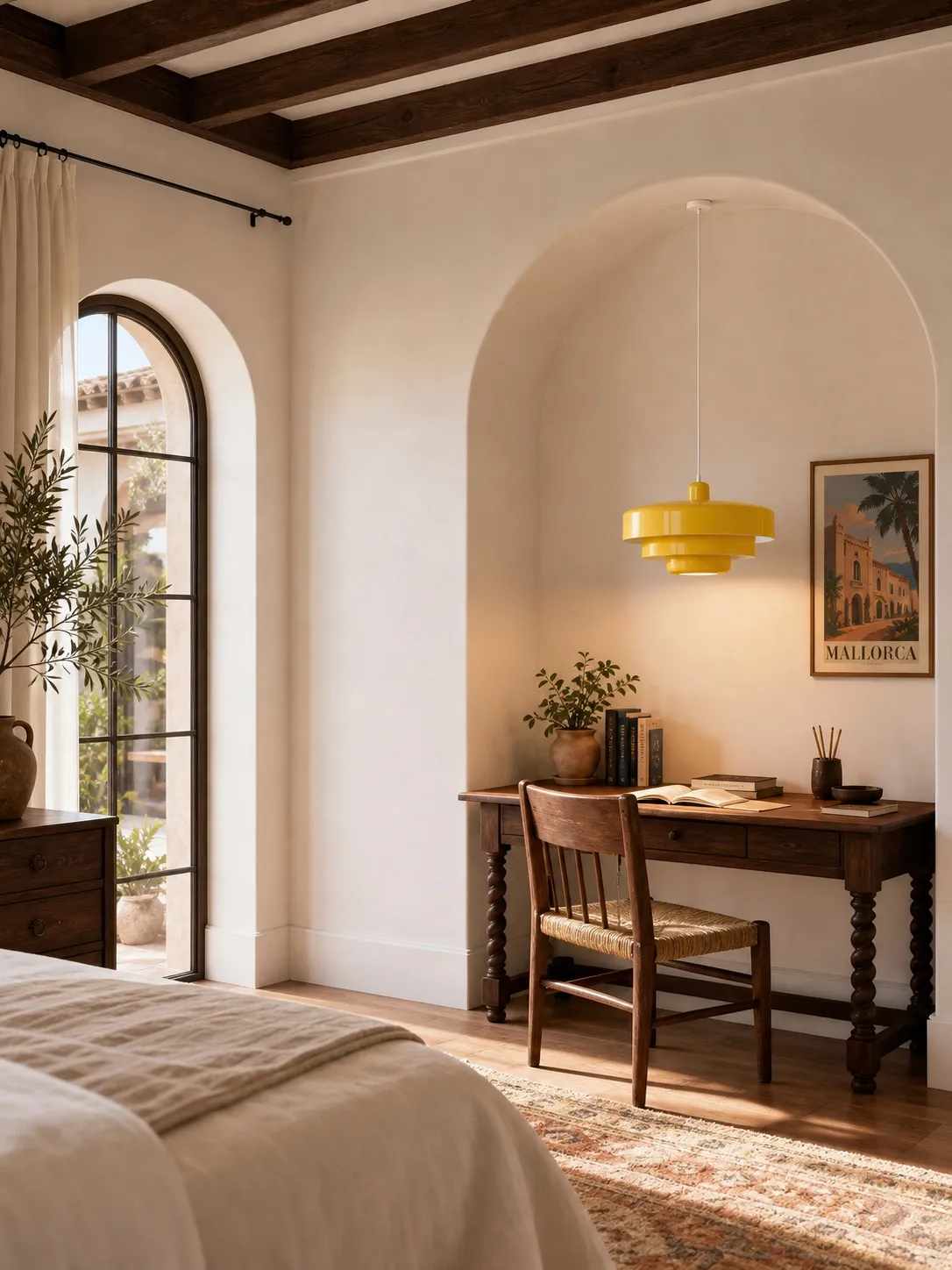
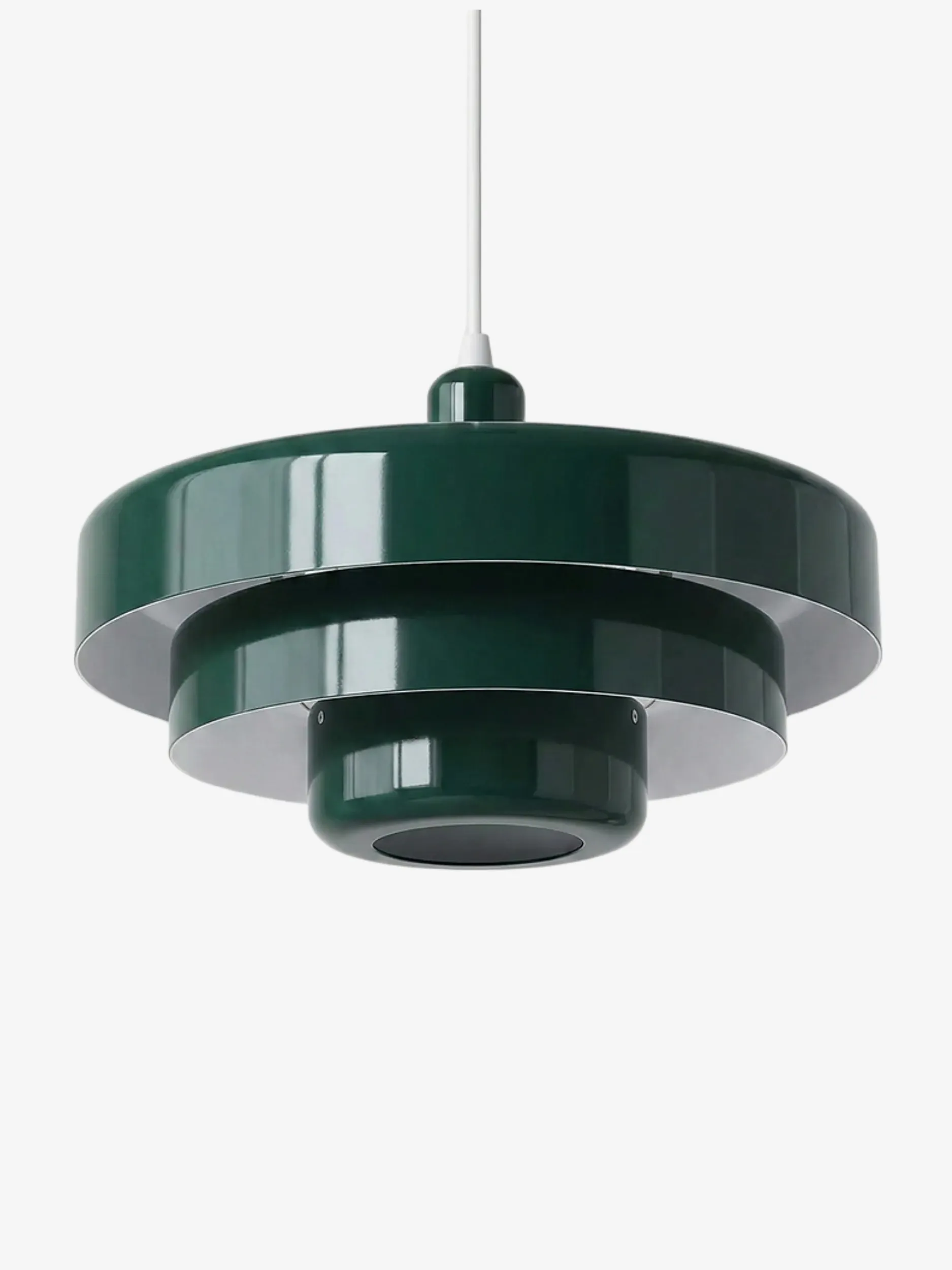
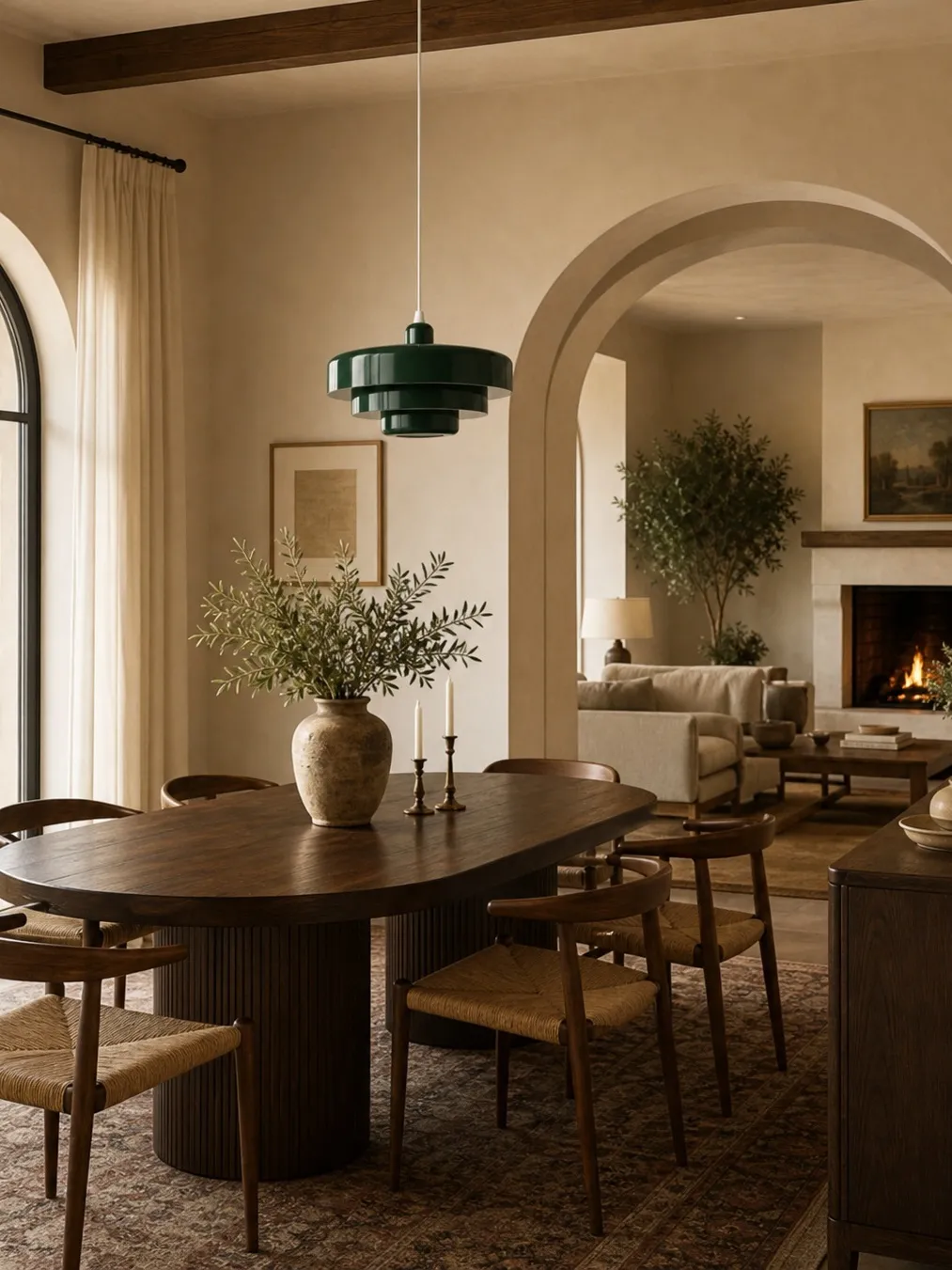
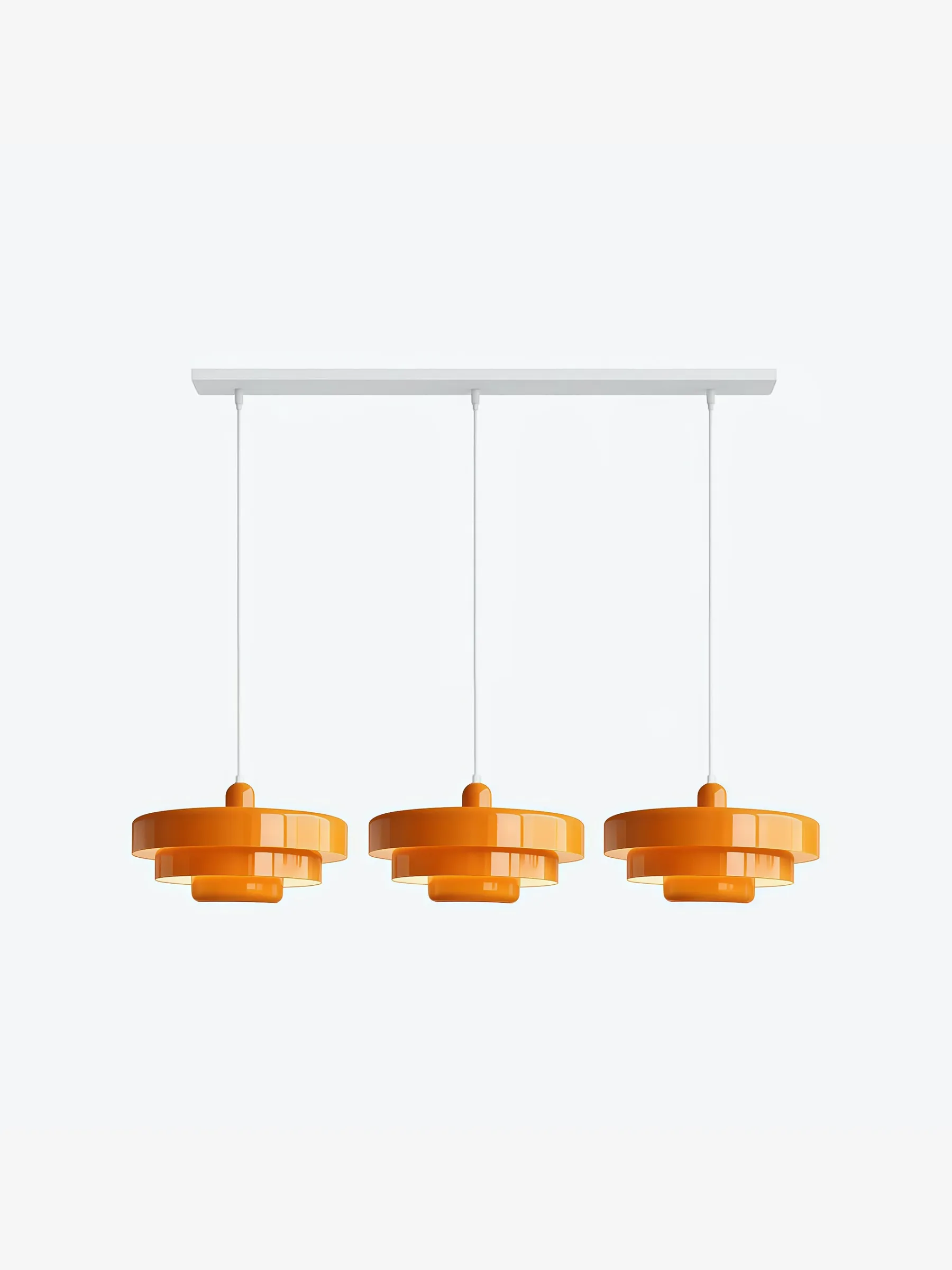
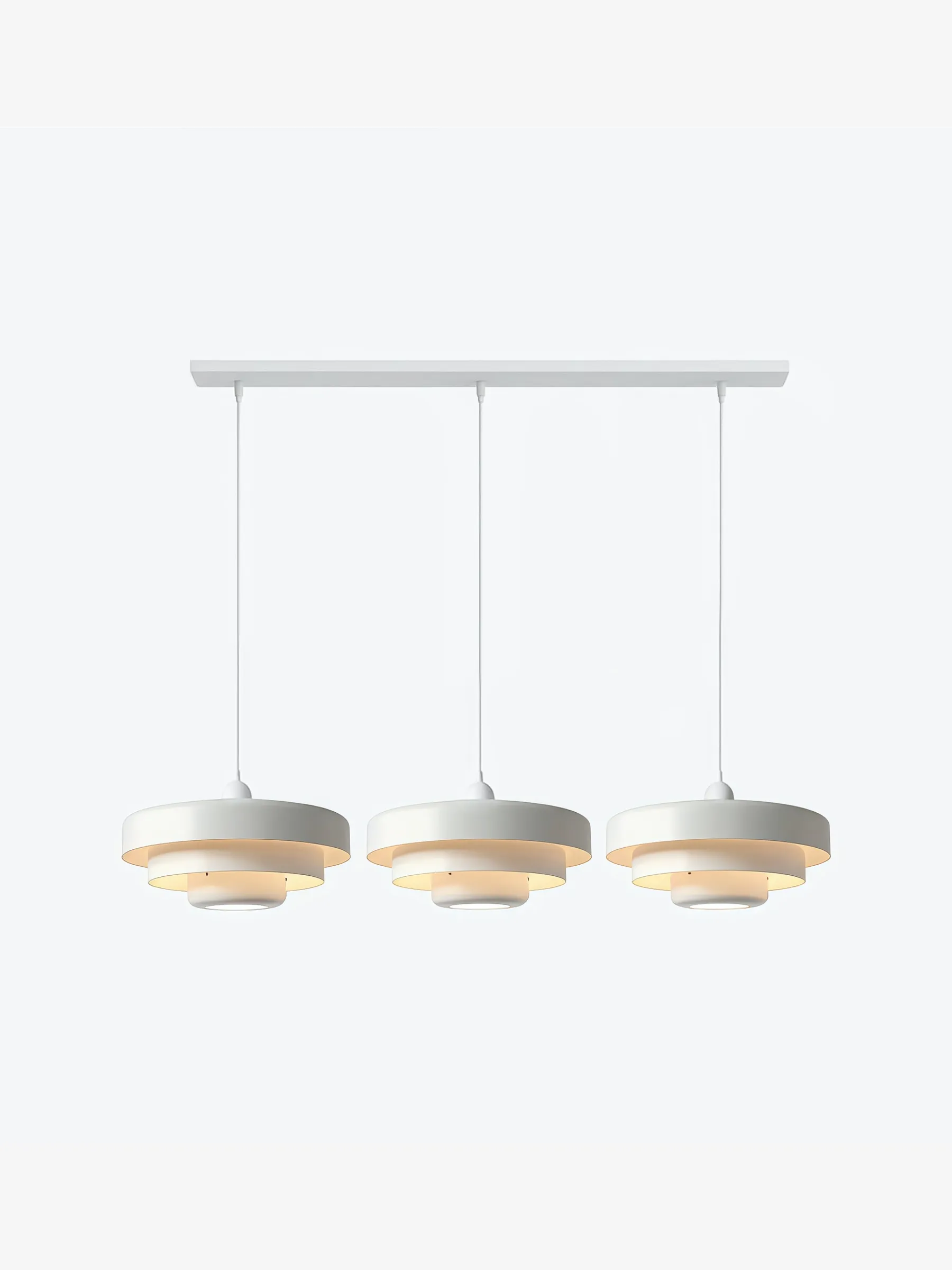
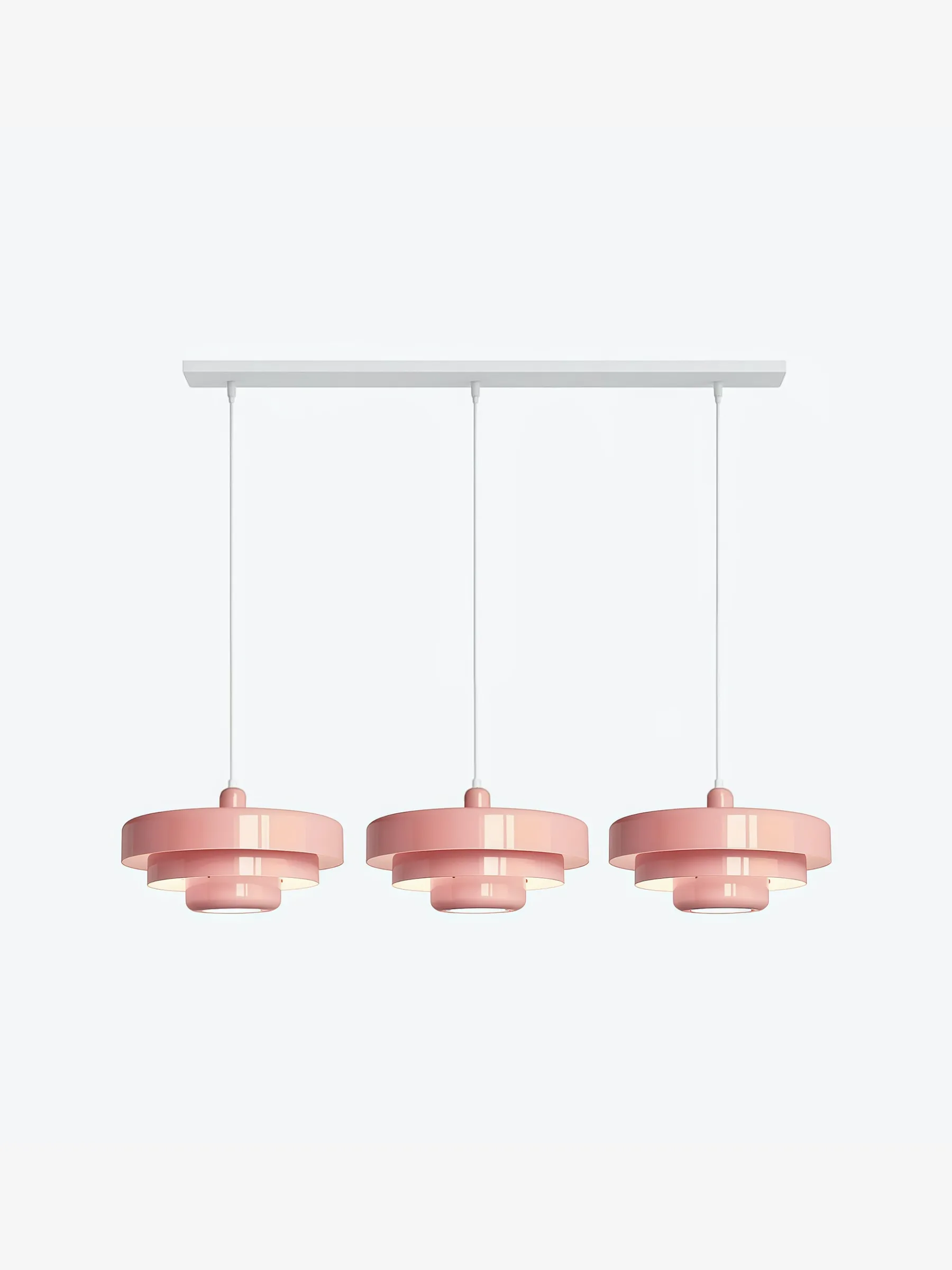
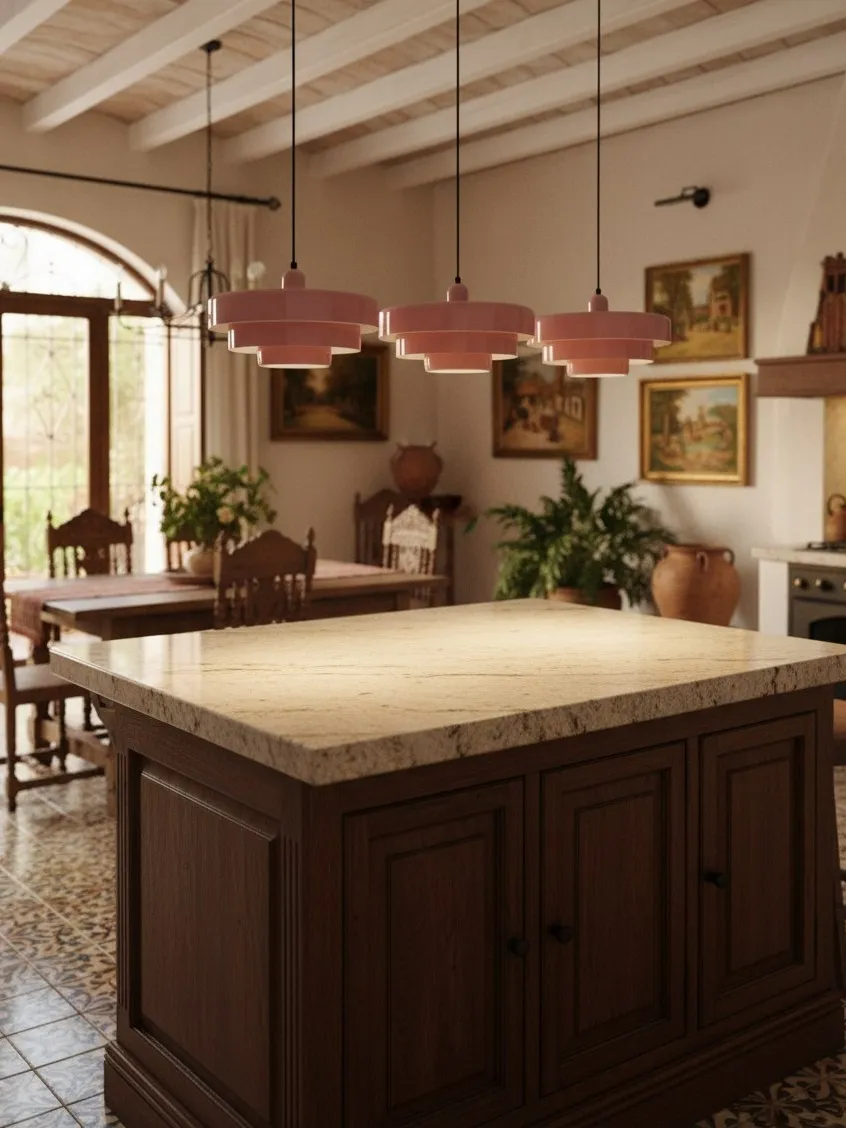
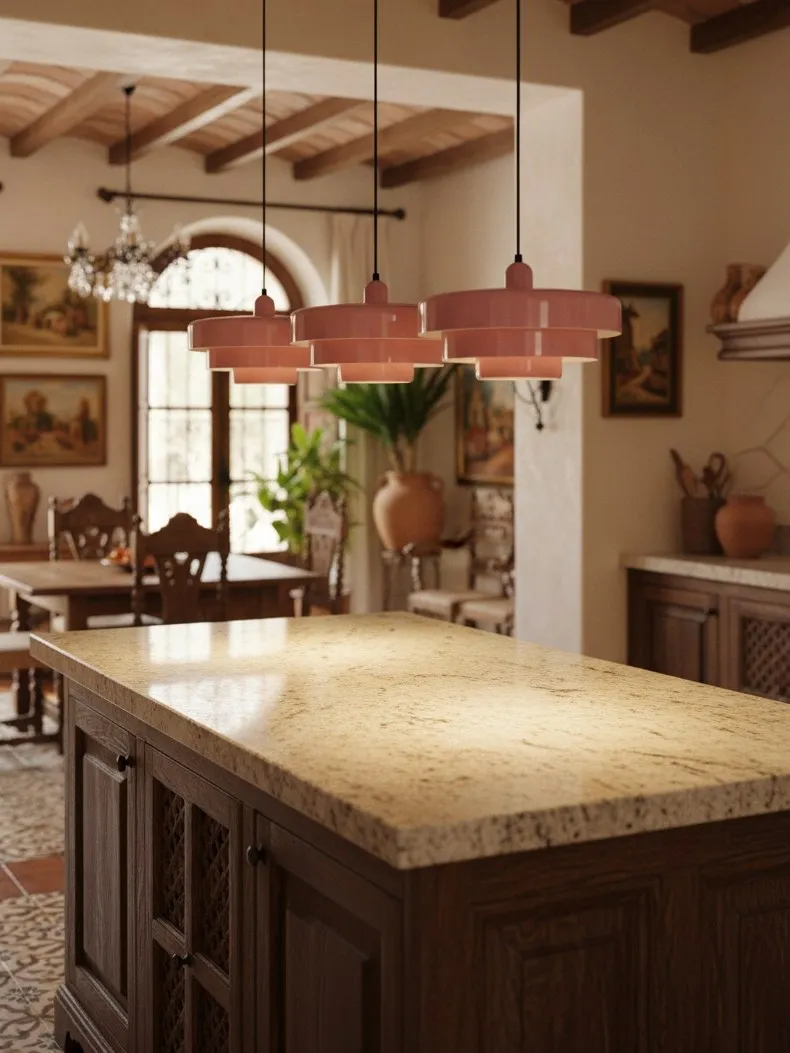
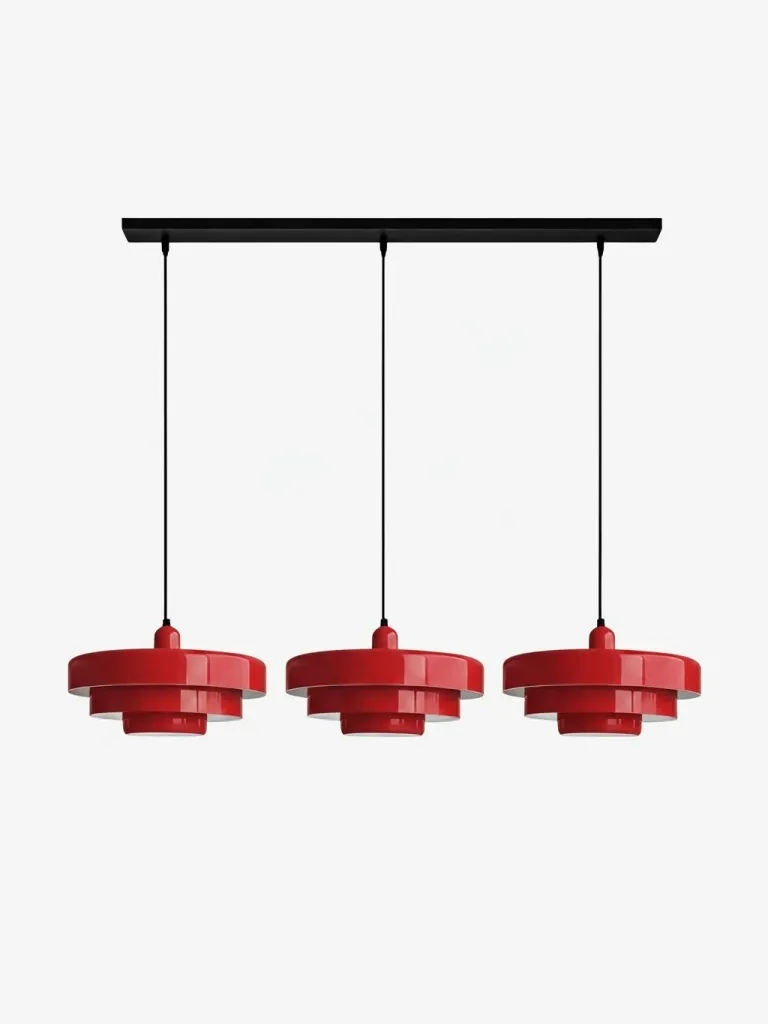
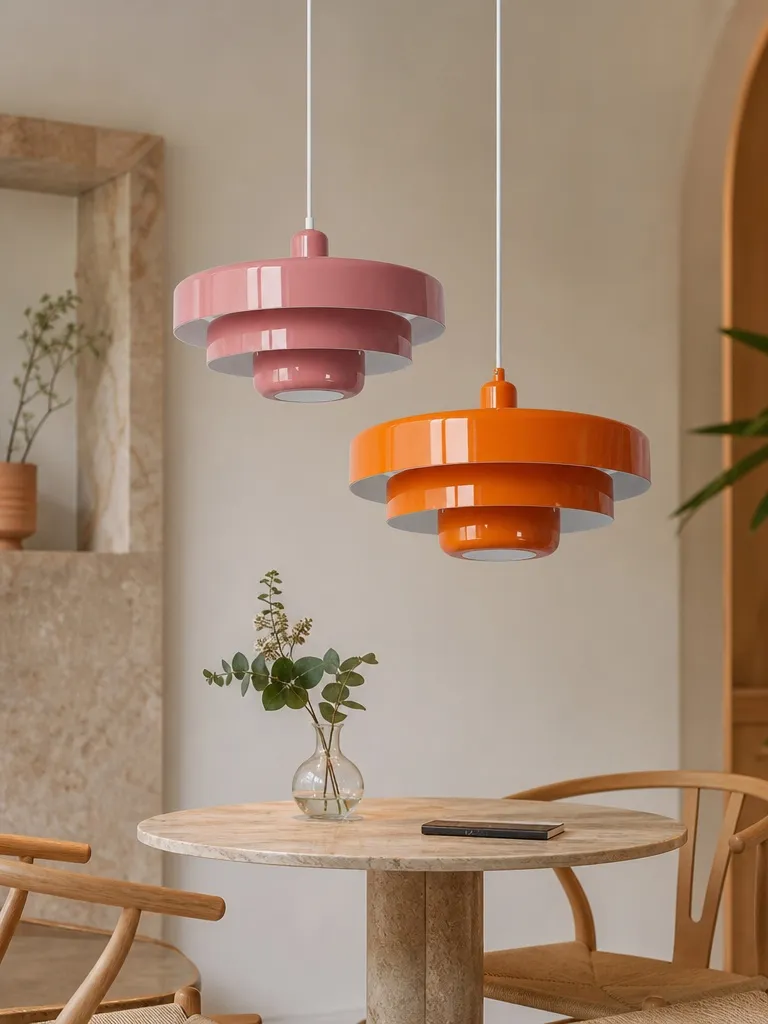
The hozo.es Triple Layer Disc Macaron pendant is listed at 35 cm in diameter and 21 cm high, with an E27 lamp holder, a maximum of 40 W, a 150 cm cord and a product weight of about 1 kg. Those figures make it a compact visual accent, not an automatically suitable centrepiece for every six- or eight-seat table.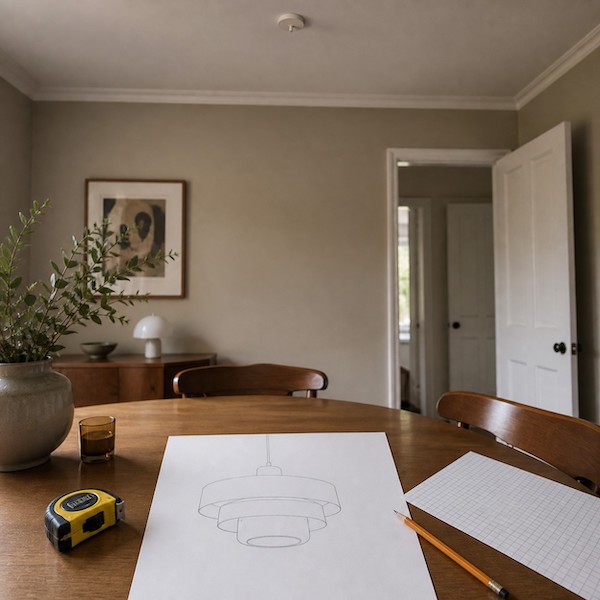
Height: Protect Faces Before Following a Formula
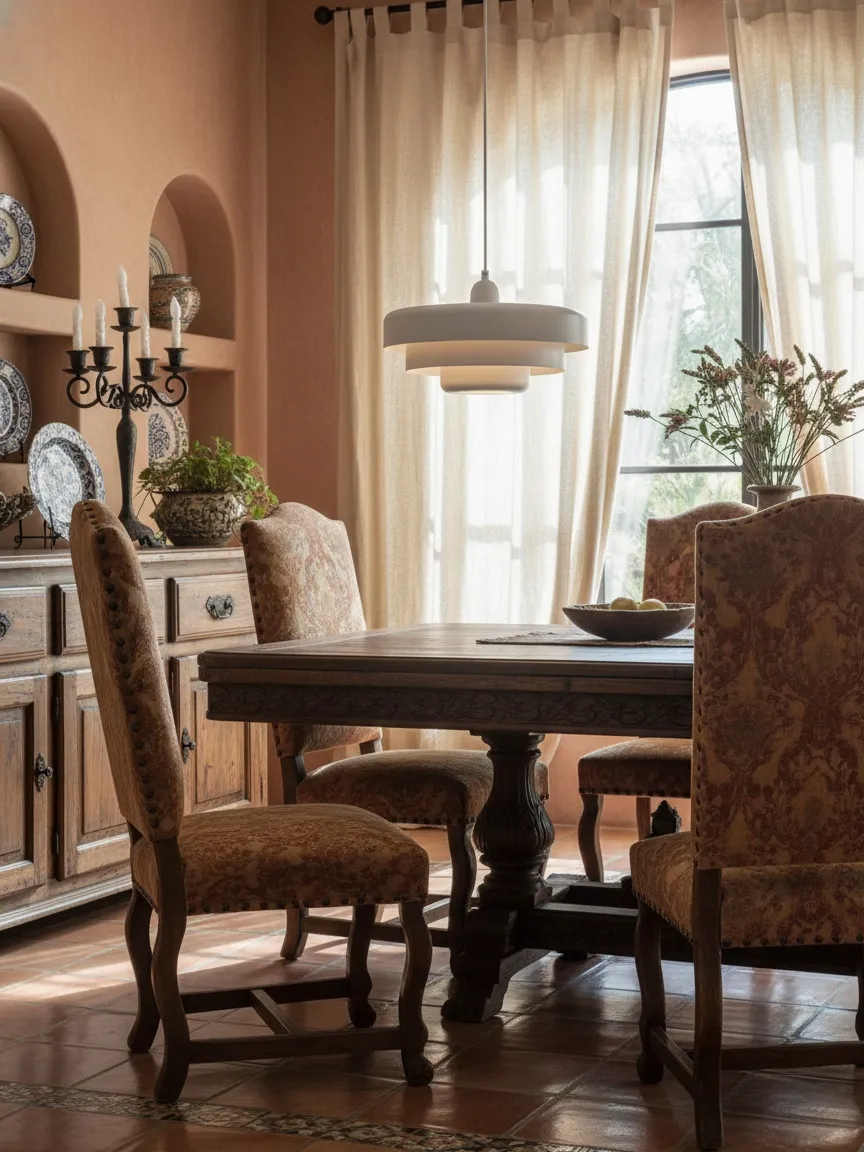
The familiar 30-36 inch band is useful because it places many pendants low enough to relate to the table while leaving a view across it. It is not a building rule. A deep opaque shade may need to sit slightly higher so diners do not stare into its underside; a shallow, visually light shade may feel disconnected if it is pushed too close to the ceiling.
Mock up the lowest edge with paper or cardboard. Sit in every chair, stand at the room entrance and walk the normal serving route. If the shade hides faces, move it up. If it floats above the table and loses visual connection, move it down. For the full adjustment method, read How High Should a Pendant Light Hang Above a Dining Table?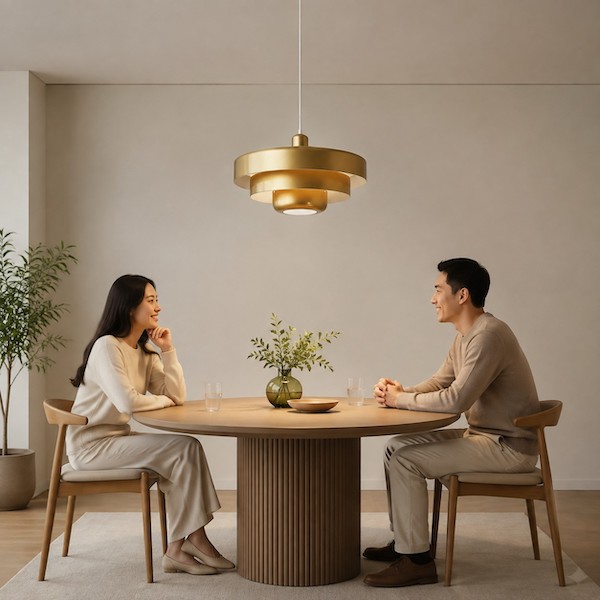
Size: Match the Table's Geometry, Not the Room's Centre
For a round table, a single round pendant usually reads clearly when its diameter is about one-half to two-thirds of the tabletop diameter. For a rectangular table, think in terms of illuminated spread and visual length. A linear fitting or a disciplined row of smaller pendants often relates better to the long axis than one small shade at the centre.
Use edge clearance as a second check. The fixture should sit far enough inside the tabletop that standing diners do not meet it with a shoulder or head. A practical mock-up is more reliable than a rigid ratio because a dark, solid shade looks visually heavier than an open or pale one of the same size.
If you need the shape-specific calculations, How Wide Should a Pendant Light Be Over a Round vs Rectangular Table? separates diameter, length and repeated-pendant spacing instead of using one formula for every table.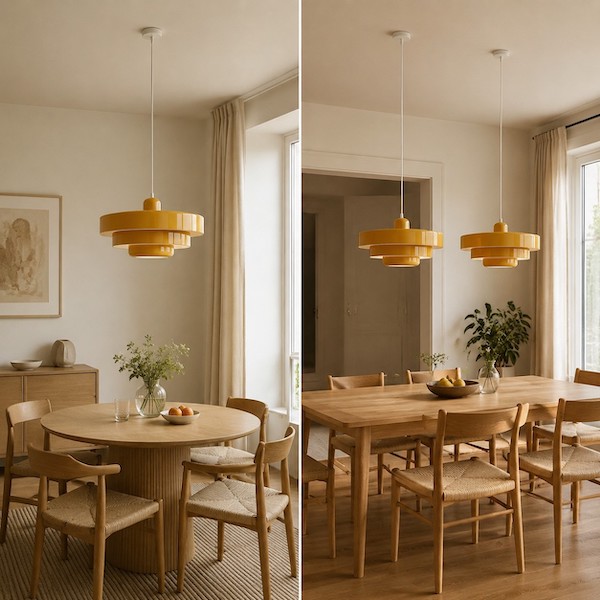
Brightness: Design the Table Layer, Then Support It
A bulb's wattage describes electrical power, not visible light. Compare bulbs by lumens; the luminous flux reference explains what that measurement represents. Colour temperature, expressed in kelvin, describes whether white light appears warmer or cooler. ENERGY STAR's LED guidance provides a useful non-commercial overview of LED output, colour and efficiency.
Dining light should make faces and food easy to see without turning the bulb into a bright object in the centre of everyone's vision. A shaded or frosted source usually feels calmer than a clear, high-output source at seated eye level. Add wall, floor or ceiling light for the rest of the room so the pendant does not have to overpower the table to reach dark corners.
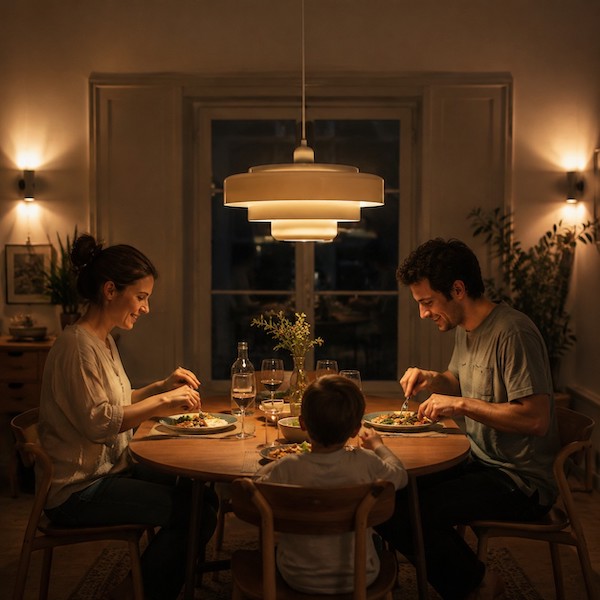
When the 35 cm Layered Pendant Is a Good Fit
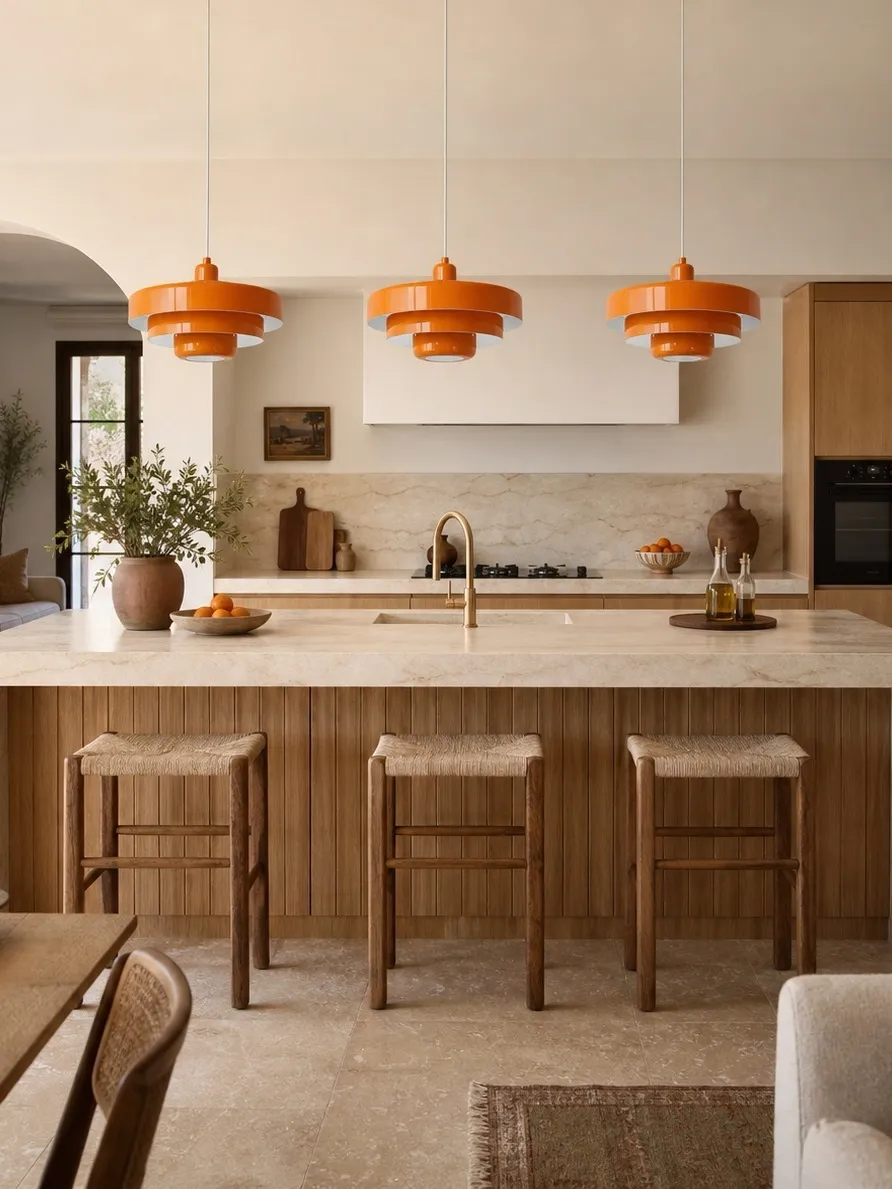
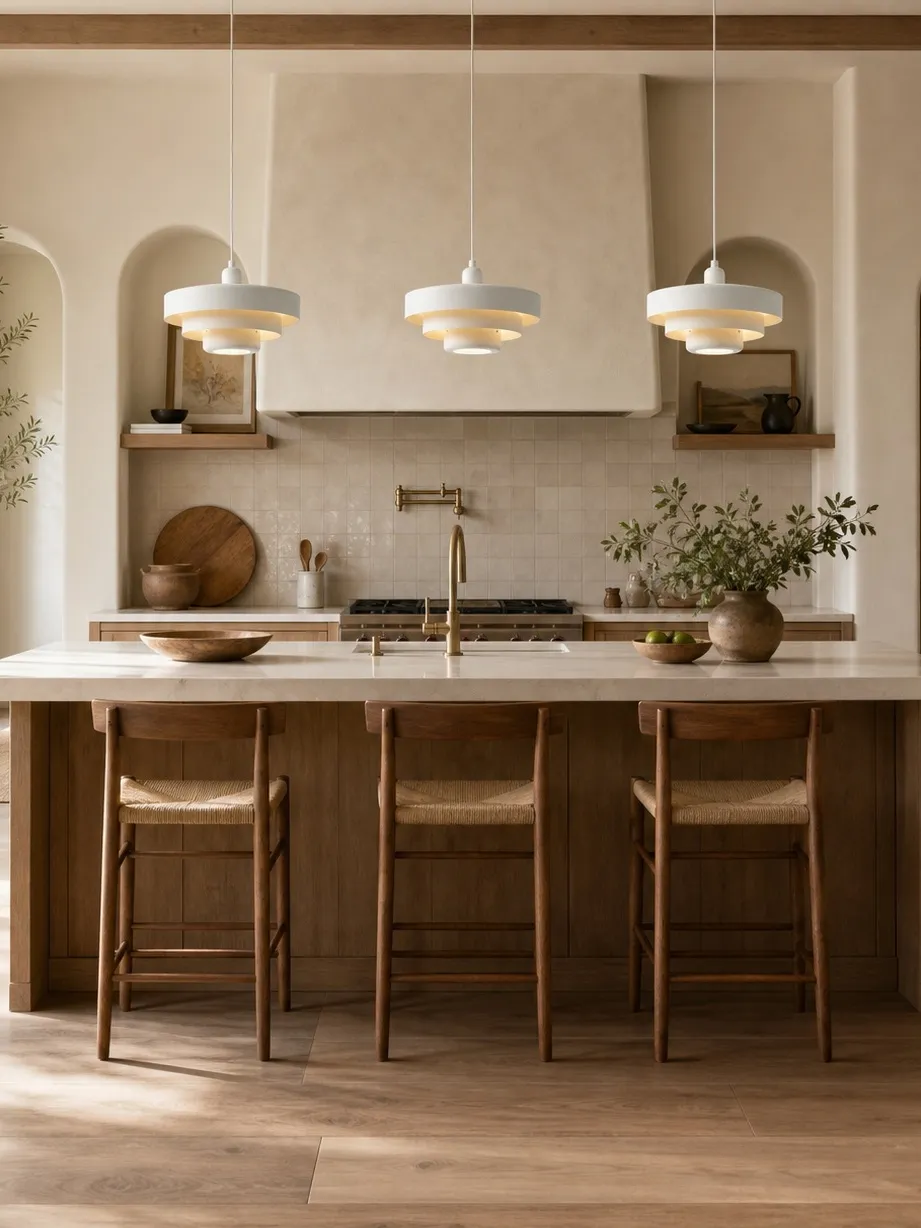
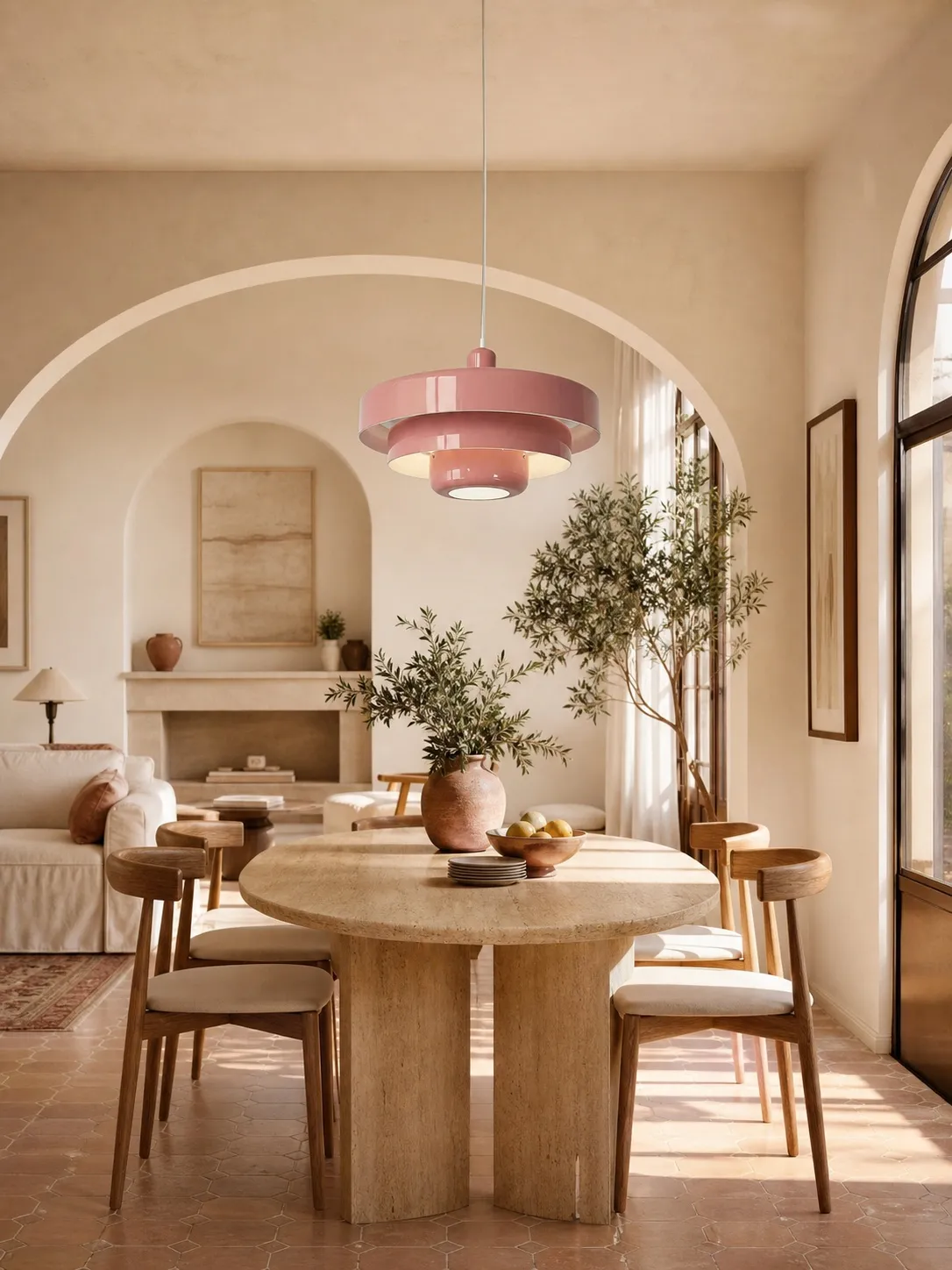
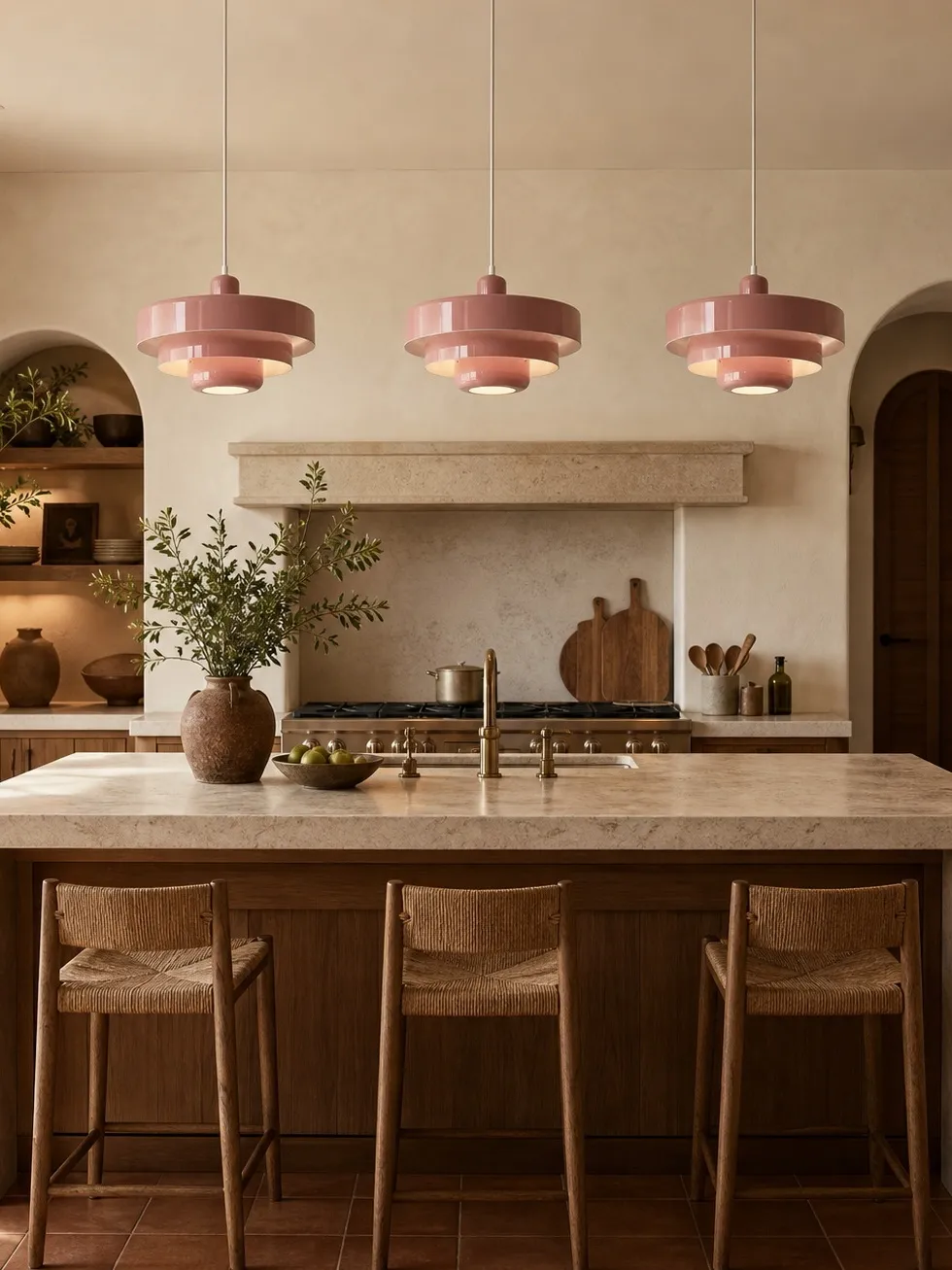
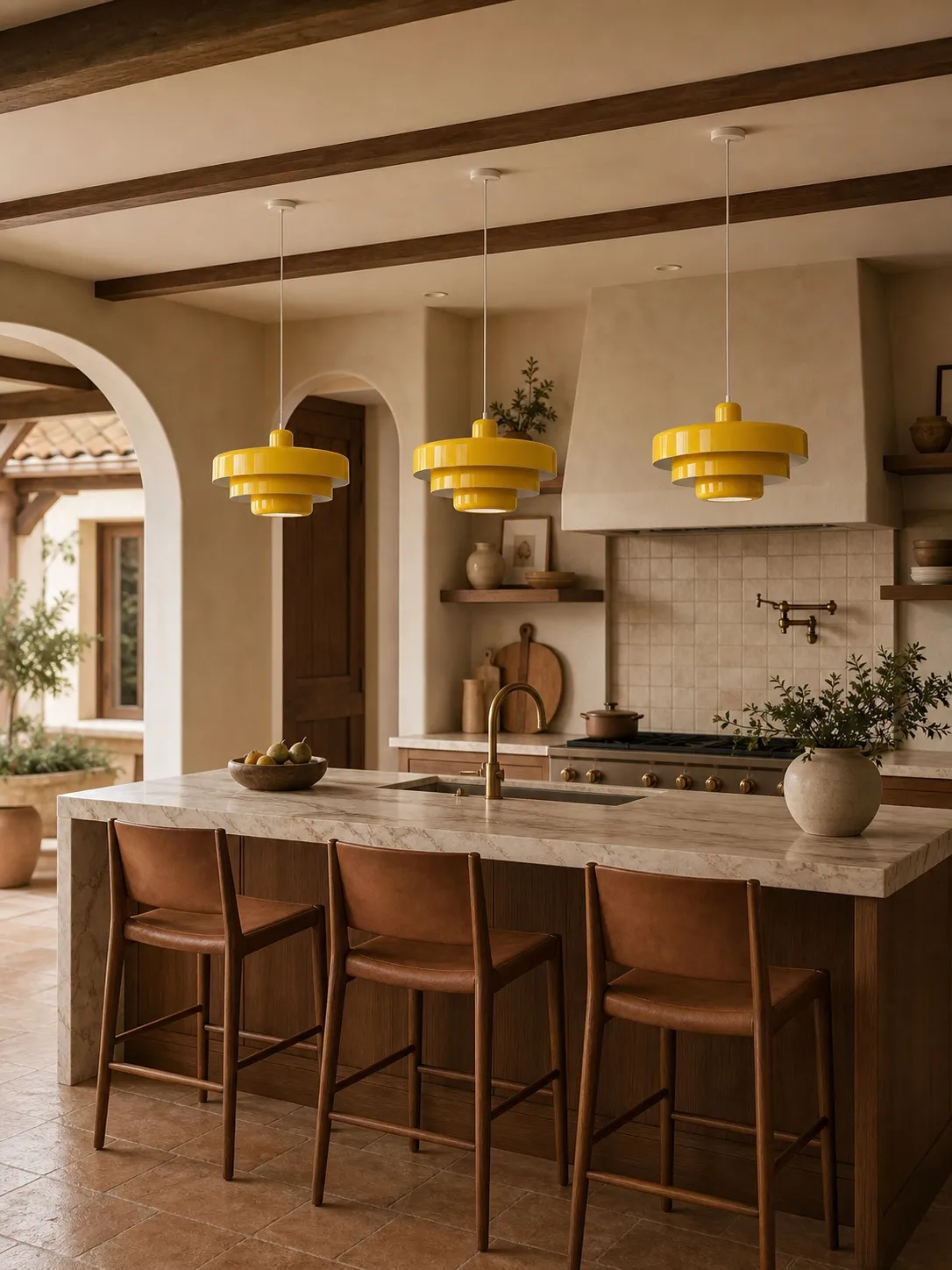
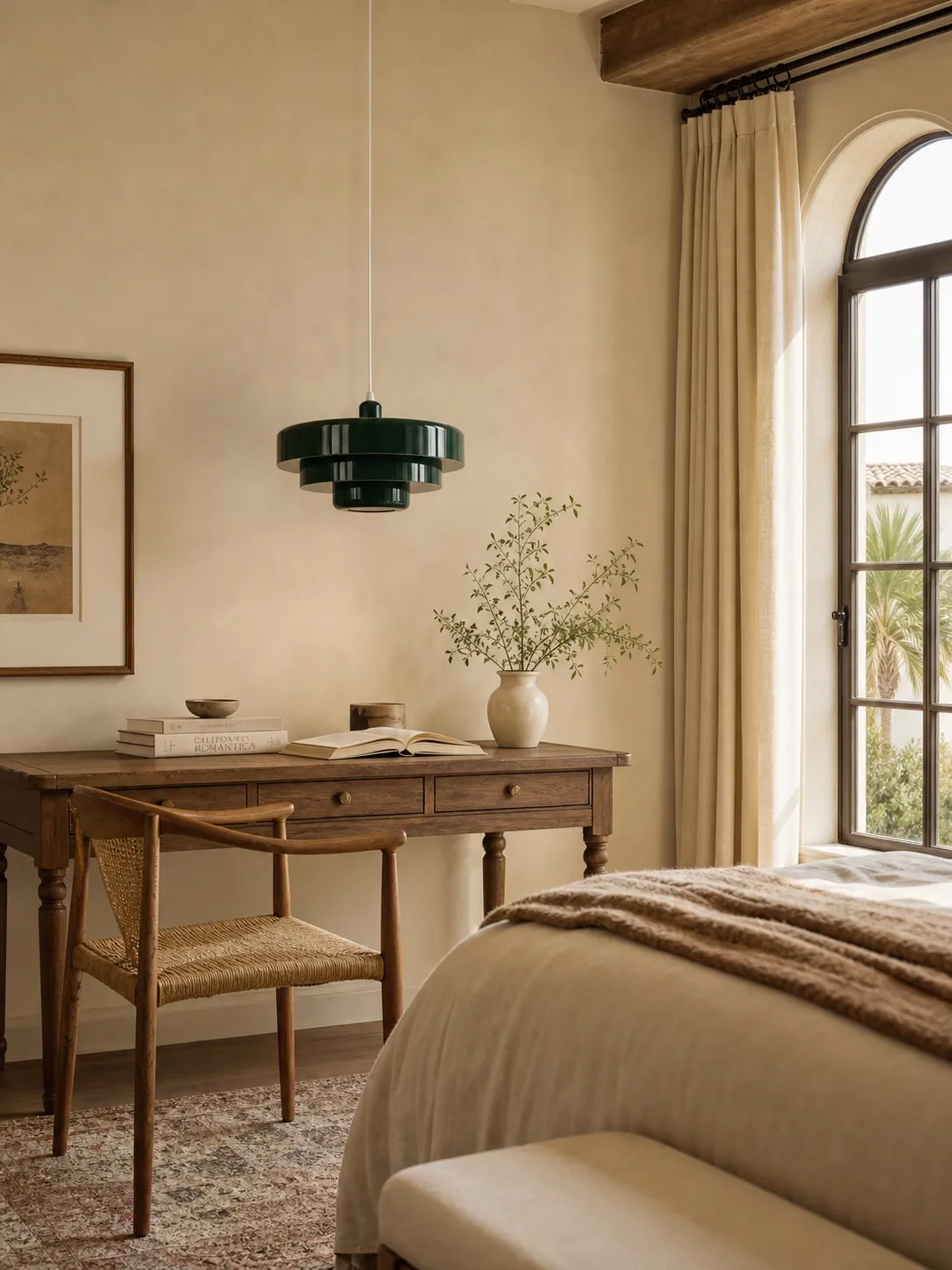
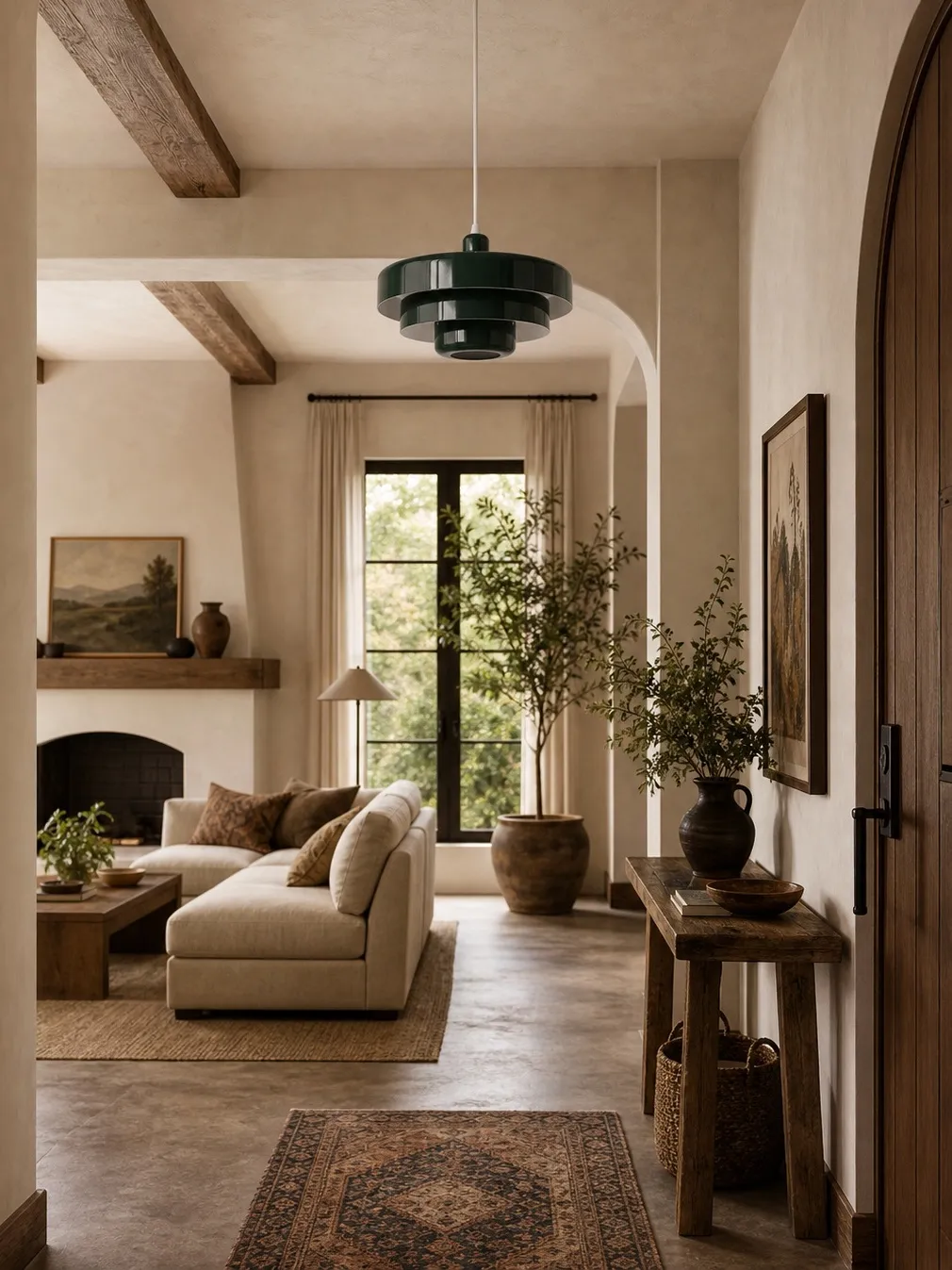
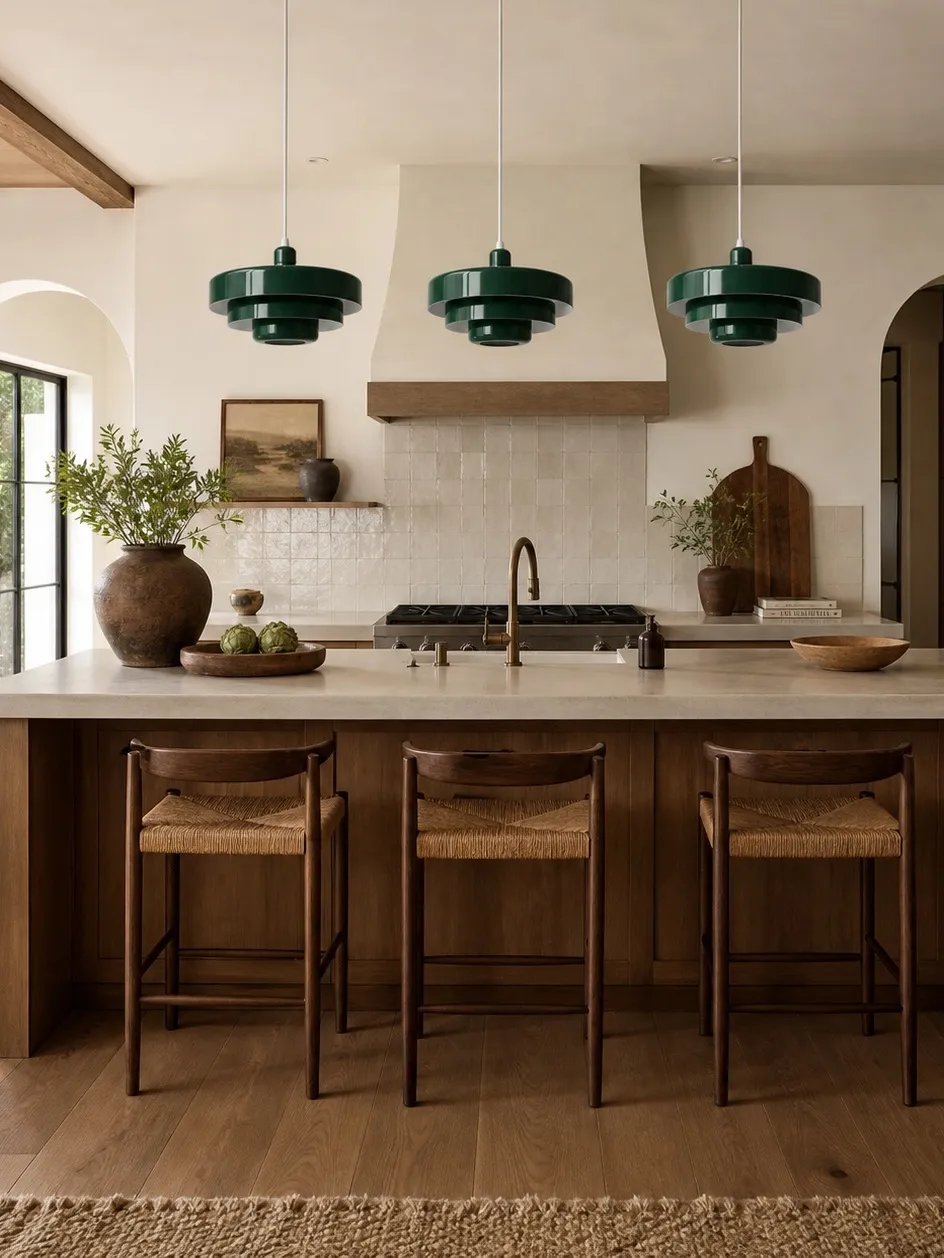
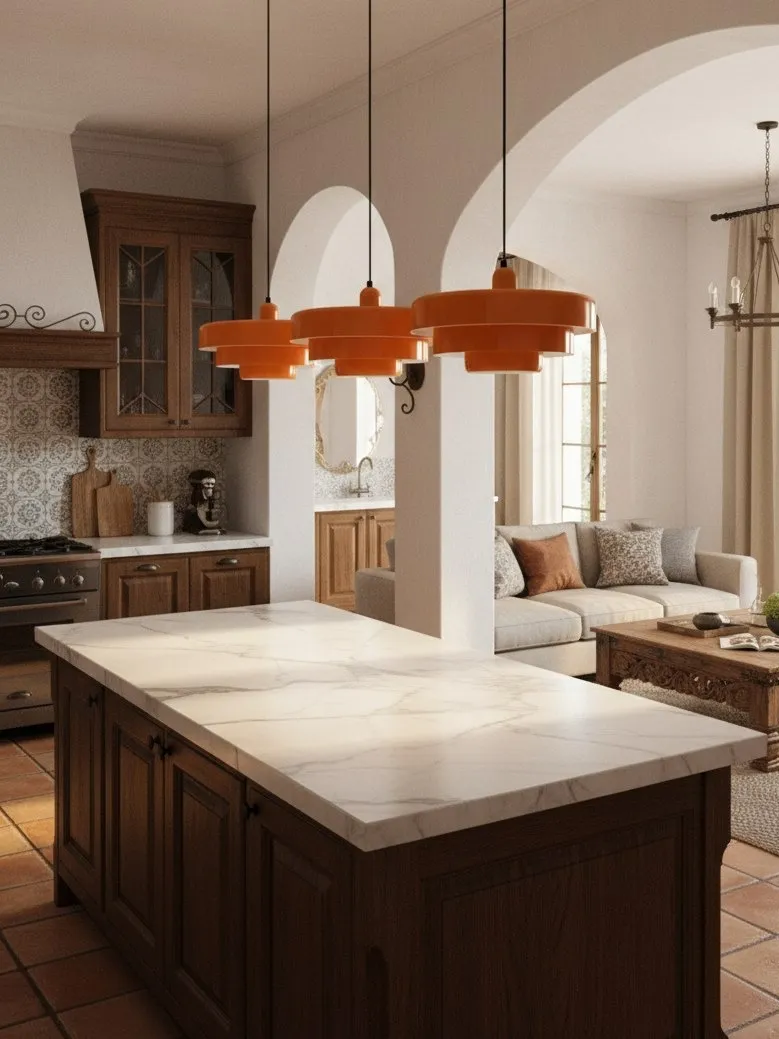
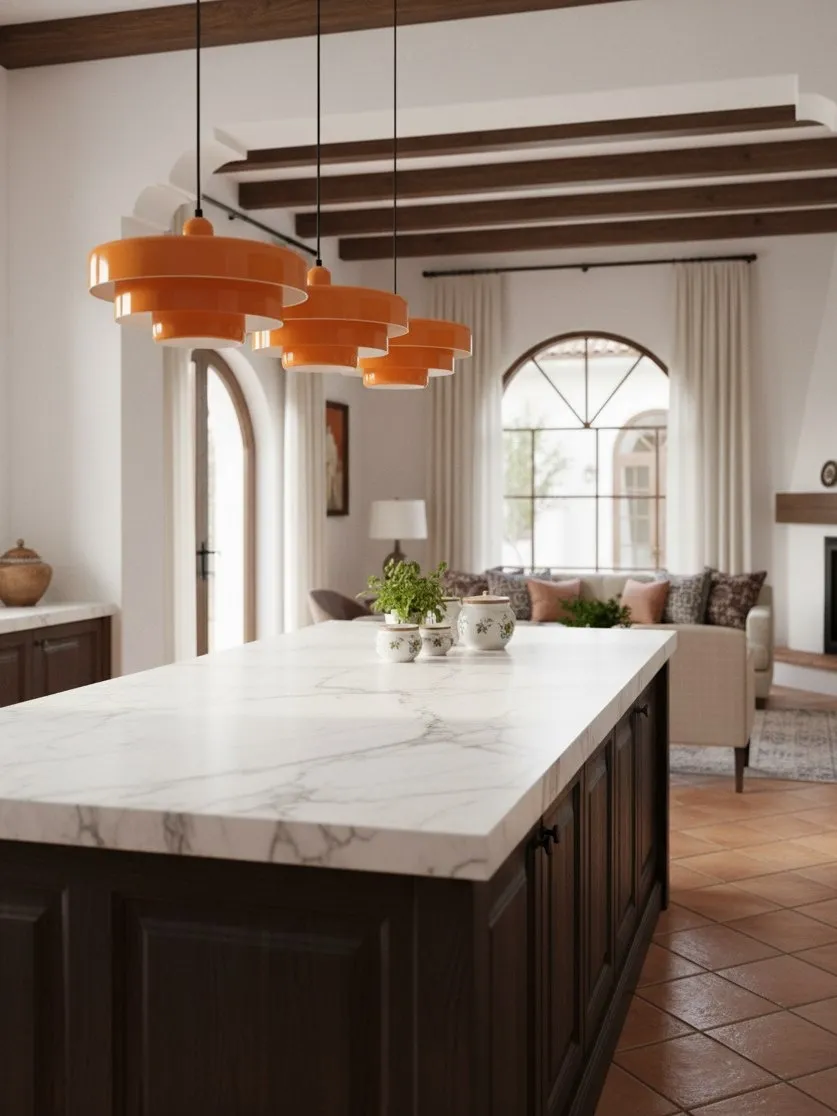
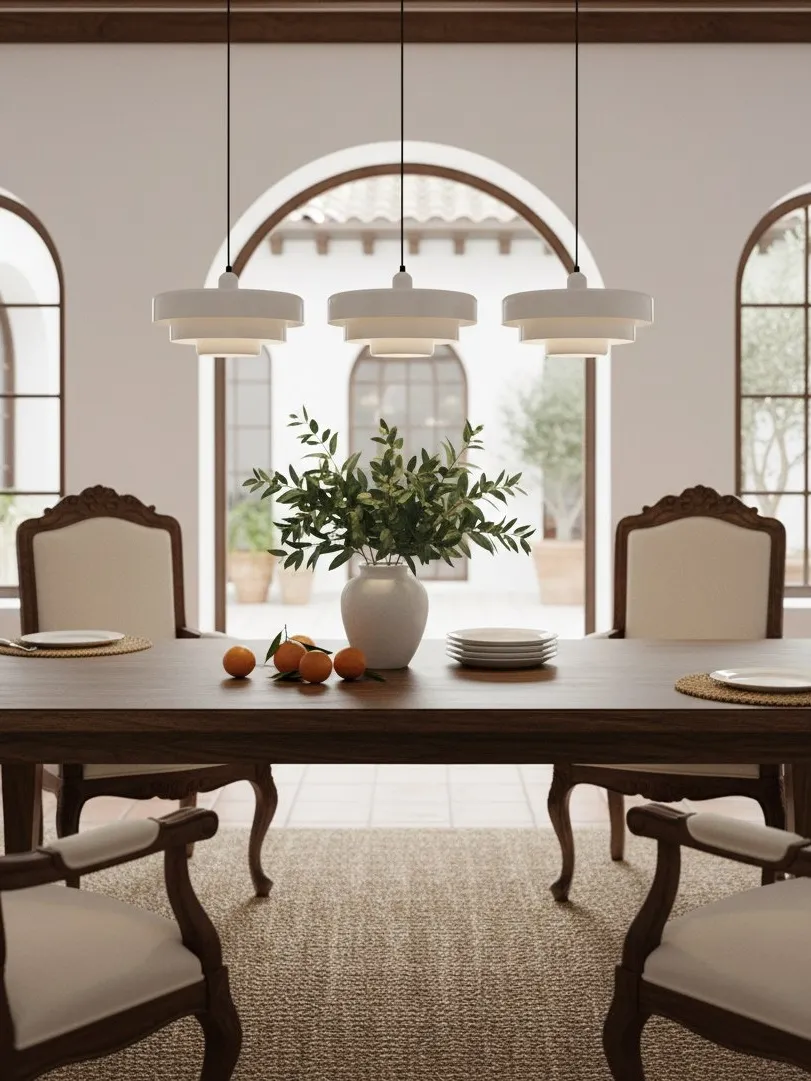
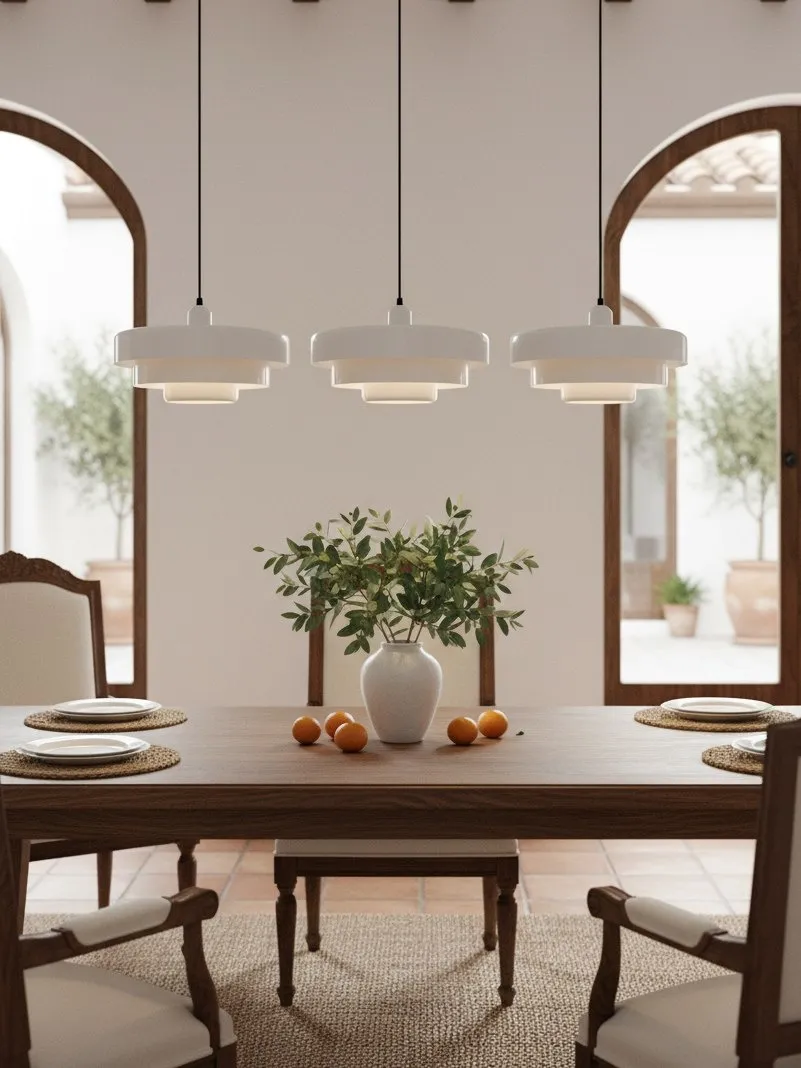
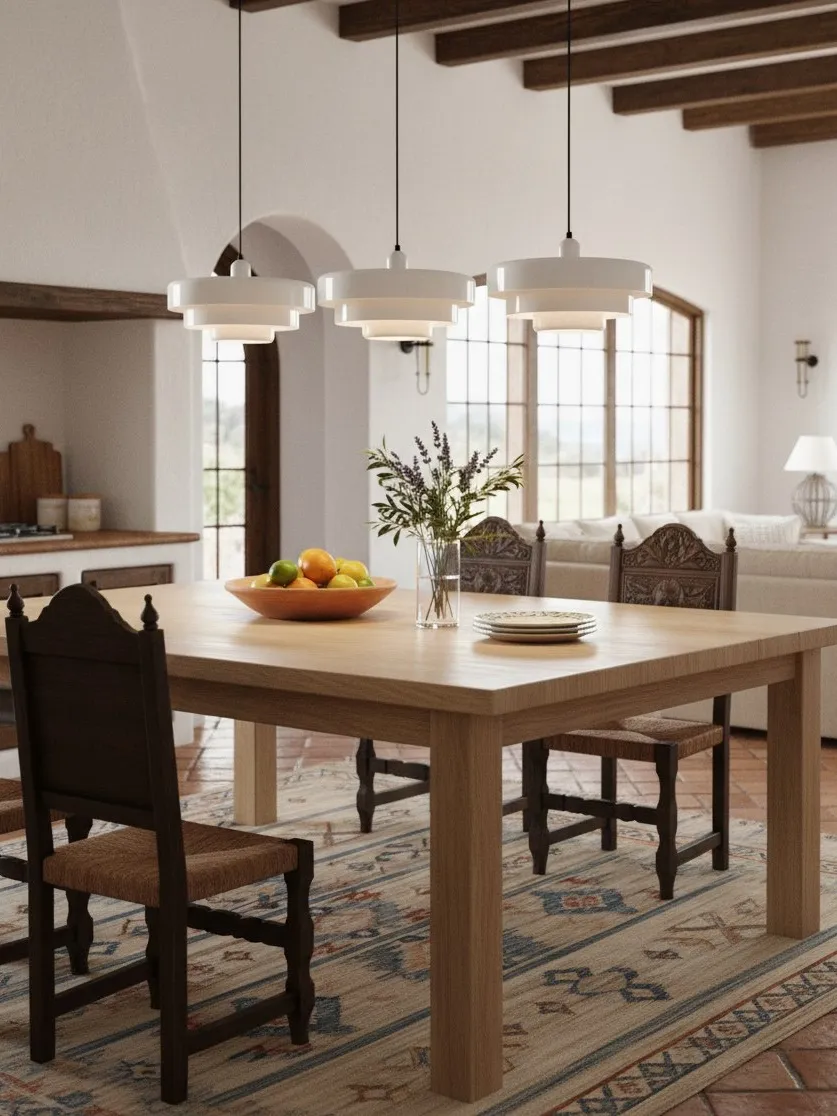
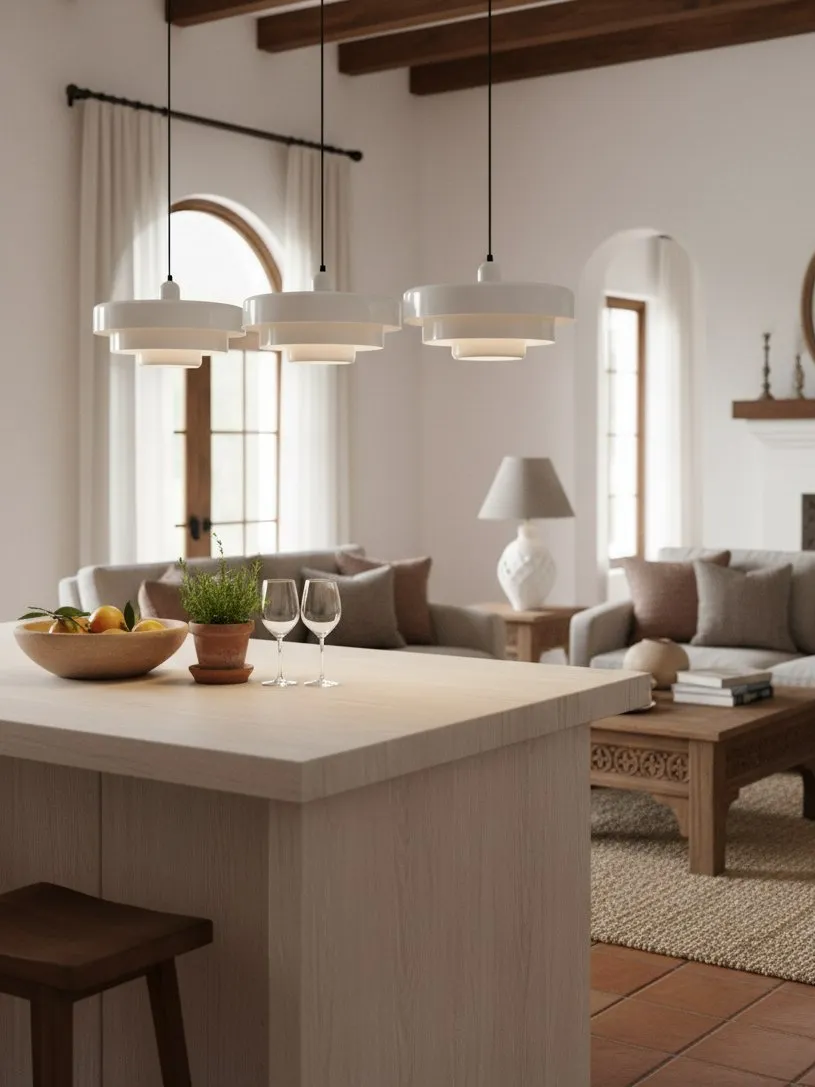
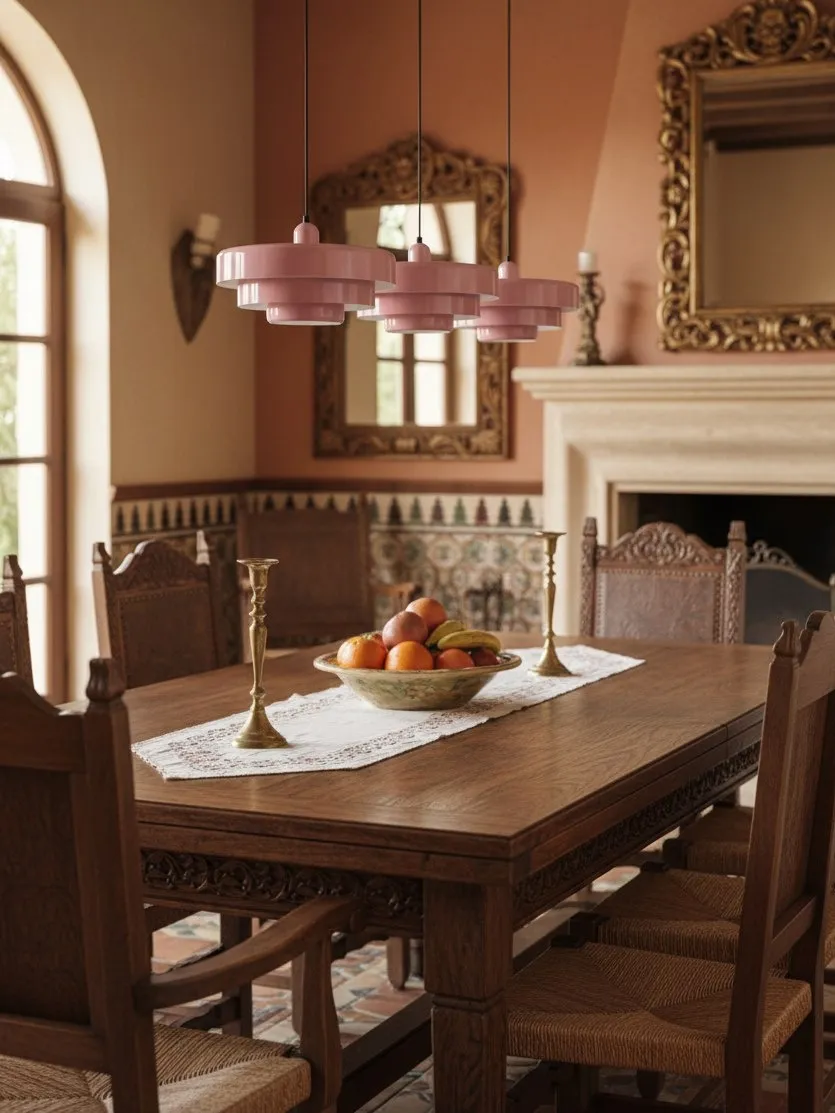
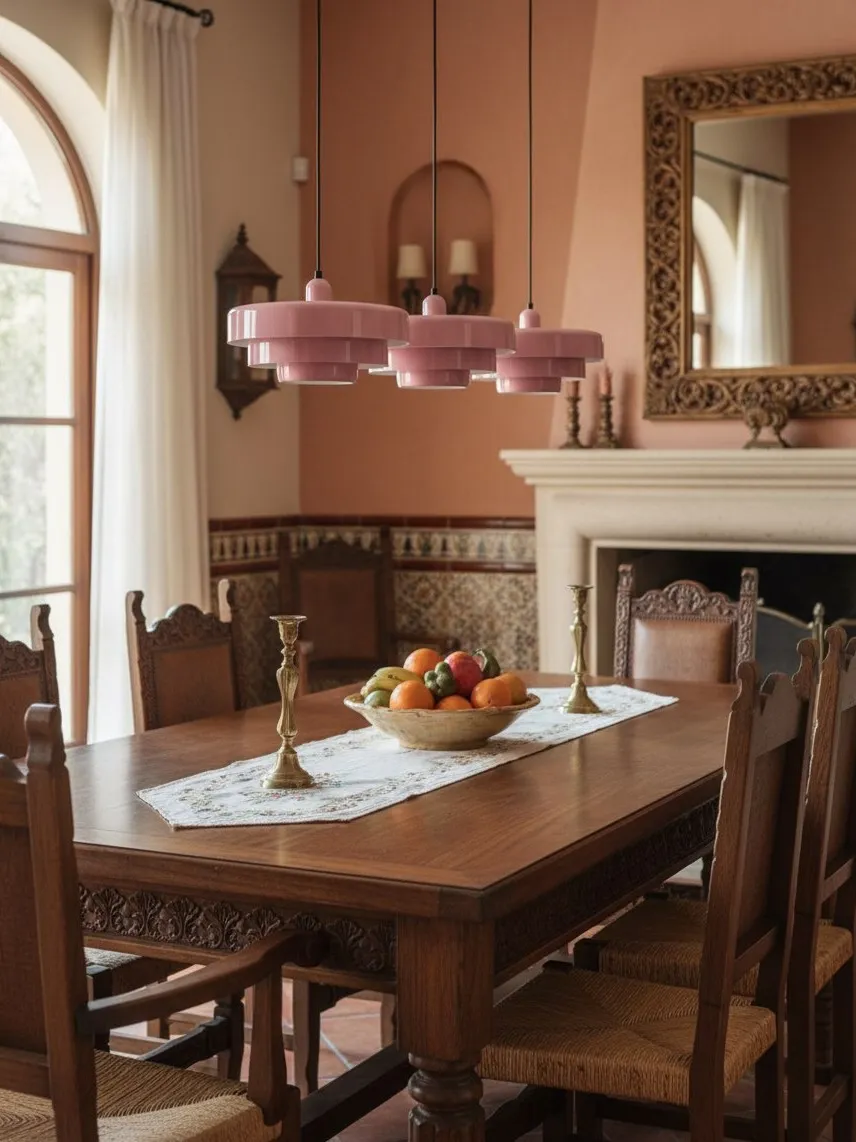
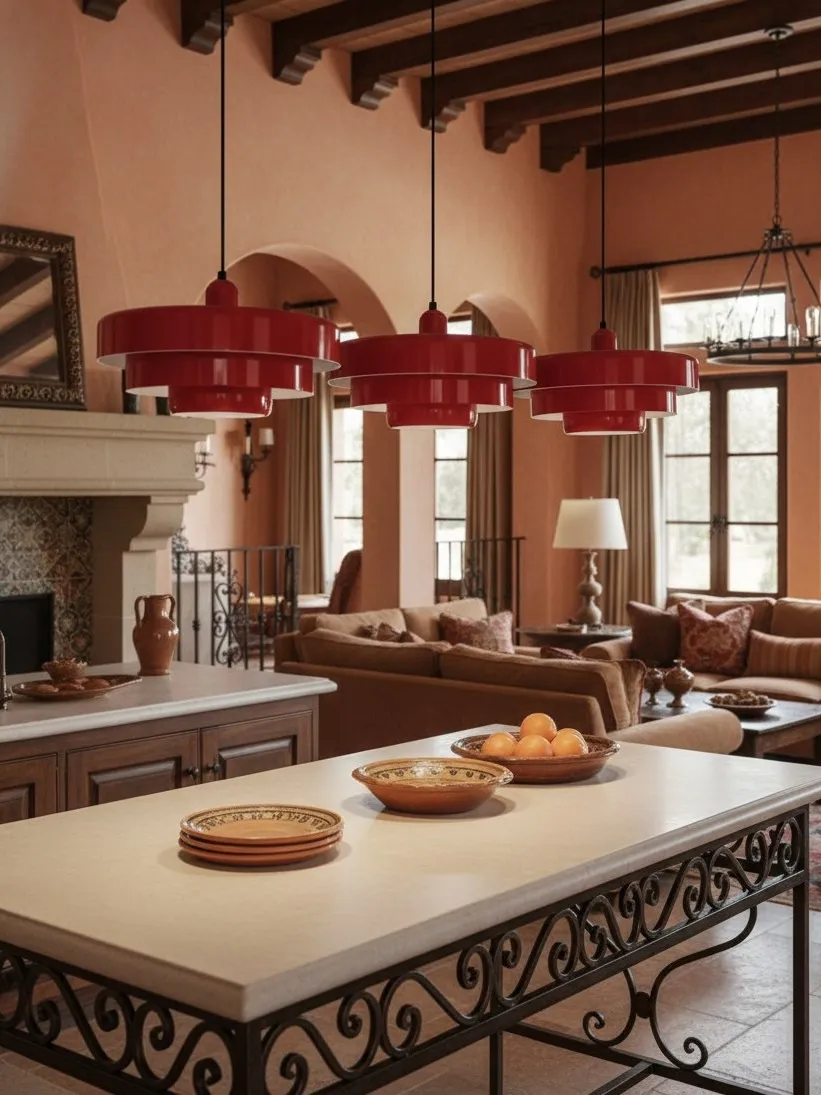
The compact 35 cm diameter is strongest over a small round table, breakfast table or intimate two-to-four-seat dining area where the layered silhouette can register without feeling undersized. On a long rectangular table, one unit may look isolated. Repeated identical fittings can create a longer rhythm, but only after the electrical layout, spacing and installation method are confirmed.
The opaque aluminium-and-iron layers can help shield direct views of the lamp from some angles, yet the open underside still makes bulb choice and hanging height important. The six listed finishes also change visual weight: dark green or red reads more strongly than white at the same physical size.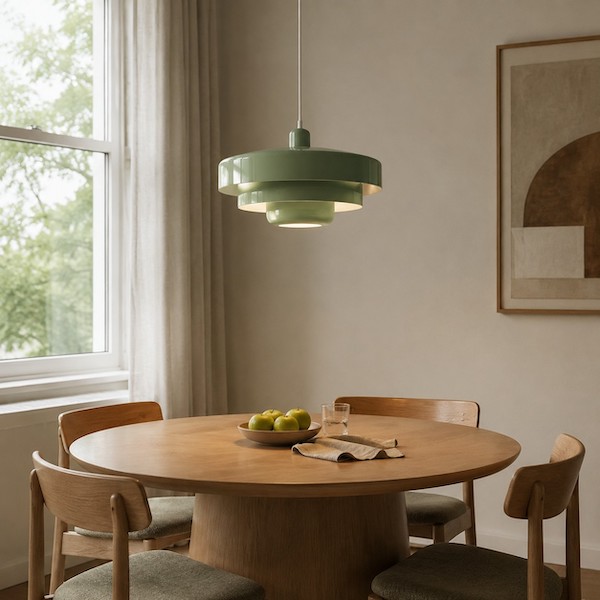
A Five-Minute Full-System Test
- Tape the pendant's width on the tabletop.
- Hang a paper silhouette at the proposed lowest edge.
- Sit in every chair and check faces, bulb visibility and reflections.
- Switch off other lights and identify dark corners; then add the intended ambient layers.
- Photograph the mock-up from the doorway to judge scale in the whole room.
Before ordering, use 7 Dining Table Pendant Mistakes That Cause Glare or Bad Proportions as a final fault-finding pass. It covers off-centre placement, exposed sources, unclear canopy dimensions and delivery checks.
FAQ
What if the ceiling outlet is not centred over the table?
Centre the light on the table, not the room. Ask an electrician about relocating the point or using an approved offset solution.
Should I confirm canopy size before buying?
Yes. Buyers often discover too late that the canopy will not cover the existing ceiling opening or mounting marks.
Can one pendant be the only dining-room light?
Usually not. A pendant lights the table; separate ambient light prevents the surrounding room from becoming dark.
What if I may replace the table later?
Choose an adjustable suspension and keep a record of the electrical point so the next table can still align.
Is a 35 cm pendant large enough for six seats?
Often it will read small as a single centrepiece. Test the outline or consider a repeated arrangement after checking installation.